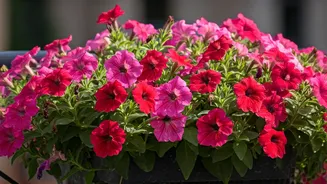







Petunias: The Classic Choice
Petunias are a favorite for a reason, thanks to their profuse blooms and adaptable nature. These flowers are available in a vast spectrum of colors and patterns,
making them ideal for adding pops of color to any balcony. They thrive in sunlight, requiring at least six hours of direct sunlight each day. When planting petunias in pots, choose well-draining soil and ensure the containers have drainage holes. Water them regularly, especially during dry spells, and feed them with a balanced fertilizer every few weeks to encourage more blooms. Deadheading, or removing faded flowers, will also help to stimulate continuous flowering throughout the spring and summer. Petunias are versatile; you can plant them in hanging baskets, window boxes, or standalone pots, allowing you to maximize your balcony space. Consider planting them with other flowers to create a captivating display.
Marigolds: Sunny Disposition
Marigolds are known for their vibrant, cheerful blooms and relative ease of care, making them excellent choices for balconies. These flowers come in shades of yellow, orange, and red, instantly injecting warmth and brightness. Marigolds generally prefer full sun, needing at least six to eight hours of direct sunlight. Well-drained soil is crucial for their well-being, so use a potting mix that drains water readily. Water the plants consistently, especially when the top inch of soil feels dry, but avoid overwatering, as this can cause root rot. Marigolds also benefit from regular feeding with a balanced fertilizer, which can be done every few weeks. They can be planted in pots of varying sizes, as long as they provide enough space for growth. Their ability to thrive with minimal fuss makes them perfect for beginner gardeners. Furthermore, marigolds are often used as companion plants, as they may help to deter certain pests from other plants.
Vincas: Low-Maintenance Beauty
Vincas, sometimes called periwinkles, are another attractive option for balcony gardens, celebrated for their resilience and long blooming periods. Available in a variety of vibrant colours, vincas are adaptable and can thrive in hot, sunny conditions. The plants need at least six hours of sunlight to flourish. When planting vincas, select a well-draining potting mix; these plants do not fare well in consistently soggy soil. Water moderately, allowing the soil to dry out between waterings. Vincas are somewhat drought-tolerant once established, making them a good choice for those who might occasionally forget to water. Feed the plants with a balanced fertilizer a few times during the growing season to encourage robust flowering. Vincas can be planted in hanging baskets, pots, and containers, and their compact growth habit suits smaller spaces. Their ability to withstand the heat and bloom profusely makes them ideal for a sunny balcony.
Geraniums: Classic Elegance
Geraniums are timeless balcony staples, known for their abundant blooms and easy maintenance. They come in a wide range of colors and forms, offering flexibility in design. Geraniums need full sun to thrive, requiring at least six hours of direct sunlight daily. Planting them in pots with good drainage is vital to avoid root rot. Water the plants when the top inch of soil dries out, and make sure excess water can drain away freely. Feed geraniums with a balanced fertilizer every couple of weeks during the growing season to encourage prolific flowering. Remove faded flower heads to promote new blooms and keep the plants tidy. Geraniums are well-suited to pots and hanging baskets and can endure various weather conditions. They offer continuous bursts of color and structure, bringing charm to any balcony garden. They are relatively resistant to pests, making them a low-maintenance option for gardeners.
Bougainvillea: Tropical Touch
Bougainvillea brings a touch of tropical flair to any balcony garden, with its vibrant bracts (modified leaves) that come in striking colors. Bougainvillea demands ample sunlight, requiring at least six hours of direct sun daily to bloom well. It’s also relatively drought-tolerant once established, so be careful not to overwater. Plant bougainvillea in a pot with well-draining soil to prevent waterlogging. Water when the top inch of soil is dry. Fertilize regularly with a balanced fertilizer formulated for flowering plants to encourage lush blooms. Bougainvillea can be trained to grow up trellises or along railings, adding a vertical element and making the most of balcony space. Remember that it may need protection from frost in colder climates. Their dramatic appearance and vibrant colors make bougainvillea an eye-catching choice. However, pruning is important to manage size and shape, ensuring the plant fits well in your balcony setting.