



Celebrating Homeopathy's Reach
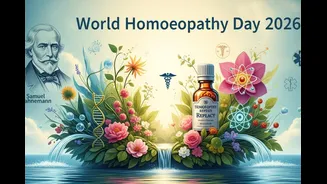
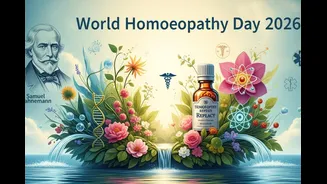
World Homeopathy Day, observed each year on April 10th, serves as a special occasion to honor the birth anniversary of Dr. Samuel Hahnemann, the pioneering
founder of homeopathy. This day provides a vital platform for global reflection on the advancements and future trajectory of this medical system. Union Minister of State, Prataprao Jadhav, emphasized homeopathy's significant role as a potent instrument for fostering worldwide health. He reiterated the government's unwavering dedication to promoting natural healing and comprehensive well-being. The prevailing theme for World Homeopathy Day 2026, 'Homoeopathy for Sustainable Health,' underscores the system's capacity to contribute to long-term health solutions. The Minister articulated that the day is not merely a ceremonial event but a strategic opportunity to assess past achievements and chart a purposeful course forward. He passionately advocates for collective action to build a healthier and more sustainable future, underscoring the government's commitment to holistic wellness and natural recovery methods on this important observance.
Foundations of Homeopathy
Homeopathy, a medical discipline rooted in the Greek terms 'Homois' meaning 'similar' and 'Pathos' signifying 'suffering,' operates on a fundamental principle: treating ailments with remedies that elicit responses akin to the patient's symptoms. This distinct approach was formally established in 1796 by the esteemed German physician, Dr. Samuel Hahnemann. His seminal publication, 'Organon of Medicine,' continues to serve as a guiding text for homeopathic practitioners across the globe. The birth anniversary of Dr. Hahnemann, falling on April 10th, is consequently recognized as World Homeopathy Day. Hahnemann's foundational theories include the 'like cures like' principle, asserting that substances inducing specific symptoms in healthy individuals can, when meticulously prepared in diluted forms, effectively address similar symptoms in those who are ill. The second cornerstone is the 'law of minimum dose,' which champions the use of highly attenuated remedies to gently stimulate the body's innate healing capabilities while minimizing any adverse reactions.
Homeopathy's Indian Embrace
The introduction of homeopathy to India in the early 19th century marked the commencement of its progressive dissemination throughout the nation. John Martin Honigberger, a direct disciple of Samuel Hahnemann, initiated its practice in India around 1810. Dr. Tarakeshwar Jain, Chairperson of the National Commission for Homeopathy, eloquently stated, "Though the roots of homeopathy may lie in Germany, its heart and future reside in India." He further elaborated that homeopathy in India is currently experiencing unprecedented growth, significantly contributing to the concept of 'sustainable health.' Official governmental data indicates that India boasts one of the largest homeopathic professional workforces globally. The nation's homeopathic infrastructure is robust, encompassing 3,45,404 Homeopathy Beds in Ayush Wellness Hospitals, 8,697 Homeopathy Dispensaries, 8,593 Teaching Faculty members, and 7,092 individuals involved in educational roles. Furthermore, there are 1,117 Pharmacopoeial Monographs on Homeopathy drugs published, 384 Pharmaceutical Industries, 277 Homeopathy Colleges, 34 Research Centres, and 28 other related facilities, highlighting India's central role in the global homeopathic landscape.
Preparedness and Epidemic Response
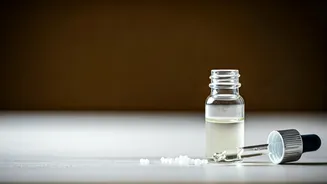
Homeopathic medicines are meticulously prepared from natural sources, including botanical, mineral, and animal origins, employing processes of dilution and succussion. These remedies are administered in accessible forms such as tablets, globules, and liquids. A defining characteristic of homeopathy is its highly individualized treatment approach, wherein therapeutic strategies are tailored to the patient's complete physical and mental constitution, transcending a mere focus on the diagnosed disease. Dr. Preetha Kizhakkutil, Advisor (H.) at the Ministry of Ayush, highlighted that "Homeopathy is a system rooted in individuality, compassion, and the body’s natural healing ability." She further emphasized its critical role in public health initiatives, the management of chronic conditions, and preventive healthcare. Dr. Kizhakkutil stressed the imperative to enhance accessibility, public awareness, the quality of education, and ethical practices within the field, alongside fostering collaborative efforts to solidify homeopathy as a people-centric and sustainable healthcare paradigm. The Indian government recognizes homeopathy as a valuable complementary modality for epidemic preparedness, leveraging its preventive, promotive, and adjuvant capabilities. The Central Council for Research in Homoeopathy (CCRH) actively engages in epidemic-related research and provides medical assistance through its network of 33 institutes and units spread across India, demonstrating the system's proactive engagement in public health challenges. The Minister's observation that "When thousands of patients seek hope in homeopathy institutions every day, it proves the unwavering faith the people of India have in this system to solve their health problems" underscores the profound trust placed in homeopathy within the country. He called for a harmonious blend of "tradition, science and innovation" to amplify the "relevance and strength of homeopathy on the global health landscape."