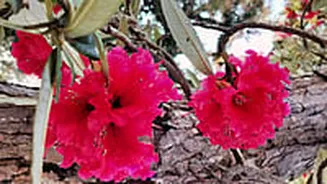






Premature Blooms Signal Change
The vibrant flowering of Rhododendron arboreum, affectionately known as Buransh in the Himalayan region, is typically a harbinger of spring. However, recent
observations reveal that these beautiful blossoms are appearing two to four weeks ahead of their usual schedule. This deviation from the norm has ignited significant concern among scientists and environmental stewards, who interpret these early and sometimes unusually widespread blooms as a clear indicator of profound shifts in our climate. Experts point to changing weather dynamics and escalating global temperatures as primary drivers behind this phenomenon. Milder winters and an accelerated arrival of spring-like conditions can evidently trick many plant species, including the sensitive Rhododendron arboreum, into initiating their flowering cycles prematurely. While the sight of Buransh in bloom is a natural occurrence, any significant alteration in its timing, the intensity of its flowering, or the geographical extent of these blooms can serve as a potent signal of ecological imbalance. This premature flowering is intrinsically linked to a constellation of climatic anomalies, such as elevated winter temperatures, erratic snowfall patterns, and extended periods of drought.
Buransh: An Ecological Linchpin
The Rhododendron arboreum, or Buransh, holds a place of paramount importance within the delicate Himalayan ecosystem, particularly because it is among the very first trees to herald the arrival of spring with its blooms. This early flowering is not merely a visual spectacle; it provides an absolutely vital source of nectar and pollen for a myriad of local fauna, including essential pollinators like bees and birds, as well as other insects. By offering sustenance during a period when other food sources remain scarce, the Buransh plays a critical role in supporting the survival and propagation of these populations. Beyond its direct impact on wildlife, the presence of Buransh forests is fundamental to the region's ecological stability. These forests act as natural anchors, significantly contributing to the stabilization of steep slopes, thereby preventing destructive soil erosion. Furthermore, they are crucial in safeguarding vital watershed areas. Consequently, any disruption to these established forest systems, whether through climate change or other factors, inevitably reverberates through the communities that call the Himalayan region home, impacting their livelihoods and environment.
Nature's Climate Indicator
Given their inherent sensitivity to environmental nuances, the flowering times and growth patterns of Rhododendron arboreum have become a critical barometer for monitoring the progression of climate change. This makes the premature blooming or any unusual display of Buransh flowers not just a natural event, but a significant environmental alert. When we observe these deviations, it’s imperative to recognize them as nature's way of communicating the stress our planet is under. These changes are tangible manifestations of broader climatic shifts that require our attention and action. The very fact that this indicator species is responding so noticeably to warming temperatures and altered weather patterns underscores the urgency of addressing the root causes of these ecological disturbances. Understanding these signs allows us to better appreciate the interconnectedness of our natural world and the profound impact human activities can have on even the most remote and seemingly resilient ecosystems.