
Purple Honey's Rarity
Purple honey is an exceptionally unusual type of honey. Its striking color immediately distinguishes it from the more common golden or amber hues. This
unique coloration is not just a visual curiosity; it's a marker of its scarcity. Unlike the typical honey varieties that are produced widely, purple honey is found in only a few locations globally, making it a highly sought-after delicacy by honey enthusiasts. The rarity contributes to its allure, transforming it into a fascinating topic for both culinary exploration and scientific investigation. This unusual type of honey is not just a sweet treat; it also embodies a testament to the special conditions and plant interactions that create such a distinctive product.
The Colour's Mystery
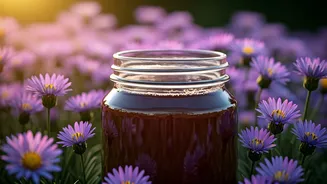
The vivid purple color of this honey is a result of the combination of various elements. The exact reasons behind the honey’s color are still being explored, but it is clear that specific floral sources play an important role. Certain pigments within the nectar of particular plants get carried over to the honey, resulting in the striking purple shade. This process is not a random occurrence; instead, it is highly dependent on the plants visited by the bees and the unique chemical properties of their nectar. Scientists continue to research the exact processes, including the chemical reactions that cause these vibrant colors. Further study also involves the investigation of environmental factors that contribute to the development of purple honey.
North Carolina's Treasure
Among the few places where purple honey is found, North Carolina stands out as a prominent location for its production. The state's unique ecosystem contributes to the cultivation of this special honey, which is a rare treat. The environment provides the specific plants required for the bees to create this unique honey. The specific conditions, along with the interaction between the plants and bees, create a honey type that has become a symbol of the region's diverse natural resources. The honey's rarity also elevates its value, making it a source of regional pride and an item of interest for those seeking unusual culinary experiences. This exceptional honey has garnered attention from both local residents and food lovers from further afield, each eager to explore the unique flavor and color of this regional delicacy.
Key Features Explored
North Carolina's purple honey has several distinguishing features that set it apart from other honey varieties. Its color is, of course, the most noticeable feature. The shade can vary from a deep violet to a lighter lavender, based on environmental and floral variables. The flavor profile is complex, often noted for the delicate floral notes. While the taste can vary based on the specific plants involved, it normally has a smooth and subtle sweetness, which makes it enjoyable and less overpowering. The texture also adds to its distinctiveness; it can vary from thick and syrupy to a more crystallized form. The flavor profile is an important component of the overall experience. Moreover, its rarity means that each jar is a unique discovery, offering an unparalleled taste experience for honey lovers.
What Makes It Unique?
What truly separates purple honey from other varieties is its exceptional origin and rarity. The combination of unique plant sources, specific environmental conditions, and the complex process of honey production contribute to its unmatched nature. This combination creates a product that is not replicable in most places. The scarcity of purple honey makes it a special find, appreciated by culinary experts and gourmands. Each batch is a testament to the harmony between nature and bees, creating a sweet treat that encapsulates a region’s distinctive ecological characteristics. This uniqueness is more than just a novelty; it is a sign of the delicate balance within the ecosystem, providing a flavor and color unlike any other honey type, making it a treasure to be cherished.
Plants Behind the Hue
The unique color of purple honey is directly linked to the flowers that the bees visit. Specific plants contain pigments in their nectar that are then carried over into the honey, resulting in the purple color. While the precise plant species are still being thoroughly studied, certain varieties are often connected to the creation of purple honey. These may include specific species of flowers and plants indigenous to the regions where the honey is produced. The floral variety available to the bees plays a key role, directly affecting the color and flavor characteristics of the final product. Understanding these plant-bee interactions provides greater understanding of the rare honey. Moreover, it highlights the importance of preserving the natural habitats that allow these unique floral sources to flourish.