




Thangka Paintings Explained
Thangka paintings serve as potent visual aids for meditation and contemplation within Tibetan Buddhism. These are religious paintings, typically featuring
deities, mandalas, or scenes from Buddhist cosmology. The creation of a Thangka is a meticulous process, involving specific proportions and iconography, that is guided by religious tradition. The artistry of Thangka paintings is about conveying the teachings of the Buddha. Each element, from color to gesture, holds significant symbolic meaning, aimed at helping practitioners connect with the spiritual realm. These paintings can be found in places like the Kala Ghoda Arts Festival, which provides a platform to showcase and appreciate this art form.
Who is Green Tara?
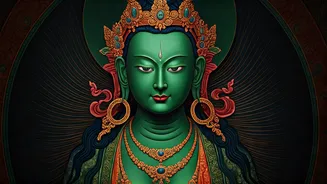
Green Tara is revered in Tibetan Buddhism as the embodiment of enlightened activity and compassion. She is considered a female Buddha, representing the active aspect of compassion. She is often depicted in a youthful and graceful form, usually in a posture of royal ease, ready to help those in need. Green Tara is associated with protection from fear and obstacles and is invoked to overcome difficulties. Her green color symbolizes her active nature and swiftness in assisting beings. Devotees often recite her mantra, 'Om Tare Tuttare Ture Soha,' to connect with her energy and invoke her blessings, making her a central figure of devotion and practice.
Kala Ghoda Festival Feature
The Kala Ghoda Arts Festival provides a prominent venue for the display of Thangka art. This annual event attracts art lovers and enthusiasts, offering a chance to see and purchase these religious paintings. During the festival, artisans often exhibit their works, providing an opportunity for attendees to learn about the techniques and symbolism behind the art. The Kala Ghoda Arts Festival in 2026, for example, could have featured vendors selling Thangka paintings of Green Tara. This creates a cultural exchange, allowing people to appreciate and connect with this ancient form of religious art. The festival provides a platform for both artists and art lovers to celebrate traditions.
Green Tara in Detail
Green Tara's significance goes far beyond her role in the Buddhist pantheon. She is seen as a protector, a healer, and a guide on the path to enlightenment. Green Tara's various forms and representations are a testament to her versatility in aiding beings. Each element in her depictions has meaning: her right hand in the gesture of giving (varada mudra), her left hand in the gesture of refuge (tarjani mudra), and the lotus she holds. Her swift action is reflected in her willingness to assist those facing challenges. Understanding Green Tara deepens one's appreciation for Tibetan Buddhist art. Green Tara serves as a powerful symbol of compassion, making her a significant figure for devotees seeking guidance.
Spiritual Significance
Thangka paintings, especially those featuring Green Tara, help practitioners connect with deeper spiritual realities. The art form serves as a focal point for meditation, aiding in visualization and contemplation. The detailed imagery and symbolic language of the paintings convey complex Buddhist concepts. For those seeking enlightenment, these paintings serve as reminders of the path to liberation. They offer a visual and spiritual anchor to understand Buddhist principles. Viewing a Thangka featuring Green Tara can evoke feelings of peace, protection, and connection to the divine, inspiring devotees on their spiritual journey. Understanding these artworks is crucial in appreciating the spiritual depth of Tibetan Buddhism.