


Creating Illusory Space
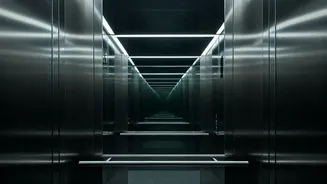
Mirrors are strategically placed within elevator cabins primarily to combat the inherent feeling of confinement. By reflecting the surroundings and light,
they generate an illusion of expanded volume, making the typically compact space appear significantly larger. This visual trick is particularly beneficial for individuals prone to anxiety or claustrophobia, transforming a potentially uncomfortable enclosed environment into one that feels more open and airy. The psychological effect helps passengers relax and feel less restricted during their ascent or descent, especially in busy buildings where elevator usage is frequent and cabins can become crowded, thereby enhancing the overall journey experience for everyone.
Easing Anxiety and Claustrophobia
For many, the enclosed nature of an elevator can trigger feelings of mild anxiety or claustrophobia. Mirrors offer a powerful psychological countermeasure by fostering a sense of openness and providing a broader visual field. When occupants can see reflections of themselves and their surroundings, the perception of the cabin as a confined box diminishes, leading to a more comfortable and less stressful ride. This is especially impactful in taller buildings where elevator trips might be extended, as the increased visual depth provided by the mirror can significantly alleviate the feeling of being trapped and improve passenger well-being.
Providing Passenger Distraction
Even short elevator journeys can sometimes feel awkward due to the silence and proximity of strangers. Mirrors serve as a simple yet effective tool to occupy passengers, making the travel time feel less tedious. People naturally glance at their reflections, perhaps to check their appearance or simply observe themselves. This minor activity acts as a welcome distraction, alleviating potential boredom and making the enclosed journey more engaging. It’s a subtle design feature that contributes to a more pleasant and less monotonous elevator experience.
Enhancing Safety and Security
Mirrors play a crucial role in bolstering both passenger safety and the security of the elevator cabin. They expand the visible angles within the confined space, allowing passengers to more easily observe their surroundings and the actions of others without needing to turn directly. This increased mutual visibility can act as a deterrent against undesirable behaviors such as vandalism or harassment. Furthermore, in the event of an incident, the enhanced observation capabilities provided by mirrors can aid in situational awareness and potentially support security monitoring systems by offering clearer views for any surveillance cameras present.
Assisting with Cargo and Mobility
The utility of mirrors extends to practical considerations for passengers carrying bulky items or utilizing mobility aids. When transporting large luggage, trolleys, or other sizable objects, a mirror provides an additional perspective, akin to a rearview mirror. This allows individuals to maneuver their belongings more safely and precisely, reducing the risk of collisions with elevator walls, doors, or other occupants. Critically, for wheelchair users, mirrors are indispensable; a rear-facing mirror enables them to reverse out of the elevator smoothly and safely, avoiding contact with doors or corridor obstacles, thereby ensuring a more accessible and secure transition.
Improving Accessibility for All
A significant, often overlooked, benefit of elevator mirrors lies in their contribution to accessibility, particularly for individuals using wheelchairs or other mobility devices. The reflective surface, typically placed on the rear wall, functions much like a rear-view mirror. This allows wheelchair users to navigate their entry and exit from the lift with greater confidence and safety, enabling them to monitor their path and avoid potential collisions with the lift doors, walls, or any obstructions in the hallway. This thoughtful design inclusion ensures a smoother, safer, and more inclusive travel experience for everyone.
Boosting Ambiance and Brightness
Beyond their functional advantages, mirrors also contribute significantly to the aesthetic appeal and perceived atmosphere of an elevator's interior. By reflecting ambient light, they make the cabin appear brighter and more welcoming. This quality can enhance the overall décor, lending an air of sophistication and elegance to the lift's design. In buildings aiming for a premium or luxurious impression, mirrors are an essential element that amplifies the sense of space and light, contributing to a more refined and pleasant environment for passengers.