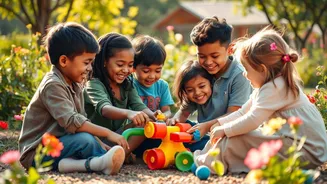







Step into Others' Shoes
Role-playing offers a powerful, interactive method for children to grasp diverse viewpoints. By stepping into different characters' roles within a safe
environment, youngsters begin to truly understand how their actions might impact others. This exercise cultivates critical thinking about consequences and nurtures a compassionate outlook. Parents can devise straightforward scenarios mirroring daily occurrences, providing children with opportunities to practice responding empathetically and thoughtfully to various social situations.
Storytime Empathy Boost
The simple act of reading together opens a gateway to understanding a spectrum of emotions and life experiences. Engaging children in discussions about the characters' feelings, motivations, and the challenges they face after a story concludes is invaluable. This encourages children to contemplate how they might feel if they were in similar circumstances, fostering empathy by exploring the narratives of fictional individuals. It allows them to connect with the characters' journeys, celebrating their victories and sympathizing with their setbacks, thereby deepening their emotional comprehension.
Guess the Feeling Game
Emotion charades transforms learning about feelings into an exciting game, enhancing children's ability to recognize and articulate various emotions. In this playful activity, one child embodies an emotion through gestures and expressions, while the others endeavor to guess what it is. This game significantly bolsters emotional literacy by honing children's skills in identifying nuanced non-verbal cues associated with different feelings, both in themselves and in those around them, which is a cornerstone of developing robust empathy.
Family Volunteering Adventures
Engaging in charitable work as a family serves as an exceptional vehicle for instilling empathy in children. It provides them with direct exposure to varied life circumstances and the obstacles encountered by different segments of society. Whether it's assisting at a local animal shelter, contributing to a community garden, or participating in neighborhood clean-up initiatives, these collective efforts impart crucial lessons about the significance of kindness, compassion, and active civic responsibility, shaping well-rounded, caring individuals.
Gratitude Journaling Practice
Encouraging children to keep a gratitude journal can profoundly enhance their capacity for empathy. This practice sharpens their awareness of the positive aspects present in their lives and fosters a deeper appreciation for the kindness they receive. By regularly documenting things they are thankful for, children are prompted to reflect on the contributions and support offered by others. This cultivates a mindset of appreciation and a more nuanced understanding of diverse perspectives, significantly boosting emotional intelligence and interpersonal connections.