







A Bridge Grown, Not Built
Meghalaya, situated in India's northeastern region, is renowned for an exceptional natural phenomenon: the double-decker living root bridge. This remarkable
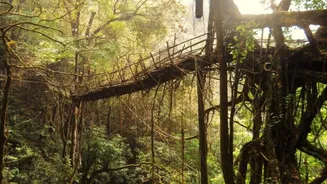
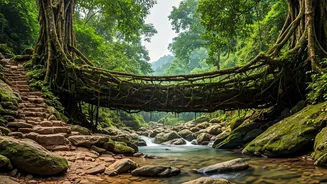
structure isn't a product of conventional construction; instead, it's a living entity meticulously cultivated by the indigenous Khasi and Jaintia tribes over generations. The cultivation process involves ingeniously guiding the aerial roots of the Ficus elastica tree across rivers and streams. With dedicated care and time, these roots mature, thickening and intertwining to form a robust, living passage. The distinctive 'double-decker' aspect is a result of further development, where roots are encouraged to grow downwards from the initial bridge, creating an even sturdier and wider structure capable of supporting greater loads and enduring challenging environmental conditions. These extraordinary bridges are predominantly found in the Cherrapunji and Mawlynnong regions of Meghalaya, areas distinguished by their exceptionally high rainfall, a vital element for the flourishing growth of the Ficus elastica trees. The Umshiang Double Decker Root Bridge, located in close proximity to Nongriat village, stands as the most celebrated example of this natural architectural marvel.
The Journey to Nongriat
Embarking on a visit to these living root bridges is an expedition in itself, promising an immersive experience deep within the tropical landscapes of Meghalaya. The trek to reach them typically involves navigating through verdant, dense rainforests, crossing smaller watercourses, and descending challenging, steep pathways. This arduous yet rewarding journey offers travelers a profound connection with the pristine and untamed natural beauty of the region. Beyond their engineering prowess, these bio-bridges carry significant cultural weight, serving as potent symbols of the deep-rooted harmony that exists between the local communities and their natural environment. They stand as a testament to a sustainable and symbiotic approach to developing infrastructure, demonstrating how human needs can be met by working in tandem with nature's rhythms. For those seeking truly unique travel experiences and a profound connection with the natural world, Meghalaya's double-decker living root bridges present an unparalleled opportunity to step into a realm where human innovation and the organic world coalesce in breathtaking fashion.
Global Recognition and Design
In a significant global acknowledgment, Time Out magazine has positioned India's Double Decker Living Root Bridge in Meghalaya at an impressive second place on its list of the world's most beautiful bridges for 2026. This natural wonder, nestled in Northeast India, has garnered international attention for its unique bioengineering and aesthetic appeal, even surpassing iconic structures like New York's Brooklyn Bridge. The magazine's panel of experts evaluated bridges based on distinctive design characteristics, their integration with the surrounding landscape, and the amount of media attention they have generated. Meghalaya's root bridge particularly impressed with its organic evolution, resilience against the harsh monsoon seasons, and its status as a UNESCO tentative site. This distinction highlights the bridge's exceptional ability to blend human ingenuity with nature's grandeur, showcasing a sustainable approach to infrastructure that resonates globally. The ranking is expected to draw increased interest from travelers and nature enthusiasts worldwide to this remarkable Indian landmark.
Genesis of the Double Decker
The Double Decker Living Root Bridge, specifically the Umshiang variant located near Nongriat village close to Cherrapunji (Sohra), is a testament to the extraordinary craftsmanship of the Khasi tribe, who have meticulously guided the aerial roots of rubber fig trees (Ficus elastica) to form this extraordinary span over the Umshiang River. Unlike conventional bridges constructed from inorganic materials, this structure is a living entity, cultivated over many years. The process involves using betel trunks as initial guides for the roots, which then mature and thicken over a period of 15 to 20 years, progressively strengthening with age. The 'double-decker' configuration was not an initial design but rather an innovative response to environmental challenges. Intense monsoon seasons in the region historically caused flooding of the original single-level bridge. To overcome this, locals developed a second, upper tier by encouraging roots to grow downwards, creating a more robust and flood-resistant structure. This unique two-story design allows the bridge to withstand Meghalaya's exceptionally heavy rainfall, solidifying its reputation as a marvel of adaptive engineering and a symbol of the symbiotic relationship between the community and their natural surroundings in one of the wettest inhabited areas on Earth.
A Trek of Discovery
The journey to reach the Double Decker Living Root Bridge is an adventure in itself, often commencing from Tyrna village with a challenging descent of approximately 3,500 steps. This trek winds through lush, verdant rainforests, offering glimpses of single root bridges, crystal-clear streams, and the serene Blue Lagoon along the way. The most favorable period to undertake this journey is between October and May, as it allows visitors to avoid the heavy monsoon rains from June to September. During the dry season, the path is more accessible and offers clearer views of the surrounding flora and fauna. A significant reward for trekkers is the nearby Rainbow Falls, a breathtaking turquoise cascade that, on sunny days, is often adorned with ethereal rainbows formed by the mist. This immersive trek is not merely a means to an end but an integral part of the experience, allowing visitors to appreciate the natural beauty and ecological richness of Meghalaya before even reaching the main attraction.
Unique Attributes of the Bridge
This living structure possesses a number of remarkable attributes that distinguish it from conventional bridges. Firstly, it is a perpetually 'living' marvel that is 'self-healing'; unlike concrete bridges that degrade over time, its foundation of rubber fig tree roots naturally regenerates and gains strength with age. This adaptability ensures its longevity for centuries, allowing it to withstand Meghalaya's intense monsoon rains. Secondly, it represents a profound example of 'tribal engineering genius'. For centuries, the Khasi and Jaintia tribes have employed meticulous techniques, using bamboo scaffolds and natural guides, to train the aerial roots. This sustainable method, passed down through generations, seamlessly integrates human requirements with the delicate rainforest ecosystem. Thirdly, the 'double-decker innovation' arose from a practical necessity; after severe floods in the 1980s, a second tier was cultivated above the original, creating a 30-meter-long structure capable of supporting numerous daily crossings, showcasing brilliant adaptive design in a high-rainfall zone. Fourthly, it is a 'record-breaking rain survivor' in Cherrapunji, an area receiving over 11,000 mm of annual rainfall. Its flexible root system can absorb seismic shifts and gales, demonstrating resilience that surpasses many modern infrastructure alternatives. Lastly, the bridge is situated within a 'biodiversity hotspot haven', surrounded by subtropical forests rich in rare orchids, hornbills, and bioluminescent fungi. The trek itself is an opportunity to observe over 200 bird species, underscoring the interconnected beauty and ecological depth of this UNESCO tentative site.
Sustainable Tourism Model
The Double Decker Living Root Bridge serves as a leading example of sustainable tourism, positively impacting the local community. The bridge directly supports over 100 villagers through opportunities such as homestays and offering guidance to trekkers. This model ensures that tourism benefits the local economy without leading to deforestation or environmental degradation. Visitors are strictly instructed to adhere to designated paths, helping to preserve the integrity of this organic wonder for future generations. This ethical approach to tourism not only protects the fragile ecosystem but also fosters a deeper appreciation for the bridge's unique cultural and environmental significance. By choosing to stay in local homestays and hiring local guides, travelers contribute directly to the livelihoods of the people who are the custodians of this living heritage, creating a mutually beneficial relationship between visitors and the community.
Planning Your Visit
To experience the magic of the Double Decker Living Root Bridge, careful planning is essential. The bridge is precisely located in Nongriat village, within the East Khasi Hills district of Meghalaya, India, approximately 2 kilometers from Tyrshang village, near Cherrapunji (Sohra). It gracefully spans the Umshiang River, enveloped by lush rainforests. The ideal period for visiting is from October to May, as this timeframe allows for pleasant weather and avoids the torrential monsoon rains from June to September. During winter months (November to February), temperatures range comfortably between 10-20°C, while summer offers a misty ambiance with fewer crowds. Reaching the bridge involves a multi-stage journey: first, fly into Guwahati, followed by a 3-hour drive or bus ride to Shillong, and then another 2-hour journey to Cherrapunji. From Sohra, a 20-minute taxi ride will take you to Tyrna village, the starting point for the trek. The trek itself involves descending roughly 3,500 steps, typically taking 1 to 1.5 hours. Entry fees are modest, ranging from ₹50-100 for locals/Indians and ₹500-1,000 for foreigners, with no special permits required beyond a village entry fee at the base. Homestays are available for around ₹800-1,500 per night, often inclusive of meals. Essential items to carry include water, insect repellent, and sturdy trekking shoes. Hiring a local guide is recommended for safety and insight, costing approximately ₹200-500. Consider staying overnight to witness the sunset and sunrise over the bridge. Importantly, mobile network coverage can be spotty, and ATMs are scarce, so carrying sufficient cash is advisable.