






Selecting Your Driftwood
The foundation of any compelling driftwood mask lies in the choice of material. When hunting for the ideal piece, pay close attention to its inherent characteristics.
Seek out driftwood that boasts intriguing natural textures and organic shapes; these elements will naturally imbue your mask with a unique personality and depth. Consider the overall size of the wood in relation to the mask design you envision, ensuring it's substantial enough for detailed work but manageable for carving. Crucially, verify that the wood is thoroughly dried and free from any significant cracks, splits, or structural flaws. Such imperfections can not only hinder the carving process but also compromise the longevity and integrity of the finished artwork, potentially leading to breakage during or after completion.
Essential Carving Tools
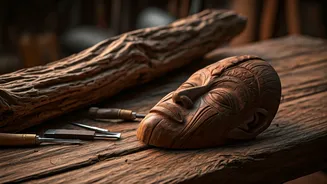
To bring your vision to life with precision and finesse, equipping yourself with the right set of carving implements is paramount. A curated collection of wood carving tools will serve you well. Essential items include a variety of chisels, finely pointed knives, and rasps, each designed to execute specific types of cuts and shaping. For initial shaping and to reduce larger sections of wood, a fine-toothed saw proves invaluable. Once the basic form is established, smaller, more delicate tools can be employed for intricate detailing. Maintaining the sharpness of all your tools is non-negotiable; consistently sharp blades facilitate clean, effortless cuts, preventing splintering and ensuring a smoother, more professional finish on your mask.
Understanding Cultural Context
Before you even touch the wood, a profound appreciation for the cultural context of African tribal masks is vital. These masks are far more than mere artistic expressions; they are deeply interwoven with the spiritual beliefs, social hierarchies, and historical narratives of various communities across Africa. Engaging in thorough research about the specific meanings, symbolism, and traditional uses of the masks you intend to create will elevate your work. This knowledge allows you to thoughtfully incorporate authentic motifs and characteristics, transforming your carving from a simple craft project into a respectful homage and a tangible representation of rich cultural heritage.
Mastering Carving Techniques
The journey from raw driftwood to a finished mask involves a methodical approach to carving. Begin by conceptualizing your design and sketching it thoroughly on paper. Once satisfied, lightly transfer these pencil lines onto the surface of the driftwood as a guide. For creating the deeper contours and forms of the mask, employ chisels with controlled force. Finer details, such as delicate facial features, intricate patterns, or textural elements on the mask's surface, are best achieved with the precision of carving knives. Patience is key; dedicate ample time to each stage of the carving process, striving for accuracy while also allowing for your own creative interpretation within the established traditional frameworks.