







Control Humidity Levels
Moss thrives in damp environments, making humidity a primary culprit for its proliferation in indoor plant settings. To combat this, actively manage the
moisture content in your home. Employing a dehumidifier can significantly reduce ambient moisture, creating an atmosphere less conducive to moss growth. Alternatively, opening windows to enhance air circulation offers a natural way to dissipate excess humidity. Aim to maintain indoor humidity levels within the 40% to 60% range. Regularly using a hygrometer is recommended to accurately gauge these levels, ensuring your plant's environment is optimal for their health without inadvertently fostering moss development. This precise control over moisture is a fundamental step in preventive care.
Boost Air Movement
Ensuring good airflow within your living space is crucial for drying out surfaces and making them less hospitable to moss. Stagnant air pockets can create microclimates where moisture lingers, encouraging unwanted growth. To counter this, strategically place fans near your plant collections to promote consistent air circulation. Repositioning furniture can also help eliminate areas where air becomes trapped. Beyond its role in moss prevention, improved ventilation is beneficial for your plants' overall well-being, facilitating quicker drying of foliage after watering and reducing the risk of fungal diseases. A breezy environment is a healthy environment for both your plants and your home.
Natural Antifungal Sprays
For immediate action against existing moss or to preemptively deter its return, natural antifungal solutions offer a safe and effective approach. A simple mixture of one tablespoon of baking soda dissolved in water can be sprayed directly onto affected areas. Another potent option is a diluted vinegar solution, created by mixing one part white vinegar with three parts water. Both these concoctions work by creating an environment that is less favorable for moss spores to thrive. They are generally safe for most common houseplant varieties, minimizing the risk of foliage damage while effectively tackling the moss. These household ingredients provide a gentle yet powerful defense.
Mindful Watering Habits
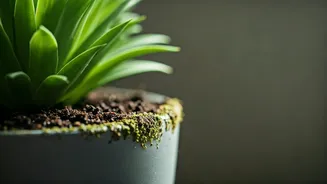
Overwatering is a leading cause of moss problems in indoor planters, as it keeps the soil consistently saturated. To prevent this, adopt a vigilant approach to watering. Before reaching for the watering can, always check the soil moisture level by inserting your finger a couple of inches into the dirt. This tactile check will reveal if the soil is still damp or if it has dried out sufficiently. Furthermore, ensure all your pots are equipped with drainage holes. These are essential for allowing excess water to escape freely, preventing waterlogging. Tailoring your watering schedule to the specific needs of each plant and its potting mix will create soil conditions that naturally resist moss formation.
Clean Foliage Regularly
Maintaining clean plant leaves is an often-overlooked yet vital practice in preventing the spread of moss indoors. Dust, debris, and grime that accumulate on leaves can trap moisture, providing a fertile ground for moss spores to germinate and flourish. Make it a habit to gently wipe down your plant's leaves on a regular basis. A soft, damp cloth or a sponge works perfectly for this task, effectively removing any buildup. This simple act of cleanliness not only enhances the aesthetic appeal of your plants, allowing their natural beauty to shine, but also plays a significant role in discouraging unwanted moss from establishing itself in your indoor garden.