




The Illusion of a Frozen Core
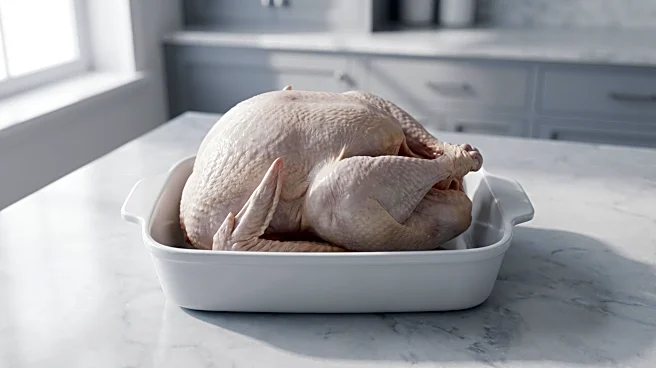
The main reason counter-thawing is so risky comes down to a simple fact of physics: a turkey doesn't thaw evenly. While the deep interior of the bird might remain frozen solid for hours, the outer layers of meat and skin warm up much faster. This creates a false sense of security. You might touch the bird and think it's still safely chilled, but the surface has already entered the temperature 'danger zone'. This is the range between 40°F and 140°F, where harmful bacteria like Salmonella and Campylobacter can multiply at an alarming rate. In fact, under these room-temperature conditions, the bacterial population on your turkey can double every 20 minutes. After just a couple of hours, the outside of your turkey can become a breeding ground for pathogens
long before the center has even begun to thaw.
You Can't Cook Away All the Risk
A common belief is that the oven's heat will kill any bacteria that grew during thawing. While it's true that cooking a turkey to an internal temperature of 165°F will kill active bacteria, it doesn't eliminate the toxins some bacteria can produce as they multiply. These toxins can be heat-resistant and may still cause foodborne illness even after the bird is thoroughly cooked. The longer the turkey sits in the danger zone, the higher the risk. Food safety guidelines from the USDA are clear: perishable foods, including your Thanksgiving turkey, should never be left at room temperature for more than two hours. Counter-thawing virtually guarantees this rule will be broken, turning your festive centerpiece into a potential health hazard.
Safe Method 1: Refrigerator Thawing
The safest and most recommended method for thawing a turkey requires planning but is completely hands-off. Simply keep the turkey in its original wrapper, place it on a rimmed baking sheet or in a container to catch any juices, and leave it in the refrigerator. The key is to allow enough time: approximately 24 hours for every 4 to 5 pounds of turkey. A 16-pound bird, for example, will need about four full days to thaw completely. This method keeps the entire turkey below 40°F, safely out of the danger zone. Once thawed, it can remain in the fridge for another day or two before cooking.
Safe Method 2: Cold-Water Thawing
If you're short on time, the cold-water method is a much faster and still safe alternative to counter-thawing. Keep the turkey in its leak-proof packaging and submerge it completely in cold tap water in a clean sink or large container. The critical step is to change the water every 30 minutes to ensure it stays cold and prevents the outer layers from warming up. This method takes about 30 minutes per pound, so a 16-pound turkey will thaw in about eight hours. A bird thawed this way must be cooked immediately afterward.
The Last Resort: Microwave Thawing
For smaller turkeys or turkey parts, the microwave is a potential option, but it comes with its own rules. You'll need to follow your microwave manufacturer's instructions for weight and power settings. Because microwave thawing can heat parts of the turkey into the danger zone or even begin to cook them, the turkey must be cooked immediately after it's defrosted. This method is not ideal for large birds, which often don't fit in a standard microwave and won't thaw evenly.