




The Real Risk of an Overloaded Hook
It’s a scenario many holiday decorators have experienced: you hang a beautiful, heavy wreath on a small, unassuming removable hook. For a few hours, everything seems fine. Then, you’re woken by a crash. Your festive centerpiece is on the ground, potentially broken, and the hook has peeled a strip of paint or finish from your door. The promise of 'damage-free' removal vanishes when a hook fails under too much weight. These failures aren't just frustrating; they can lead to costly and time-consuming repairs. The adhesive, when overloaded, doesn’t release cleanly; it tears away from the surface, taking whatever is underneath with it. This is especially true for painted or wood-finished doors, where the bond between the hook and the surface becomes
a battle the door often loses.
Step 1: Weigh Your Decorations
Before you even think about hooks, you need to know what you're working with. Don't guess the weight of your decor. A simple kitchen scale or bathroom scale will give you an exact number. Place the wreath or sign on the scale to get a precise reading. Most standard artificial wreaths weigh between two and five pounds. However, larger wreaths, especially those with dense faux foliage, pinecones, or other embellishments, can easily exceed five pounds. A seemingly small 'heavy-duty' wreath could weigh more than a larger, lighter one. Knowing the actual weight is the single most important piece of information for choosing the right hanging solution.
Step 2: Become a Label Reader
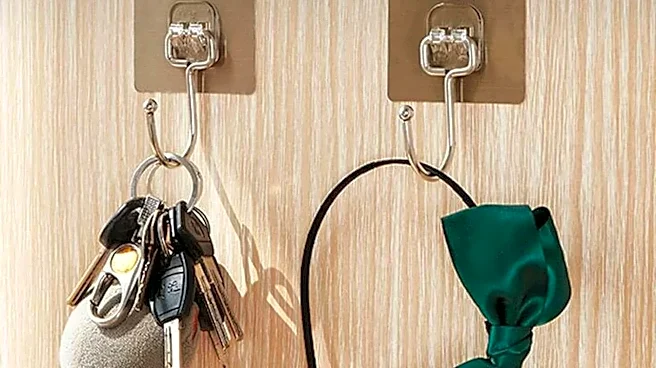
Adhesive hooks are not created equal. Manufacturers like 3M, the maker of Command hooks, produce a wide array of products designed for specific weight classes, from small hooks that hold half a pound to large ones rated for 7.5 pounds or more. The weight limit is always clearly printed on the front of the package. This number represents the maximum weight the hook can hold under ideal conditions. A good rule of thumb is to choose a hook that is rated for at least double the weight of your decoration. This provides a safety margin, especially for decor hung on an exterior door where temperature fluctuations and humidity can affect the adhesive's performance.
Step 3: A Clean Surface Is Not a Suggestion
This is the step most people skip, and it's a critical reason why hooks fail. Any dust, oil, or cleaning residue on the door's surface will prevent the adhesive from forming a strong bond. Do not use household cleaning sprays or wipes, as they leave behind a slippery film. The only recommended cleaner for this job is isopropyl rubbing alcohol. Pour a small amount onto a clean, lint-free cloth and wipe the area where you plan to place the hook. Let it air dry completely. This simple act removes invisible residues and creates the perfect surface for the adhesive to grab onto, ensuring a much stronger and more reliable hold.
Step 4: Press Firmly and Be Patient
Proper application takes a little time. First, separate the adhesive strips and attach one to the back of the hook, pressing firmly. Then, remove the wall-side liner and press the hook firmly against your clean, dry door for at least 30 seconds. This pressure is essential for activating the bond. But the most crucial part is what comes next: waiting. Most adhesive hooks require a 'curing' period of at least one hour before you hang anything on them. This allows the adhesive to build to its maximum strength. Hanging your wreath immediately is a common mistake that dramatically increases the likelihood of failure.
Step 5: The Art of Damage-Free Removal
When Thanksgiving is over and it's time to take down your decor, removal is just as important as application. Never pull the hook straight out and away from the door. This action will almost certainly cause damage. Instead, locate the small, non-adhesive tab at the bottom of the strip. Hold the hook gently with one hand and, with the other, slowly pull the tab straight down, parallel to the surface of the door. You may need to stretch the strip quite a bit—up to 15 inches or more—until the adhesive releases and the hook comes off cleanly. If the strip breaks or the hook has been in place for a long time, gently warming the area with a hairdryer on a low setting can help soften the adhesive.