





The Fix for: Lumpy Gravy
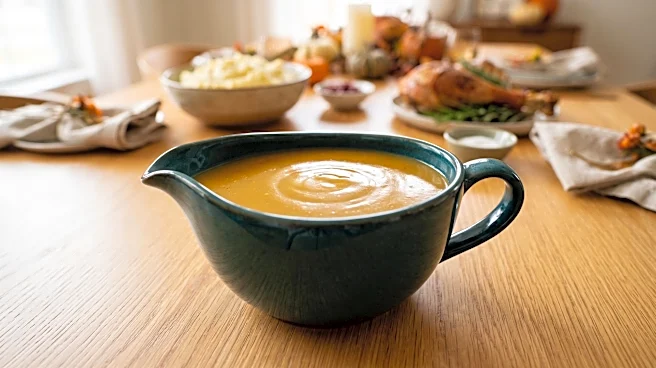
Lumps happen when a thickening agent like flour or cornstarch is added to hot liquid too quickly, causing it to clump before it can dissolve. The fastest fix is to use a blender. An immersion blender is ideal because you can stick it directly into the pot and blitz for 20-30 seconds until smooth. This method is quick, effective, and creates minimal cleanup. If you don't have an immersion blender, a standard blender or food processor works just as well; just be careful when transferring the hot liquid. The no-tech solution is to pour the gravy through a fine-mesh sieve set over a clean bowl or pot. Use a spatula to press the liquid through, leaving the stubborn lumps behind in the strainer. The resulting gravy might be slightly thinner since
you've removed some thickener, but that's an easier problem to solve next.
The Fix for: Gravy That's Too Thin
Watery gravy that pools on the plate instead of coating your turkey is a classic Thanksgiving woe. Luckily, it's very correctable. The quickest fix is to create a slurry. In a separate small bowl, whisk together one tablespoon of cornstarch with one tablespoon of cold water or broth until it forms a smooth, milky liquid. While the gravy is at a simmer, slowly whisk in the slurry. The gravy should begin to thicken almost immediately. If it's still not thick enough, you can add more slurry a little at a time. Another great method is to make a 'beurre manié', which is French for 'kneaded butter'. Knead together equal parts softened butter and all-purpose flour to form a paste, then whisk small pieces of it into your simmering gravy until it melts and thickens. The butter helps the flour dissolve without clumping.
The Fix for: Gravy That's Too Thick
If your gravy has gone from silky to sludge-like, you've gone a little too far with the thickener or let it reduce for too long. This is perhaps the easiest gravy problem to fix. The solution is simply to thin it out with more liquid. While you can use water, using more stock (like turkey or chicken broth) is the best choice because it won't dilute the flavor you've worked to build. Place the gravy over low heat and gradually whisk in warm stock, a little at a time, until it reaches your desired consistency. Stop when it coats the back of a spoon but still pours easily. Remember to taste it again after you've thinned it out; you may need to adjust the seasoning with a little more salt and pepper.
The Fix for: Bland, Flavorless Gravy
After all that work, a gravy that tastes like little more than salty flour water can feel defeating. Before you do anything else, taste it. Does it just need more salt? Salt is a flavor enhancer, so often a bit more is all that's required to make the other flavors pop. If it's still missing something, it's time to add umami. A few dashes of soy sauce or Worcestershire sauce can add a deep, savory complexity without being overpowering. You can also try simmering the gravy with aromatics like a sprig of thyme or some sautéed mushrooms for 10-15 minutes to infuse more flavor. A splash of dry white wine or sherry can add a touch of acidity to brighten everything up. For a richer color and taste, some cooks swear by a drop of Kitchen Bouquet browning sauce.
The Fix for: A Greasy Slick
Greasy gravy happens when there's too much fat in the pan drippings and not enough starch to emulsify it all, leaving an oil slick on top. There are a couple of ways to tackle this. If you have time, you can let the gravy settle for a few minutes, allowing the fat to rise to the surface where you can carefully skim it off with a spoon. A clever trick involves using ice: place a metal ladle with a few ice cubes in it on the surface of the gravy. The cold metal will cause the fat to solidify and cling to the bottom of the ladle, making it easy to remove. If the gravy is still a bit greasy after skimming, you can also try whisking in a small cornstarch slurry (about a half teaspoon of cornstarch mixed with a teaspoon of water) to help bind the remaining fat.