






Why Your Layers Are at War
The problem isn't just that your sweater is 'big'. The issue is a combination of bulk, friction, and construction. A chunky, loosely-woven knit sweater has a lot of volume. When you try to force that into a coat with fitted shoulders and narrow armholes, all that fabric has nowhere to go. It bunches up, creating uncomfortable lumps and restricting your movement. It's a battle of silhouettes. A tailored coat is designed to create a sharp, clean line, while a big sweater is all about relaxed volume. When you pit them against each other, the sweater almost always loses, leaving you feeling stuffed and constricted before you’ve even had a bite of turkey. Many people make the mistake of buying a coat that fits perfectly over a thin t-shirt, forgetting
to test it over their typical winter layers.
Choose Your Champion Sweater Wisely
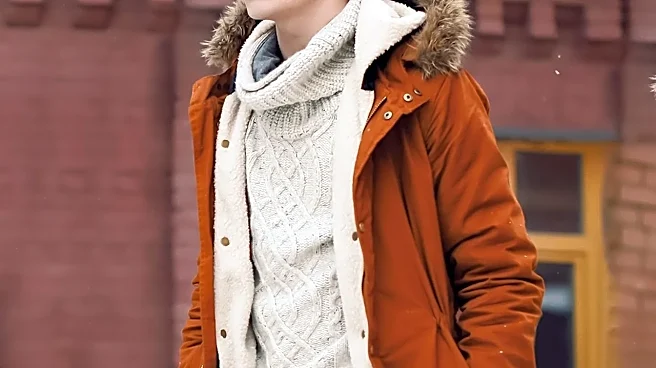
The dream of a cozy Thanksgiving outfit doesn't have to die, it just requires a smarter sweater selection. The key is to look for warmth without excessive bulk. Materials like merino wool and cashmere offer incredible insulation without the thickness of many synthetic or chunky acrylic yarns. These finer-gauge knits drape more smoothly and slide more easily under other layers. If you absolutely must have that chunky cable-knit look, pay attention to the sweater's cut. A sweater with set-in sleeves will generally layer better than one with bulky dolman or drop-shoulder sleeves, which add extra fabric right where your coat's armhole needs space. A good rule of thumb is to choose one 'hero' piece that's oversized and keep the other layers more streamlined.
Not All Coats Are Created Equal
The right coat is the other half of the equation. If you love bulky sweaters, a sharply tailored, slim-fit overcoat is not your friend. Instead, look for outerwear with a more forgiving silhouette. Styles described as 'cocoon', 'oversized', or that feature an A-line cut are specifically designed with more room to accommodate layers. Another key feature to look for is a raglan sleeve. Unlike a traditional set-in sleeve that has a seam at the shoulder, a raglan sleeve extends in one piece up to the collar, creating a diagonal seam from the underarm to the neckline. This construction provides significantly more room and flexibility through the shoulder and upper arm, making it the ideal companion for a substantial sweater. Unlined or lightly lined coats, like a classic trench or a waxed cotton jacket, also offer more interior space than a heavily padded puffer.
Techniques for a Peaceful Assembly
Once you have a compatible sweater and coat, a few simple tricks can make the layering process even smoother. Start by putting the sweater on and making sure it's sitting correctly on your body—pull the sleeves down and smooth out any bunching around your torso. When putting on your coat, hold onto your sweater's cuffs as you slide your arms through the sleeves. This prevents the sweater sleeves from riding up and creating a traffic jam in your bicep area. A thin, silky base layer underneath your sweater can also help reduce friction, allowing the fabrics to slide against each other more easily. Finally, when trying on a potential new coat, always wear the thickest sweater you own to the store. It’s the only way to know for sure if you’ll have the room you need when the temperatures drop.