


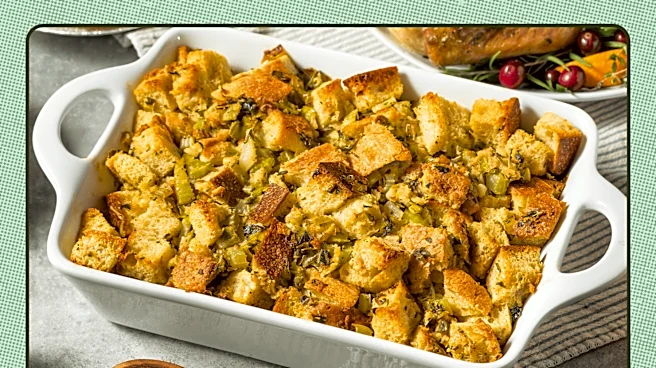
The Anatomy of a Classic Stuffing
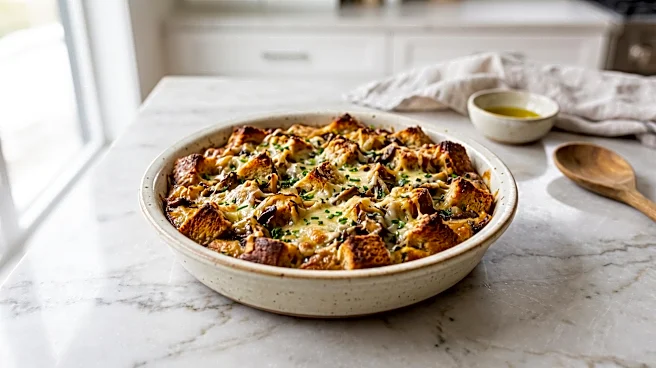
First, let's get the terminology straight. Technically, it's 'stuffing' if cooked inside the bird and 'dressing' if baked in a separate dish. Most of us now make dressing for food safety reasons but still call it stuffing out of habit. This beloved classic is a rustic affair. It starts with dried or stale bread cubes, often from a sturdy loaf like sourdough or a traditional white bread. The bread is tossed with sautéed aromatics—typically onion and celery—and a generous amount of herbs like sage, thyme, and rosemary. The mixture is moistened with chicken or turkey stock, bound loosely with an egg or two, and baked until the top is a landscape of golden-brown, crunchy peaks and the inside remains soft and bready. The texture is a mosaic: crisp,
buttery edges give way to tender, savory pockets of bread that have soaked up the broth.
The Case for Savory Bread Pudding
Savory bread pudding, sometimes called a strata, takes the same basic components and elevates them into something far richer and more decadent. The key difference lies in the liquid. Instead of relying primarily on broth, bread pudding is saturated in a true custard base made of eggs and dairy, like heavy cream, half-and-half, or milk. This transforms the final product entirely. Where stuffing is a collection of distinct bread pieces, savory bread pudding is a cohesive, sliceable casserole. The bread fully absorbs the rich liquid, creating a uniformly moist, tender, and almost spoonable texture from edge to center. It's less about crispy bits and more about a smooth, velvety consistency throughout.
The Textural Showdown
The choice between these two dishes is fundamentally a choice about texture. Classic stuffing offers contrast. You get the crunch of the toasted top, the chewy interior pieces, and the soft, fully saturated bites at the bottom of the pan. It's a dish of delightful inconsistencies. Savory bread pudding, on the other hand, is all about luxurious uniformity. Its defining feature is the soft, custardy middle that holds everything together. It puffs in the oven like a soufflé, and while the top might get golden, the primary experience is one of integrated, creamy richness. If you want a side that feels like a rustic counterpart to the turkey, stuffing is your answer. If you want a side that feels like a rich, standalone casserole, you're looking for bread pudding.
Flavor, Tradition, and Preparation
While both can be flavored with anything from sausage and mushrooms to oysters and dried fruit, the base texture affects the final taste. The leaner, broth-based stuffing allows the herbal notes and toasted bread flavor to shine through more distinctly. The rich custard of a bread pudding can mute some of those sharper flavors, blending them into a milder, more cohesive whole. Tradition also plays a huge role; for many families, a specific stuffing recipe is an unchangeable part of the holiday. But bread pudding has a major practical advantage: it's an ideal make-ahead dish. You can assemble it completely the day before, let it soak overnight in the fridge, and simply pop it in the oven on Thanksgiving Day, a huge bonus for a busy cook.