




Just in the past year, I’ve been to Bangkok twice and eaten my way through the Thai capital’s astounding dining scene. These visits and previous ones have convinced me that Bangkok is one of the world’s most compelling destinations for high-end dining,
and it seems I’m not alone: The city has six spots on the World’s 50 Best restaurants list and nine on the Asia 50 Best.
Which is why I haven’t been this excited about a new restaurant opening in the U.S. in a long time — maybe ever. On July 24, Bangkok-based chef Thitid “Ton” Tassanakajohn opened Saam, his first-ever U.S. restaurant, in San Francisco. If you haven’t heard of Tassanakajohn, you might’ve heard of his two Bangkok establishments, Le Du and Nusara, both of which hold one Michelin star and occupy rankings (No. 30 and No. 35, respectively) on the 2026 World’s 50 Best list. As soon as I could, I jumped into my car and drove six and a half hours to visit Saam in its second week of operation. I managed to get four friends to help me dine through nearly the entire menu, and I came away quietly astonished by what Tassanakajohn and his team are cooking.
I’m a bit surprised this opening isn’t getting more coverage in national media. (I guess the European chefs earning Michelin stars with pricey Bangkok restaurants — Alain Ducasse, Anne-Sophie Pic, Mauro Colagreco — have more name recognition stateside among fine dining aficionados.) At Saam, Tassanakajohn echoes other ambitious Thai restaurants in the U.S., like Anajak in LA, Kalaya in Philadelphia, and Bangkok Supper Club in New York, by serving an approachable menu at an attainable, but certainly higher-than-average, price point.

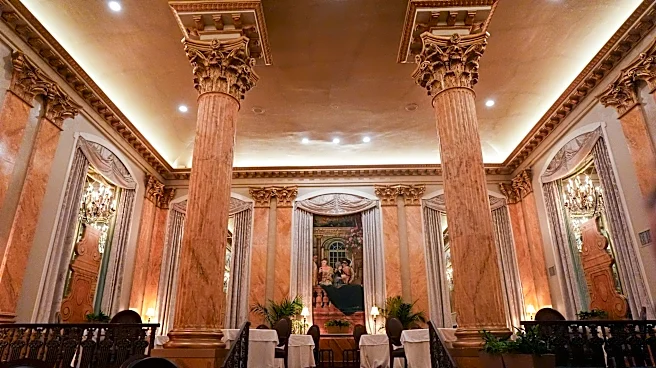
Saam means three in Thai, referring to the trio of partners involved — in addition to Tassanakajohn, Tee Atthapon and Ty Choosuwan — as well as the three essential elements of Thai cooking, spicy, sour, and sweet. While many restaurants in Bangkok lean sleek and chic, Saam’s room has a lived-in, analog feel that greatly improves the former Sun and Moon space. Warm wood details boost the homey charm; one wall even features faux clay stoves. Walking up to the second-floor space right around golden hour, I found it bathed in soft, misty light. Aim to dine here right as the sun’s setting, if possible.
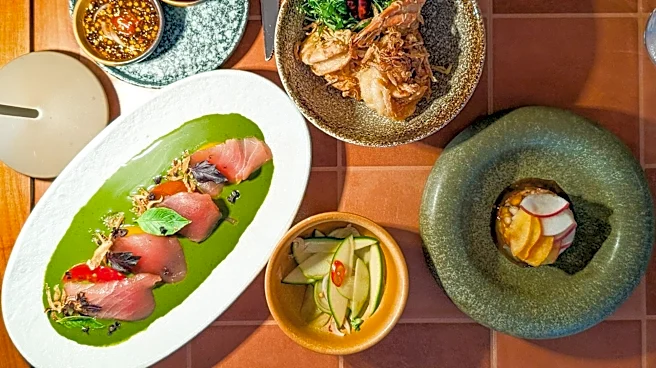
Just eight days after opening, the kitchen was in excellent stride. Unlike Le Du and Nusara, Saam serves an a la carte menu, with dishes that would surprise even avid Thai food fans in the States. In lieu of the usual pad Thai, for instance, there’s a shareable plate of khao soi, its thick wheat noodles topped with shrimp, squid, mussels, and a gentle curry sauce. The sweet, familiar flavors of som tum (papaya salad) come through here in a minuscule mound of diced local peaches hiding chunks of marinated raw shrimp.
Spice-averse diners will have to endure some intermittent moments of intense chile heat, as everything comes preset by Tassanakajohn. Thin-sliced duck breast from Root Down Farm gets coated in a curry of shrimp, ginger-like fingerroot, makrut lime, and young coconut. Tassanakajohn’s secret weapon is his attention to the curries and pastes made every day from scratch with local ingredients.
For mains, you can get a salt-crusted baked fish (in our case, a good-sized branzino that might be enough for two to share) with spicy salsa-like pla ra and milder peanut sauce, plus lettuce and mint leaves we used to wrap individual bites, ssam-style. The grilled pork chop from Snake River Farms came with a dark au poivre-esque Northern Thai om sauce. Our table fought over the gaeng kua Manila clams with a red curry sauce that was marvelous simply spooned over jasmine rice. Desserts played on beloved Thai flavors: a bruleed meringue over ripened mango and sticky rice, a soft Thai iced tea cheesecake. A German riesling’s soft, round sweetness and tartness paired wonderfully with everything.

After dinner I sat down with the chef for a few minutes, and he told me that many visits to San Francisco with his wife over the years had given him an appreciation for the local produce and especially the breezy, cool weather. “I worked in New York, but it would be very difficult to do this there. You cannot easily buy [fresh] lemongrass or coriander root like in California,” he said. And LA’s hot weather is “too much like Bangkok,” he added with a laugh.
He’s hopeful for the success of Saam in San Francisco, given his long relationship with the partners. “It’s [challenging] because you have to train the team, and have the staff understand how I cook Thai food,” he said. Managing places on both sides of the Pacific won’t be easy, but you can tell Tassanakajohn cares about representing the best of his brand at Saam.
“I want to give San Francisco something different,” Tassanakajohn said. “I want people to feel that there’s so much more flavor to Thai food.” While San Francisco already has two Michelin-starred Thai restaurants — Kin Khao and Nari, both from chef Pim Techamuanvivit — Saam brings a welcome infusion of top-tier cooking from one of Thailand’s most renowned chefs. In Los Angeles, even with its sizable Thai population and diverse Thai restaurant scene, there’s really nothing approaching the sensibility, execution, and creativity of Saam.