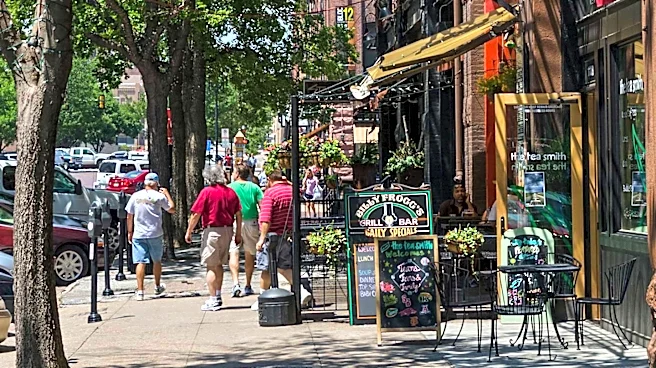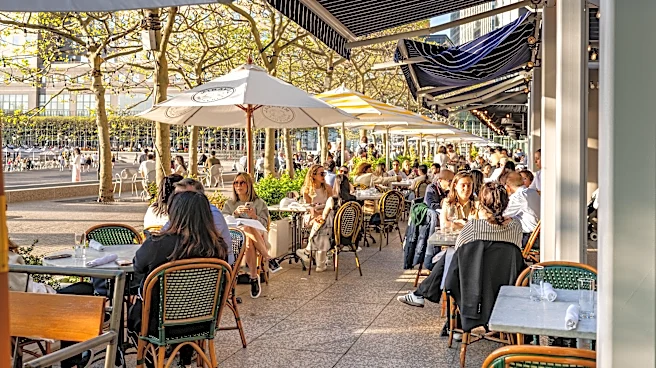










There was a time when outdoor dining was flourishing across New York City — during the pandemic because of public health, when restaurants, cafes, and bars could easily set up outdoor spaces any which way without going through much bureaucracy. But since
then, thanks to an overly complicated, lengthy, and expensive application process , the wild west of NYC outdoor dining is no longer.
Now, Mayor Zohran Mamdani is trying to make it way easier for restaurants and bars to open outdoor dining. His administration, through the Commission on Government Efficiency (COGE), announced several proposed amendmentsthat would ease outdoor dining applications.
Currently, restaurants and bars that want to apply for outdoor dining spaces have to get what’s called “revocable consent” from the Department of Transportation. And it’s a process that is convoluted, especially as restaurant owners have to wait in limbo for approvals while they can’t use those alfresco spaces for paying customers; others often just never bother trying. In March 2026, Hell Gate reported that only 411 restaurants have curbside dining and 1,235 restaurants have sidewalk dining for early April, both down from 400 and 1,500, respectively, from 2025.
During a public hearing held on June 22 in Queens, several restaurateurs called for getting rid of revocable consent. Thai restaurant mini-chain co-owner Pei Wei said outdoor dining has become “a luxury for the well-funded restaurant in a wealthy neighborhood from my point of view. They also have customers with higher incomes who can support those investments.”
At the same meeting, Helen Zhang, the co-owner of Dumbo restaurant Ziggy’s Roman Cafe, recounts her tale of paying big fees and deposits, and being delayed, “which added nearly two months to my timeline with little or no meaningful public benefit,” she said. If the revocable consent requirement didn’t exist, she would’ve gotten her permit in late April, but instead, she didn’t get it until June. “That’s about six-and-a-half weeks of lost outdoor revenue,” she said, “because of one administrative requirement.” She adds that she spent much more time than is documented in the process of filling out forms, working with politicians, independent contractors, and more.
The proposed changes for outdoor dining applications would, per a city rep, shorten the current approximate eight-month process to about three to four-and-a-half months. These include:
- Combining the separate sidewalk cafe and the roadway dining applications into one. (Currently, restaurants that want both sidewalk dining and roadway dining would have to go through separate review processes with their respective timelines and fees.)
- Get rid of the City Council’s right to call for votes on sidewalk cafe applications — something that isn’t required and doesn’t happen often, but currently adds time to the process to build in the possibility..
- The city is getting rid of mandatory hearings. If the Department of Transportation believes there needs to be a hearing, that’ll be announced in the official City Record.
- And since there would be no required hearings, they would nix the requirement for a business to pay for and publish a print ad twice in a daily and weekly newspaper for upcoming hearings about their outdoor dining proposals.
But are these proposals enough to make it easier for businesses to open outdoor dining spaces?
Megan Rickerson, the owner of Boreum Hill’s Someday Bar, had spoken at the June hearing about the financial burden of getting her sidewalk dining application approval, which totaled $36,000 with fees, paying her lawyer, advertising the proposed change, etc., along with the costs of running the business and paying the staff. So when she learned about these new proposals, she was glad that it’s something in the right direction.
“I guess I’m cautiously optimistic that hopefully with some of these changes, people will be more apt to buy in,” she tells Eater, “but a lot of the conversation is around the difficulty and the cost.” She mentions perhaps businesses shouldn’t have to pay fees upfront for a four-year permit. “While I think olive branches are awesome, I think it takes a little bit more than olive branches to fix the distrust,” she tells Eater.
Rickerson, who is also on the board of directors of the New York City Hospitality Alliance, talks about how these improvement suggestions were presented to former mayor Eric Adams’ administration, but nothing happened. “It’s frustrating to be like, ‘We told you this was going to be an issue,’ and it got shoved off. Now we’re having this conversation again, but I’m grateful that they are looking at the problems and being like, ‘Well, what can we try to do?”
She urges the importance of the city government making it easier for restaurants and bars to operate. “We’re in a city where the job market is meh, and people need work,” she says. “The longer it takes to get these places open and get these operators moving just means more days that people are unemployed and people are without work.
The commission will release the finalized proposals on Wednesday, July 22, after which it will vote on Thursday, July 23. Once approved, the ballots will be up for voting on Tuesday, November 3. So restaurants looking for a reprieve from the wait will have to wait until at least next year.