




You can tell a lot about someone by the way they talk about ranch dressing. Do they express Midwestern passion for the condiment, or coastal-elite distaste? Do they limit its usage to crisp iceberg lettuce salads, or do they become a jester of pairings,
drizzling the sauce over steak, pasta, and even cereal?
“I love ranch, but I’m also one of those nostalgic [kids] of the 1990s,” says chef McKenna Lelah of the Los Angeles Korean Italian restaurant Lapaba, where the yuzu kosho ranch that accompanies the fried chicken has been quickly gaining fervent fans. “I almost removed ranch from the menu after [hosting] a friends and family night,” she laughs, “because some of my colleagues weren’t sure if it made sense on the menu. But we kept it, and it’s been a hit. Kismet.” There are classic ranch elements — such as dill — in Lapaba’s ranch, which is served alongside its lollipopped fried chicken wings, but it’s made with creme fraiche for extra tang, yuzu juice for the acid component, and yuzu kosho for a hit of citrusy heat. “When I’m eating ranch,” says Lelah, “I’m mostly using the food as a vehicle to get the ranch to my mouth, you know? But I also don’t see it as a condiment. I see it as a main.”
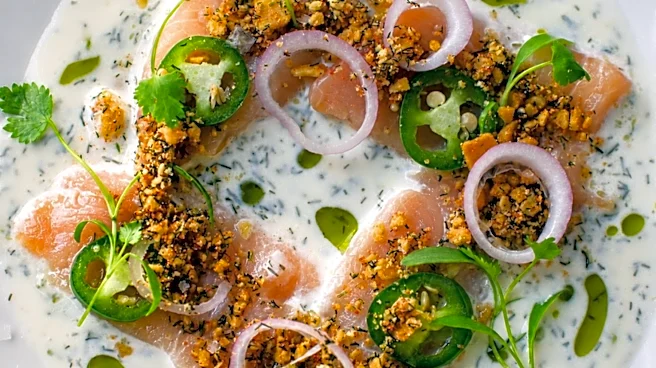
Lelah’s not alone. Across the country, chefs have been transforming ranch from an underdog condiment to a marquee menu item — often, one with a culturally specific spin or deeply personal flair. At Bistro Amasa in Santa Barbara, California, chef Julian Martinez consistently serves dishes that riff on Y2K comfort and snack food classics; at the moment, that includes a Cool Ranch Dorito-inspired crudo in which delicate cuts of hamachi are dotted around a buttermilk-lime creme lake with garlic oil, masa, cilantro, and crunchy serrano pepper slices. As Eater reported in 2024, creative takes on ranch have been popping up all over the Bay Area, from San Francisco seafood destination Popi’s Oysterette’s “fancy ranch” (dill, chives, rice vinegar, and black pepper) to the wasabi ranch at Prubechu, the city’s only Chamorro restaurant. Meanwhile, at the Thai restaurant Crispy Gai in Portland, Maine, diners can dunk their fried chicken into Nam Jim Seafood Ranch sauce, which has the creamy, buttermilk base of classic ranch, but the kick of garlic, green chile, lime juice, fish sauce, and cilantro in a nod to traditional nam jim seafood sauce.
Ranch dressing was first invented in 1954 by a contractor named Steve Henson, with the original recipe consisting of buttermilk, mayonnaise, and various herbs and seasonings. Initially, Henson served the dressing to his workers to help liven up their salads; as its popularity soared, he began serving it out of a rustic, 1800s-stagecoach-turned-restaurant called Cold Spring Tavern in the Santa Ynez mountains of California, where it’s still served to this day. Early DIY packets of the sauce, which were whipped up at Henson’s Hidden Valley Ranch (yes, a real place), were marketed as a party dip — a foreshadowing detail of its crowd-pleasing talents.
With the exception of some competition from Italian dressing in the 1990s, ranch’s popularity has been consistent ever since, and experienced an upswing post-COVID lockdowns. According to the consumer research firm Mintel, condiment consumption went up in the pandemic — a time, if ever there was one, for shelf-stable products to shine — and simply never went back down. The current Rancheissance rides that wave, alongside that of the Great Chickening, a term writer Bettina Makalintal coined last year for diners’ increased appetite for comfort foods such as rotisserie chicken and chicken tenders, which, of course, beg to be dipped in ranch. One of New York City’s buzziest reservations this summer has been at Cleo Downtown, a rotisserie-chicken-focused restaurant, and the latest endeavour from the co-owners of Montague Diner and Margot (the latter of which famously hosted a Charli XCX afterparty). The Lebanese-inspired restaurant serves up twists on comfort food such as cornbread, harissa honey butter, and, notably, a labneh ranch.

Then came the 2026 FIFA World Cup, which gave ranch a refreshed international stage. Hype around the condiment was rekindled amid a general increase of interest in American food and cultural cliches; amongst them, the German soccer fan who went viral for his Waffle House experience (“Great food, great prices, and friendly staff. 10/10, we will be coming back”), and the Scottish tourist who vlogged about the perplexing joys of cream soda. Most of all, however, there were the my-suitcase-overfloweth-with-ranch videos. Interestingly, the BBC called the bluff on the supposedly organic rise of the tourist ranch obsession, reporting that the virality of the condiment was ballooned by users harvesting and reposting older ranch videos. Still, that virality had material consequences: Kraft created special TSA-compliant mini bottles of Hidden Valley Ranch, and Buffalo Wild Wings launched Poppin’ Ranch, a Pop Rocks-style candy meant to recreate the sensation of crispy, ranch-covered wings. Suddenly, the condiment wasn’t just raising eyebrows on personality-heavy menus, but making headlines in major news outlets that declared “ranch won” the summer.
Nonetheless, ranch remains a culinary punching bag. Ranch consumers on Reddit talk about its potential as an economic flavor savior, albeit with visible embarrassment; “It goes with everything savory and helps to make up for the complete lack of flavor that most foods have,” one user responds to another in this post who questions their taste in food, adding, “If I weren’t broke…” In another Reddit post, a user writes, “I have a thing called ‘dressing theory’ where I can predict people based on their preferred dressings. In my ‘studies’ ranch users are base-line people.”
Lelah thinks the enduring duality of ranch’s reputation can be explained two-fold, and brings up the fact that she grew up in a house where some condiments were simply on the table every night, regardless of what was being served. “As a chef,” she says, “you want to [innovate], and you can deal with a lot of insecurity. But nostalgia is important. What people feel tied to is important.” For many people, ranch clearly makes eating more enjoyable. Easy. Perhaps the admission to loving that ease has always been the problem, especially in a country with foundations in a morally-imbued, self-flagellating Calvinist work ethic.
“There’s a weird shame around ranch,” Lelah says, “But, ultimately, you don’t really have anything worth keeping on your menu unless it resonates with your diners, right? That’s the whole basis of the restaurant business. Of why we do it at all.”