






Saam is the first-ever U.S.-based restaurant from acclaimed chef Thitid “Ton” Tassanakajohn, known for his Michelin-starred Bangkok restaurants Le Du and Nusara. This is a much more casual endeavor than those two restaurants, offering a glimpse into Tassanakajohn’s
style of food at an approachable price (and without the international flight). Saam means “three” in Thai; it refers to the restaurant partnership between Tassanakajohn, Tee Atthapon, and Ty Choosuwon, and the three elements of Thai cooking: spicy, sour, and salty. Check your expectations at the door: This isn’t the place for pad Thai or tom yum. Instead, open yourself to some new dishes and bites that pack a punch (in a good way).
The vibe
The Saam dining room is relaxing, pairing cream and terra cotta colors with warm woods. Terra cotta-colored fish scale tiles announce the curved bar area, with a selection of wine bottles and glasses taking up space on the lighted back bar area. Built-in shelves around the restaurant display examples of pottery and jarred produce, a fun place to rest your eyes during dinner. The tables were either made of wood or came topped with square tiles in various shades of terra cotta, with comfortable rounded chairs in patterned fabric or rattan.
What to order

- For starters, the tuna za jin ($35) stole the show with its dramatic green coriander sauce, thick wedges of tomato, and slices of leaner akami tuna on top. Fried shallots added extra texture to each bite.
- We also ordered the shrimp tartare ($20), which comes with a three-dot indicator for spice levels. Indeed, it was very spicy — our server thankfully came over with extra napkins to wipe the sweat from our brows — but as it is served without any bread or chips (a vehicle, if I may, for the tartare), it felt less designed for sharing.
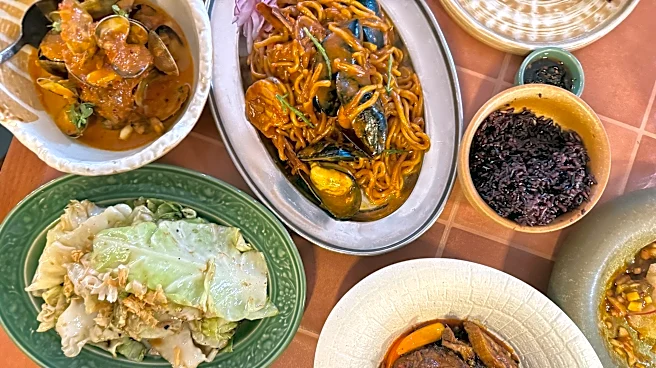
- From the curry section, the gaeng kua clams ($29) were the favorite at the table of all the main dishes we explored. Made with Manila clams, the dish arrived in a curry, with bits of the curry paste clinging to the shells and infusing it thoroughly. It was somewhat spicy, but nowhere near the sweat-inducing volume of the shrimp tartare; take this with a grain of salt, as my dinner traipsed through various heat levels and may not match your own personal tolerance. With the clams and curry spooned over jasmine rice, the dish really takes off.
- The pad ped ped ($39) was another great dish, featuring pieces of duck with curls of young coconut meat, cooked in a shrimp paste. The server suggested eating bites of the duck with pieces of the young coconut meat, and I found that I really enjoyed the combination, which adds a nice bit of cooling sweetness to the duck flavors (and the two-dot spice level). This dish is cooked in shrimp paste and shares a similar-ish flavor profile to the clams, so my advice would be to pick this or the clams, depending on personal preference. Next time, I’m hoping to try out the restaurant’s gaeng khaaw, a vegan dish with cauliflower, mushrooms, and pearl onions, in a white curry.
- The ka lum pad nam pla ($19) is a cabbage side, cooked with fish sauce, and it was a lovely addition to the table that added a much-needed mellow note to the meal. The salty punch of fish sauce worked with the softened, sweet cabbage pieces.
The drinks
For now, the drinks menu is kept to just wine by the bottle and glass, plus a small selection of beers. The wines come from many corners of the globe, from the Sonoma Coast and Suisun Valley to France, Italy, and South Africa. There are just a handful of beers, with three hailing from Thailand — Singha, 7 Bangkok Craft Brewing Co., and Pheebok Beer — with additional options from Almanac Beer Co. and a nonalcoholic option from Hitachino. On that note, the beverage menu also offers three nonalcoholic wines, plus a pandan spritz, Thai iced tea, a lemongrass drink, and sodas. The plan is to roll out a true cocktail program eventually, but for now the menu includes three “cocktails” made with wines, such as the Saam Royale, made with raspberry wine, sparkling wine, and fresh herbs.
Insider tip
Saam offers sato, an ancient Thai sticky rice wine that can be tough to find at restaurants in the States. At the time of my visit, the server said they were waiting on their next shipment from Thailand, so it’s best to ask if it’s in stock if you’re looking to try some at your meal.