



In 1985, Rick Rosenfield and Larry Flax capitalized on the growing popularity of “California pizza” when they opened their Beverly Hills restaurant California Pizza Kitchen. They hired chef Ed LaDou, who expanded on Alice Waters’s “gourmet pizza” ideas
from Chez Panisse and went on to invent the iconic smoked salmon pizza at Spago and now-ubiquitous barbecue chicken pizza at CPK. LaDou, who later opened Caioti Pizza in Studio City (still in operation), died in 2008 but left behind a legacy of California-style pizza using seasonal produce and ingredients from global cuisines. You can still find this style at places like Tony’s Pizza Napoletana in San Francisco, where famed pizzaiolo Tony Gemignani breaks down the menu into distinct styles — Neapolitan, New York, Detroit. The California pies (12-inch, wood-fired, multigrain dough) come with toppings like carnitas, goat cheese, and quail eggs.
Sign up for the Kang Town newsletter
This post originally appeared in my Kang Town newsletter, where I cover all things dining in the West. Sign up here to get my latest stories.
Now I think we’re seeing the quiet evolution of the California style with a new crop of Los Angeles–area restaurants that employ advanced fermentation techniques (longer than 48 hours), and even more unexpected toppings, like raw shaved mushrooms, cumin lamb, and candied guanciale. I don’t think it’s an accident that most of the drivers of this new California pizza style have been classically trained chefs.
Pizzeria Sei opened in 2022 with a fairly straightforward homage to Tokyo-inflected Neapolitan but has begun serving two additional pizza styles at its new Palms location: fried montanara and ultra-crispy scrocchiarella. Both display a clear California pizza influence. Chef William Joo got his pizza training at neo-Neapolitan spots Ronan and Pizzana but also spent formative years at three-Michelin-starred Providence. In Los Angeles’s Arts District, chef Joshua Skenes (who founded fine dining restaurants Saison and Angler in San Francisco) expands on his original work at Leopardo with an even more burnished, high-hydration pie at Lynx, which I covered a few weeks ago. Skenes’s pizzas elude an established style but boil down to a focused ingredient hyperseasonality (like the sweetest imaginable mini tomatoes) and Michelin-level finesse on gravity-defying crusts, priced at nearly $30 a pie.
Down in the coastal Orange County enclave of Dana Point, chefs Chris Decker and Michael Vakneen, both seasoned competitive pizza champions, partnered with hospitality veteran Donna Baldwin and pizzaiolo John Arena to open Truly Pizza, whose toppings lean more traditional but whose airy round and square crusts exhibit deeply developed fermentation and structure. And from veteran chef Joey Booterbaugh, Folks Pizzeriadebuted in Costa Mesa in 2019 and expanded to Culver City earlier this year, topping a high-hydration dough baked in gas deck ovens with peak summer produce like corn, sunchokes, and Brussels sprouts.
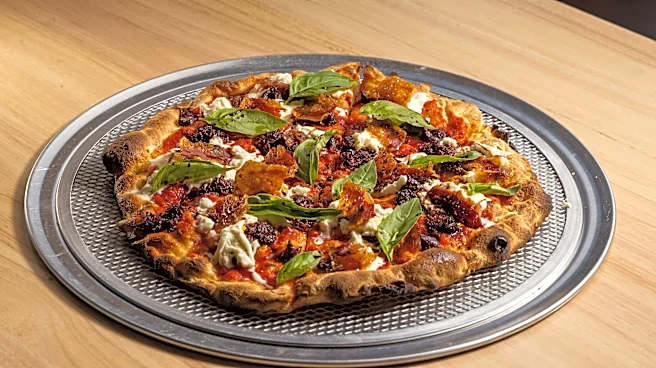
The new wave of Southern California pizzerias feels more rooted in Ed LaDou’s groundbreaking pizzas from the 1980s than anything from the East Coast. But while LaDou’s and California Pizza Kitchen’s crusts were more functional than the main feature, all of the new-wave spots offer complex dough structures that come from very long, sometimes wild (or sourdough) fermentation. Pizzeria Sei’s scrocchiarella defies the bounds of sweet, salty, and spicy with its inventive topping mix of candied guanciale, aged balsamic, melty stracciatella, and gochujang romesco — all atop a cracker-like, cocoa-colored crust. It’s a gnarly assemblage that might turn off traditionalists, but I find it incredible.

“I started by imitating Japanese Neapolitan, but you gotta cook based on where you are. California is famous for fusion,” says Joo, who found inspiration in the Korean chulpan tteokbokki of his youth for the caramelized gochujang sauce. Lynx’s mushroom pizza dusted with very aged cheese would probably tickle LaDou’s funny bone if he could see it, because it offers an unimaginable combination of snow-like texture and the satisfying spongy bite of shaved mushrooms.
Truly’s off-menu Romana pizza showcases glorious crushed tomatoes and feathery curls of pecorino cheese over a lahmajune-like crust. “We’re more experimental out here. They would probably hate this in New York,” says Truly co-chef Chris Decker. “The piped herb ricotta with mushrooms comes from my vision of walking through a foggy forest.” Folks’ blistered, puffy crusts have more heft than the ones at the three other pizzerias I mentioned, but they’re better at supporting combinations like seasonal veggie white pie with fontina and taleggio cheeses, sweet roasted onions, and almost fruity Jimmy Nardello peppers.
I wouldn’t say the innovative crust and seasonal toppings approach is unique to Southern California; plenty of pizzerias on the West Coast embrace it. Artisan dough with seasonal ingredients was also popularized at Portland, Oregon’s Ken’s Artisan Pizza and Full of Life Flatbread in Los Alamos, California. Still, there’s a notable lack of inhibitions when it comes to topping combinations in this recent wave, as chefs deftly use the global pantry in a way that feels less on-the-nose than the Thai chicken or Peking Duck Pizzas of California Pizza Kitchen. It remains easy to look to Southern California for the bleeding edge of any culinary movement, even pizza.