




This excerpt was originally published in Pre Shift, our newsletter for the hospitality industry. Subscribe for more first-person accounts, advice, and interviews.
When Chanita Chayaluk decided to open her restaurant and wine bar Taan, she hoped “to showcase
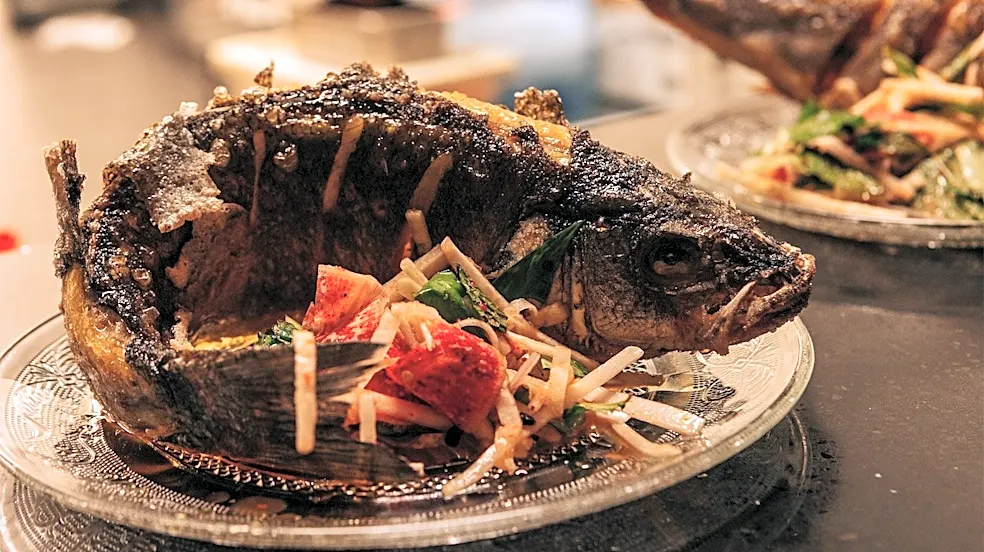
Thai food in Chicago in a different light,” she says. “The first [wave of] immigration of Thai people in Chicago was in the 1970s, and a lot of [Thai] food here still feels like it’s from that time.” In September, she opened with a menu including miang, a Northern Thai dish made with fermented tea leaves, and a whole, deep-fried fish in a fish-sauce caramel.
Another quirk of operating in Chicago? “We’re still pretty ‘Midwest nice,’” says Chayaluk. “We try to overaccommodate and appease the masses.” In the early days of service, guests made frequent requests for substitutions or accommodations due to preferences and dietary restrictions. “It would slow down service and speed, and that was not just affecting us, but the guest experience in many ways,” she says. With a small kitchen and staff, it was hard to keep up. “It just felt like we were Chipotle.” When a guest asked for green curry mussels “but without the mussels,” it was a turning point.
Chayaluk implemented a limited substitution policy at Taan, stating on Instagram that ingredients like fish sauce and shrimp paste are “the fabric that defines our cuisine,” and therefore, could not be removed from any dishes that include it.
A decade or so ago, substitution culture was generally frowned upon and derided. Recently, though, some restaurants report it bubbling back up—and in full force. There’s a swirl of factors that got us here: Lunch slop bowl spots primed customers to expect a detailed level of customization with their orders. Unreasonable Hospitality pushed an intensified “customer is always right” mentality. And influencers entering the food-review space have made criticism of anything—including a restaurant choosing not to honor certain dietary preferences—ripe for an immediate, viral takedown. Couple all of that with the fact that it is hard to keep a restaurant afloat these days, and you’ve got several operators giving in, whether to specific requests, or to altering their menus altogether (see also: the great de-spicification of menus.)
At the same time, restaurants like Taan and New York’s Ha’s Snack Bar—which proudly announces in its Instagram bio that everything contains fish sauce—are standing their ground.
For Lom Wong in Phoenix, Arizona, substitution and modification requests have ramped up after receiving national attention. Chef Yotaka “Sunny” Martin was recognized by the James Beard Awards last year, and the restaurant was named a Michelin Bib Gourmand in August. “[After the award,] we had more guests than we were used to picking things apart. They were asking us to modify dishes or not understanding our service style and why we weren’t coursing things in a European fashion,” says chef and co-owner Alex Martin. “[There is a] European distinction of what an award-winning restaurant looks like, so people equated that recognition with a white-tablecloth restaurant. We were just like, ‘Well, that’s not who we’ve ever been, and it’s never what our restaurant will ever be.’”
Like Taan, Lom Wong took to social media to set expectations, including that the restaurant would not “make substitutions simply to make a dish more familiar,” and that certain dishes might differ from Western expectations of them; beef might have gristle, fishes will be whole, and both choices are fully intentional. “Sunny is our guiding light of cultural context,” says Martin. “[She advises, considering if] changing something about a dish compromises the integrity of the dish.” For example, the mango salad can be ordered with the shrimp on the side, but the restaurant won’t remove beef or shrimp paste from dishes that necessitate them.
Chayaluk takes a similar approach at Taan; there is always a vegan, gluten-free option (currently a fried rice) that she describes as a “catchall” for those who can’t have other items on the menu. “We make sure that that dish is also really, really good and substantial; it’s not just an appetizer,” she says. “It’s not an afterthought.”
Staff at both restaurants are encouraged to uphold the boundaries, which both Chayaluk and Martin say are as much in place for protecting their staff’s peace as they are for ensuring quality control for guests. While there has been some backlash, the expectation-setting at the start of the meal (and before, thanks to the social media posts) has for the most part been taken well. “The way we explain [our policy] to guests is kindly saying we respect your preferences, but they’re your preferences,” says Martin, “and steering them toward dishes on the menu that might already align with those.”