






When San Francisco’s Restaurant Naides opened in December 2025, just one Filipino restaurant in the United States had earned Michelin-starred status : Kasama in Chicago was awarded two stars in November 2025. But within just six months, Restaurant Naides has
joined the California guide with its first star, thanks to chef Patrick Gabon’s vision for fine dining Filipino food, and partner Celine Wuu’s commitment to hospitality and the restaurant’s dialed-in beverage program.
Restaurant Naides’s takes on Filipino cuisine are certainly not traditional, but Gabon transports diners to the heart of Filipino flavors through techniques mined from his time at San Francisco’s Sons & Daughters and Restaurant Milka in Slovenia. The dishes hit hard with sour, salty, punchy notes, and it’s all meticulously plated into a nine-course meal. Wuu’s drink pairings are an excellent complement; while there are wines, the standout here is Wuu’s nonalcoholic options, which zigzag between ferments, shrubs, and infusions with ease, holding up to, and even lifting, each course. At more than $200 per person, this meal is an investment — but for my money it’s well worth it for a splurge that’s in a different class.
The vibe
The restaurant is minimally dressed with black and white photos and artwork throughout, but the open kitchen is at the heart of the space, where Gabon and his team meticulously plate each bite. It’s easy to catch glimpses of the kitchen action from certain tables, but for other parts of the restaurant, the meal can feel intimate, allowing for the space of conversation amongst parties without distraction. The marble tables continue the (at times) stark feel of the restaurant, but the hospitality team keeps the environment warm by answering questions or introducing drinks and dishes at each turn.
What to order

- Some of Restaurant Naides’s nine-course menu ($235, plus tax and 20 percent service charge) may change, but what stood out during a July 2026 dinner was the bagoong course, centered on Filipino salted, fermented shrimp paste. Slices of cooked chayote, plated in a circle, were topped with duck cracklings and a rounded spoonful of caviar, while the intensely salty bagoong was turned into a sauce and mellowed with cream and moringa leaf oil. The presentation was lovely, but the textures and flavors also played well with each other: the crunch of cracklings, the creamy shrimp flavor of the bagoong sauce, the tender chayote, and the saline burst of caviar adding dimension to each bite.
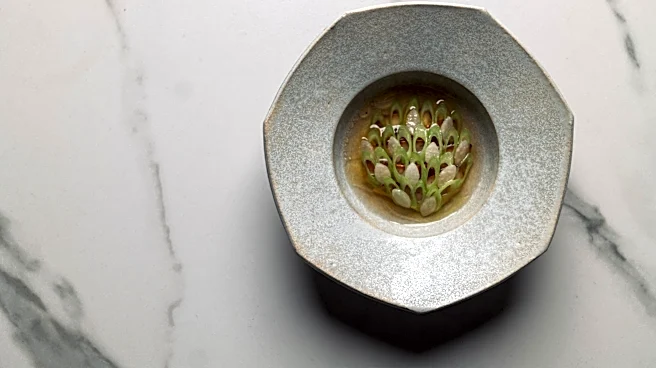
- If any dish has become synonymous with Restaurant Naides, it may be the sinigang, the sour Filipino soup typically made with tamarind. The base here is abalone and scallions sliced on a bias precisely arranged like fish scales. It’s bathed in dry-aged beef broth soup base tableside. It may read as a shockingly sour dish for those who haven’t tried sinigang previously, but its sharpness works against the chew of abalone and the heft of the beef broth that comes out underneath.
- The bread course is modeled after pandesal, a Filipino bread roll that gets somewhat of a brioche treatment by Naides. It’s a DIY course that allows diners to pick and choose between three accompanying spreads: chicken liver, chicken sisig, and atchara (Filipino pickled vegetables). It skews funky from the chicken liver, crunchy from the sisig, with sour notes from the pickles that are arranged at the will of the diner. The bread will arrive tantalizingly warm, allowing the spreads to soften into the bread upon contact.
- While the adobo main course made with aged duck might capture most of the attention, the kaldereta is what stood out to me as a Filipino American. It’s a tomato-based stew that’s typically made with goat, vegetables, and liver paste, as the menu notes, but here Gabon used spiced lamb neck. It’s not what one would expect from the dish, especially with the inclusion of green olives and salted unripe blueberries, but it hits just the right notes of the original dish, an undertone of game from the lamb, plus subtle salty notes from the olives.
The drinks
Restaurant Naides offers both a wine pairing ($145) and a nonalcoholic option ($110), but like other critics who’ve visited the restaurant, I’m here to say the nonalcoholic drinks are outstanding. Those flavors dial into the courses with more precision than I suspect a wine pairing would, thanks to a wider array of flavors available beyond the grape. Think: fermented kiwi juice infused with celery and galangal; tomato water seasoned with guava leaf, raspberry, and sage; and rooibos with habanero cordial. Add to the fact that the drinks also help the kitchen stay sustainable, as seen in a tepache made with pineapple and kiwi skins, and fermented with malt, to give the drink a beer-like mouthfeel.
Insider tip
If diners prefer wine with their meal but want a taste of the nonalcoholic pairings, Naides offers a 50-50 option ($125).
The takeaway
Restaurant Naides is a standout fine dining restaurant in San Francisco. Not only does it nail all of the hallmarks of the genre, including warm hospitality, precision dishes, and showy tableside presentations, but it upholds the salt, sour, and funk that Filipino dishes are rooted in. Naides challenges diners to go beyond what they know of fine dining (typically, European- and French-leaning) and to learn about a cuisine in a new context, without diluting the food’s dynamic flavor. It’s not an inexpensive meal, by any means, but if you have a special occasion coming up and you’re ready to be surprised by a fine dining meal, make your reservations now.