






This excerpt was originally published in Pre Shift, our newsletter for the hospitality industry. Subscribe for more first-person accounts, advice, and interviews.
Now Open is a yearlong series celebrating some of 2026’s most exciting new restaurants. Throughout
the year, we’ll check in with teams in Chicago, New York City, and Washington, D.C. to hear what it’s really like behind the scenes of a buzzy opening. Then, we’ll host exclusive meals at these restaurants as part of Dinner Party, presented by Capital One. Read along for challenges, candid reflections, and advice from the proprietors behind some of the country’s hottest new openings.
All Well comes from the team behind Oriole, a fine dining restaurant that’s been recognized by both the Michelin Guide and the James Beard Awards. At the restaurant, “you feel comforted when you walk in and know that we’ve dialed in the food and the cocktails,” says Larry Feldmeier, the restaurant’s executive chef and co-owner. Even the name comes from having that kind of rapport. “When I was working at Oriole with Noah [Sandoval, All Well’s chef-partner], when one of us was out of town, we’d check in with each other, and we’d text ‘all well.’” he says. “It was a way to see how things were going at the restaurant and see how everyone was doing. We were like, We should just call the restaurant that.”
Mary Anne Porto: You opened in April—how has it been so far? Any challenges?
Larry Feldmeier: The opening—after actually opening the doors—has been pretty smooth. Leading up to it, the week before, things we had ordered months ahead of time—glassware, plates, things like that—all of a sudden, we were told we couldn’t get those [in time]. So there were hiccups. But we really lucked out with getting a good team in here.
How do you build a good opening team?
A lot of it has been more word of mouth, like friends telling other friends to come work here. I had not met Mary Christie, the GM, but Noah had worked with her years ago and said she’d be the perfect fit, and she was on board. I had also worked with our bar director Maxx [Kleiner] at Oriole, and we had always had a great relationship, so he was one of the first people I reached out to to see if he’d be interested in the program. Our sous chef is also someone I’d worked with. From there, it was a bit of a spiderweb, where they reached out to people who were on board. [The hiring process] involved [us] covering [some positions] until we had everyone that we needed. Some of our team didn’t start until the day we opened because they were coming from different places, so that was a bit of a challenge.
For the employees who start on opening day, how does that work? Do people get super quick training?
We have pretty minimal training. We got the space in January and didn’t start a lot of work on it until February. In February and March, we got construction done and equipment in. Once that was done, [at the] end of March, we were like, “We basically need to do friends and family in two to three weeks.” So it was a bit of a time crunch. We hired [most of the team] the first week of April and did friends and family the following week.
[Training] was kind of trial by fire. With the management we have, we knew we’d be working stations, getting things set up and organized the way we wanted. Then when people started, we could say, “Here’s how it goes.” It worked out well. There are other places where they’re doing six weeks of training at new restaurants and sometimes I think it’s almost easier to get thrown right into it, especially if you have a group of talented people that know what they’re doing.
That probably also helps shape the processes, to see what works best for everyone.
A hundred percent. Even setting up the lineup. For the first couple weeks, we were moving and setting up new stations in our back kitchen. It’s a lot of learning as we go, building together.
When you were thinking of opening All Well, were you intentionally trying to make something different from Oriole?
That was one of the biggest things we talked about, making sure it wasn’t just Oriole 2.0. It’s something me and Noah wanted to do. We have very similar styles of food, but we wanted something completely different.
In the beginning, a lot of the clientele—probably like 60 percent—were Oriole regular guests. Now it’s starting to balance out. But I also tend to think that there are people who always lean toward tasting menu kinds of restaurants. [Making sure guests know All Well is its own thing] is still something we struggle with a little bit. But I think as time goes on, All Well will set its own identity.
Can you tell me a little bit about how you came up with the menu, and whether you approached that differently than you would at Oriole?
This is another cheesy thing, but the biggest considerations we had were making sure everything tasted good and was done properly. It’s a comforting space, but it’s not something where we’re trying to tell a story of like, Here’s your childhood memories, reimagined on a plate. It’s just well-done food, things we really want to eat when we go out.
I think one of the biggest differentiating factors here, versus at Oriole, is that there are some dishes that are a little less refined. For example, we do bigger family-style pasta dishes, or serve fried fish at the bar. We want people to realize that this isn’t uptight. It’s fun, and you can be loud and messy.
Is there a dish that stands out?
That family-style pasta course encompasses what we want to do here. It’s a stuffed pasta with a Délice de Bourgogne and potato filling. It’s glazed in beurre monté with a bunch of English peas and a little bit of Banyuls vinegar and pea tendrils. We serve it in a copper pot with sourdough toast from Milli bakery here in Chicago. That gets lathered in buckwheat honey butter with puffed greens on there for texture. We also bring a little bit of broth on the side made from smoked chicken. You get bowls at your table, so the idea is that you can scoop the pasta in your bowl, add broth if you want, and dip your bread in there. It’s pretty tasty. It’s something that maybe you don’t notice when you’re eating it, but there’s a lot of technique behind it.

You also have a bar with food available until midnight a la carte. Did you always know you wanted to do that, and who do you serve on that side?
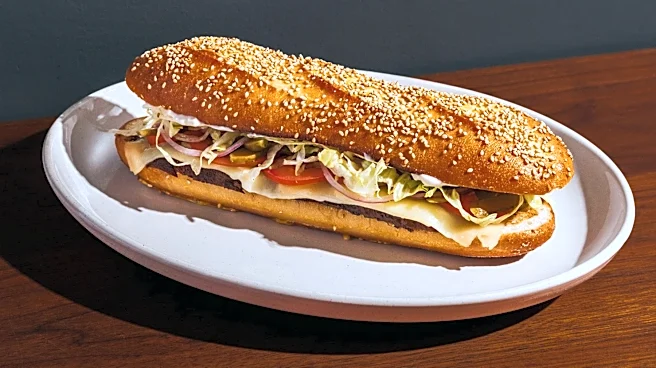
We had a pretty loose idea of what we wanted to do, but when we looked at this space, which is set up as a pretty long room with pillars down the middle, it almost naturally broke into two rooms. We wanted to be a space where, yeah, you can come in and have a five-course meal, but also, we wanted people in the neighborhood to be able to grab a sandwich or have a drink before heading home.
We’re in probably the most popular food area downtown, so we also wanted cooks to be able to come and have food after work [at the bar.] Five, 10 years ago, all of these restaurants were open until 1 to 2 in the morning, and nowadays it’s almost impossible to find anything available after 10 o’clock—or at least anything decent. We wanted to do a little something for everybody.
What’s something they don’t tell you about opening a restaurant that more people should know?
Have lots of money. [Laughs] I think the biggest thing, for me, is the food is the easiest part; the business is the hard part. The more you can actually understand the financials and what it takes and costs, the more successful you’re going to be. How good your food is won’t matter if you’re not making money.
How did you figure that out?
I’ve been doing this for 20 to 25 years now. I love fine dining; it’s probably my favorite thing to do. When I was younger, I really wanted to open a place. But I also worked at some hotels for a couple years. Working in those more structured, kind of corporate places may not be as fun, but those are the places that are the most organized, that have P&Ls, and that really teach you the basics so you can comprehend everything that goes into a restaurant. For me, doing some things outside of what I anticipated doing taught me a lot.