



Currently, there’s a four-year waitlist to score one of the six seats at chef Yasuhiko Mitani’s Yotsuya sushi counter , the famously inaccessible, introduction-only restaurant he opened in Tokyo 20 years ago. In New York, it’s considerably easier to eat Mitani’s sushi.
All you need to do is hop on Tock and book seats for his newest Midtown restaurant — for a price.
In May, the chef quietly opened Mitani New York, his first U.S. restaurant, inside Midtown’s Lotte New York Palace hotel (455 Madison Avenue, at 50th Street). The seasonal dinner tasting menu costs $700, including tip, for roughly six appetizers and 10 to 12 pieces of sushi. The meal is built entirely around Japanese seafood sourced at fish-market auctions. At its core is what he calls “Mariage,” Mitani’s approach to pairing courses with wines, sake, and tea.
Serving wine with sushi is hardly new: High-end counters including the Upper East Side’s Sushi Nozand Midtown’sJōjihave incorporated serious French wines into their omakases for years. What distinguishes Mitani is the caliber of what’s poured by the glass — and how those drinks transform each course. At Mitani, the pairings include aged Champagne, Burgundy, and Sauternes, with bottles such as 2002 Cristal and 1981 Château d’Yquem opened for individual pours.
Mitani’s original restaurant in Japan holds a Tabelog Gold award. He opened it in 2006, followed by Kioicho Mitani Honten in 2016 and Kioicho Mitani Bettei in 2021. Regulars book Honten about a year ahead and Bettei about 10 months out.

Why diners can get a Mitani reservation in Manhattan
Mitani New York has two private dining rooms, each with a six-seat, L-shaped hinoki counter. Executive chef Kazuya Tsurta leads the cream-colored Oh Room. He spent five years at Kioicho Mitani and works alongside another Mitani alum, Daichi Shimamiya. Behind the counter, panels conceal a traditional Japanese refrigerator that cools using blocks of ice rather than electricity. The adjoining Koku Room counter is surrounded by charcoal-colored earthen walls. When Mitani is in New York, roughly three times a year, he works behind both counters.
There are two Mariage options. The entry-level one adds $800 to the $700 menu, bringing dinner to $1,500 per person; the premium version starts at $2,000 and can go higher based on the selections and diners’ requests. Yes, it’s an astonishing amount of money to spend on dinner — you could fly round-trip to Paris for less. The draw is experiencing how Mitani uses those wines to unlock flavors between food and drink, something he’d argue no other sushi counter in New York is doing at this caliber.
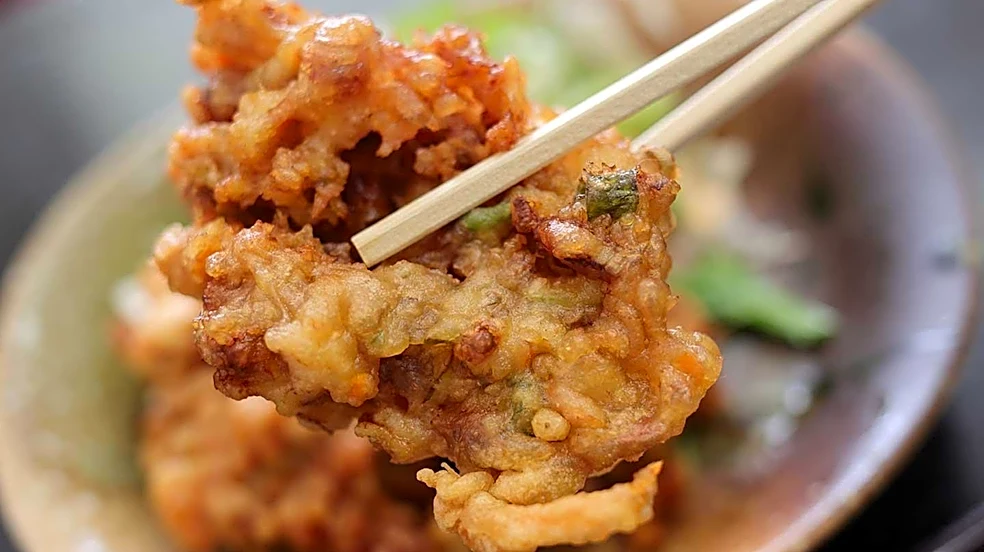
A Mariage meal might begin with kuruma ebi, briefly fried so its center remains raw beneath a tissue-paper-thin coating of batter, alongside 2002 Cristal. Fujinosuke salmon sashimi topped with Japanese black caviar might follow, alongside Juyondai Bessen Morohaku, a softly sweet junmai daiginjo sake. The sake’s sweetness offsets the salty caviar and rich fish.
Expect around six otsumami (small seasonal opening dishes), such as fried bafun uni beside a 1981 Château d’Yquem, part of the Premium Mariage. The uni’s salinity and the wine’s saffron-like sweetness make the course taste almost like a savory dessert. A later bite could include otoro, akami, and chutoro with Emmanuel Rouget Vosne-Romanée 1er Cru Cros Parantoux 2018 (that can run more than $1,400 a bottle).
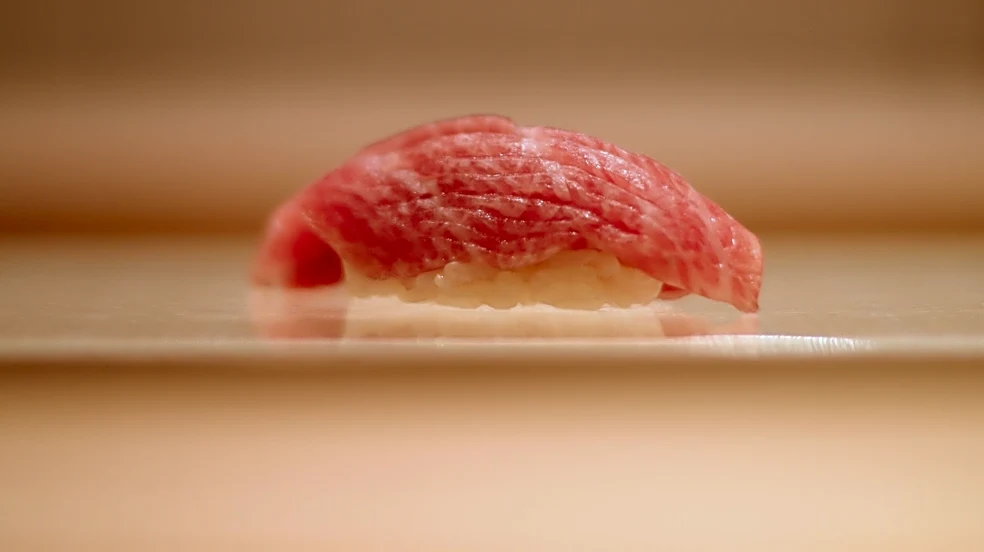
The seafood Mitani selects in Japan travels from Haneda Airport to his New York counter in less than 24 hours. For each piece of nigiri, he adjusts the temperature of the fish and shari (seasoned rice), creating what he calls a “temperature gradient.” For example, Mitani serves otoro nigiri at 59 degrees and shari at 68 degrees.
A wine, sake, or gyokuro tea accompanies each opening dish, followed by another pour every few pieces of nigiri, amounting to roughly nine to 11 drinks across an 18-course menu.
Mitani says he began considering New York five years ago to create opportunities for his apprentices and to take on “the most challenging place in the world to do business.”
For now, Mitani offers something his Tokyo original doesn’t: a reservation you can make without an introduction or a multi-year wait.