






Anthony Wang searched a long time for an ideal location for his first independent restaurant after he moved to Los Angeles in the 2010s to work with Michael Voltaggio at Ink and later Eric Bost at the excellent but short-lived Auburn. Wang eventually
took over the long-vacant Pok Pok in Chinatown’s Mandarin Plaza, carving out a sleek, richly hued dining room serving modern Chinese-inflected dishes to a smart Downtown and greater Northeast Los Angeles crowd. By the end of the last year, Wang realized he needed to change from the lengthy à la carte menu and diminishing check averages to something more feasible for smaller tables to take in.
So in February 2026, Firstborn went to a prix-fixe $68 menu that kept some of the favorites, such as beef short rib, duck breast, duck sausage, and tofu dumplings, offering the chile-laced fried chicken and a new mapo tofu as shareable add-ons. The impetus for the change also came from a strong dineLA performance that Wang hoped would lower the cost of entry for a neighborhood long associated with shifting economic dynamics. There’s even a new $40 bar menu with three courses that includes the popular Chongqing fried chicken.
This is to say that Firstborn has become more affordable than ever, but that has not necessarily translated to a full dining room. External factors like ICE raids, the Boyle Heights fire, and overall economic challenges have not helped. Still, Wang presses on like Carmy in The Bear, even as the restaurant lacks more widespread recognition for its expressive bistronomy told through a Chinese American lens. It’s very possible Los Angeles’s sandwich-and-Erewhon-obsessed diners haven’t woken up to Firstborn’s innate complexity.
If you’re intrigued, you should book a table and see what Firstborn continues to do well: refined takes on Chongqing fried chicken and sweetbreads-topped mapo tofu, plates of steamed fish with lovely braised mini artichokes and grilled tomato tartare swimming in tangy broth. The room, even when only partially full, emanates warmth and comfort — enough to bring me back for more.

What to order
- Start with toasted slices of sesame sourdough bread from Bub & Grandma’s, smeared with savory seaweed butter to get into the bistro mood.
- Lean into the menu’s produce-heavy plates: Sweet cubes of Weiser melons and rounds of poached leek nestle into a soy-almond vinaigrette almost like cold Korean soybean noodles, a refreshing and summery starter that may change once fall settles in. Roasted and raw tomato tartare topped with smoked trout roe and bathed in herb-oiled broth could be Wang’s most stunning appetizer, imbued with the ethereal umami.
- Tofu dumplings have been lifted from the original menu, served like Italian gnudi and boasting more fall-friendly depth of maitake mushrooms. Duck sausage, previously served in geometric rounds, now comes in a saucy meatball form, perched on sauteed Swiss chard.
- Butter-poached prawns in a chive-laden corn sauce would only be improved with the addition of about five more shellfish. But as is, it’s the embodiment of sunlit summer comfort.
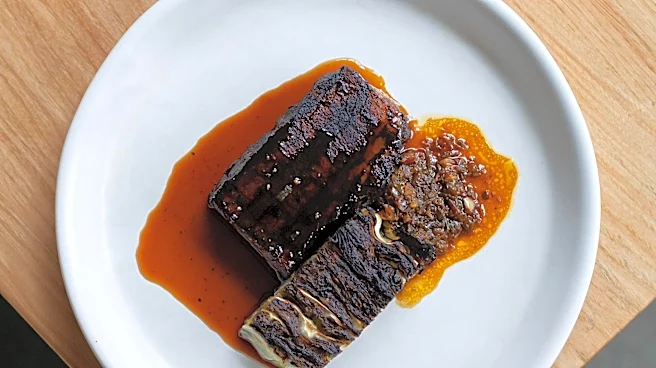
- Both the explicitly Cantonese steamed fish served over rice porridge and topped with purple artichoke and profound braised beef short rib are best entrees (the duck must be shared, but more on that later). I only wish the short rib, garnished with soft Jimmy Nardello peppers, had another layer of Chinese flavoring to take it up a notch.
- Sweet, snow-like melon kakigori, if available, is the optimal dessert.
Best for
Adventurous diners who don’t want to break the bank on a tasting menu; cocktail enthusiasts pining for award-winning bartender Kenzo Han’s inventive drinks like the non-alcoholic hojicha milk punch; fans of Chongqing fried chicken who don’t mind perching on the very friendly bar.
Insider tip
Dry-aged Liberty duck breast must be ordered for two people (meaning both diners must choose it as their third course). Combat this conundrum by also ordering the meaty, piquant, stomach-filling mapo tofu crowned with roasted sweetbreads.
The takeaway
Firstborn might be more of a second son at this point, given its rebirth as a mid-range tasting menu restaurant. Still, the newer format features Wang’s deft techniques and deployment of perfect in-season produce. There may be a desire from local diners who wish for stronger Chinese flavors in the dishes. Until then, the $68 price tag feels super digestible at a time when dining out in sit-down restaurants rarely comes under $100.