






When it comes to cooking talent, I think few people can deny chef Joshua Skenes’s ability. A meal I had years ago at his then three-Michelin-starred Saison in San Francisco, which began as a pop-up in 2009, ranks in my top five of all time; the “fire
beet in the sky,” a smoky, sweet whole beet topped with molten marrow, lives rent-free in my head.
I’m just as excited about his latest project in Los Angeles, Lynx, which my colleague Ben Mesirow described as part avant-garde art project, part new-school pizzeria, and part cocktail den. After I visited in late April, I was reminded of Skenes’s brilliance, particularly his ability to reinvent familiar dishes in an indelible fashion (a visit last week confirmed everything about my first experience). I hope it can leave a lasting mark on Los Angeles’s dining scene — but given Skenes’s track record in LA, I just want it to stick around.
Sign up for the Kang Town newsletter
This post originally appeared in my Kang Town newsletter, where I cover all things dining in the West. Sign up here to get my latest stories.
In 2019, Skenes opened Angler, his first restaurant in Los Angeles; it quickly became one of my favorites. The crispy architectural marvel of the Angler potato, the “bleeding” radicchio salad, roasted prawns, and soft serve topped with embered caramel remain core memories for me. But Angler closed a few years later, largely due to the pandemic and the restaurant’s poor location on the ground floor of the Beverly Center (the San Francisco original remains open).
Skenes moved on to open Leopardo in Los Angeles in mid-2024, showcasing his take on neo-Neapolitan pizza baked in an oven that turned faster than a record player, spitting out puffy-crusted pies that were so marvelous that my friend Raphael Brion, then restaurant editor at Food and Wine, considered it one of his best dishes of 2024. I ended up going to Leopardo an inordinate number of times, and we considered it for an Eater Award — until Leopardo, too, very quietly closed in 2025.
In 2025, Skenes opened Happies Hand Made in Los Angeles’s Arts District, initially oriented around a McDonald’s cheeseburger-like burger — but miles better. Then weeks later, the restaurant pivoted to chile-dusted chicken tenders and crisp waffles. But I, along with many of Skenes’s acolytes, adored Happies, until it closed without much warning after just a few months. Skenes says both Leopardo and Happies were projects he did as “favors for a friend,” but the explanation feels like there’s something he’s unable to tell me. Still, he says he’s all in on Lynx, the first Los Angeles project that he feels confident attaching his name to.
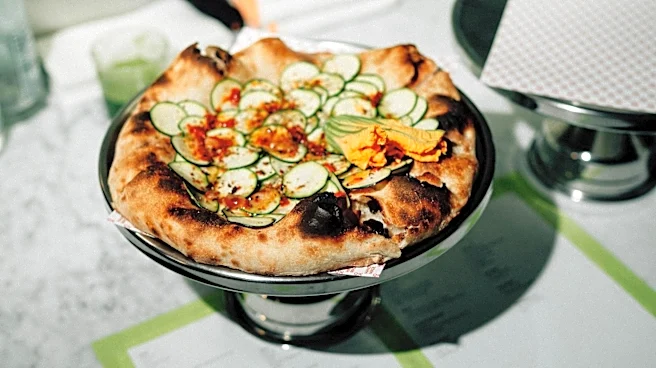
Located in the former Happies space, Lynx feels like an improved version of Leopardo (Skenes seems to love cats, but he regularly keeps his cute French bulldog in the dining room). The pizzas, which are baked on a conveyor belt oven one might see in Domino’s (according to Skenes, one of the “best ovens out there”), have a structure lighter than pan de cristal (a Spanish high-hydration loaf that shatters like glass, hence the name), meaning one person could easily house their own pie. A Singapore chile crab pizza (when available) is an ingenious mashup, while the paper-thin raw white mushroom version dusted with snow-like Vacche Rosse Parmesan is another stroke of brilliance. According to Skenes, he’s engineered a pizza dough that no one else really makes, and I agree.
Inventive cocktails, which were a highlight at Leopardo, work better in Lynx’s lounge ambience, with its magenta lighting and spaced-out seating — though the restaurant shares space with the next-door Tatsu Ramen (there’s no hard wall between the two), which makes the vibe a bit strange. It all works if you’re okay with people slurping down ramen in the other dining room. The restaurant has already faced early challenges — Lynx had oven issues and didn’t serve pizza for weeks at a time, without any notice.
Still, Michelin awarded Lynx a Bib Gourmand after just two months of service. And considering the newfound aspiration pizzerias seem to have garnered nationally, the humble pizza pie could very well be a thing that leads Skenes back into the mainstream culinary conversation.

My conundrum with Lynx is that it’s become difficult to rely on Skenes to keep a restaurant in the same shape for long. He’ll face the same challenges with staffing, rent, and other annoyances that hit anyone operating in Los Angeles. There continue to be hiccups. A friend who flew in to try Lynx was told last Saturday that the restaurant was hit with another “mechanical issue” and had to close for the night (they were promised a free meal on the next visit). I asked Skenes later over text why it closed, and he said some staff members were unavailable due to illness and that Lynx was reopening this weekend. Coming off Skenes’s meteoric rise from a pop-up to three Michelin stars at Saison, Leopardo was supposed to be a transition from the fine dining world into the casual realm. Over a year later, at Lynx, he’s working through that transition but insists the restaurant is “here to stay.”
At the same time, since moving to Los Angeles, Skenes has created a fanbase of true believers, who chase him like a beloved fashion designer or artist. They’re endlessly willing to accept whatever difficulties and annoyances there might be to participate in his latest project. Chefs like Skenes tend to deploy their skills in the highest echelon of fine dining, charging absurd amounts to serve a few people. Look at Jordan Kahn, René Redzepi, or Dominique Crenn. Yet Happies was priced like fast food, and Lynx doesn’t run more than $75 a person — certainly attainable for many LA diners. Skenes asserts this model is sustainable and profitable. He also promises changes to come: longer hours, more days of operation, non-pizza appetizers, and (scoop!) a new West Los Angeles location with a wood-fired oven.
If Lynx can remain in its form for a few years, heck, even a decade, Skenes might be able to pull off the ultimate form of restaurant glory: legacy. I’m not sure that’s necessarily Skenes’s motivation, but at least his stakeholders — workers, investors, and customers — would appreciate their return on investment (both financial and emotional) and maybe get some world-class bites of pizza along the way. He’s finally forthcoming about his commitment to Lynx, and says he’s happy being back in the kitchen doing what he loves most. Let’s just hope that the balky oven can stay on.