India’s
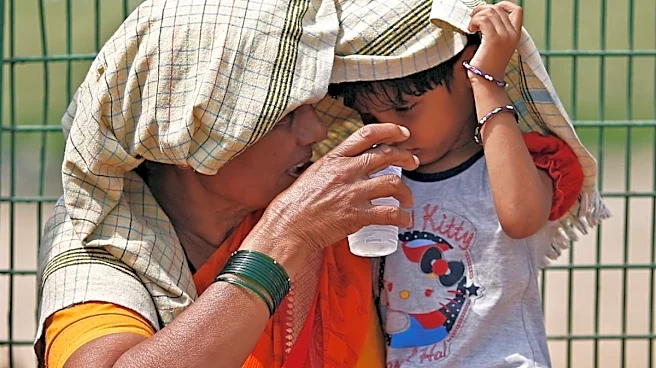
worsening heatwaves may be causing far more deaths than previously understood, according to a major new study that warns even a single day of extreme heat could trigger approximately 3,400 excess deaths nationwide. Researchers say prolonged heatwaves are rapidly emerging as one of India’s most dangerous climate-related public health threats, especially in economically vulnerable states already struggling with healthcare and infrastructure challenges. The study, published in Frontiers in Environmental Health, estimated that a five-day heatwave across India could lead to nearly 30,000 excess deaths.Also read: Heatwave Body Shock: Extreme Heat Damaging Your Bones, Muscles, and Mobility
What are excess deaths?
“Excess deaths” refer to the number of deaths occurring above what would normally be expected based on historical mortality data. Researchers Piyush Narang and Ashok Gadgil from the India Energy and Climate Center analysed heat-related mortality patterns across India’s districts. The team used district-level mortality data, population projections for 2024, and heatwave mortality analysis from 10 Indian cities. Their findings suggest heat-related deaths in India may be heavily underestimated.
Extreme heat is becoming a major health emergency
India has witnessed repeated severe heatwaves in recent years, with temperatures crossing 45°C in parts of Rajasthan, Uttar Pradesh, Madhya Pradesh, Haryana, and Gujarat. Doctors warn that extreme heat can overwhelm the body’s cooling mechanisms, leading to heat exhaustion, heatstroke, dehydration, kidney injury, heart complications, and organ failure. According to experts, vulnerable groups include elderly people, outdoor workers, children, pregnant women, and those battling chronic diseases. Doctors say prolonged exposure to high temperatures may silently increase cardiovascular and respiratory deaths even before heatstroke develops.
Uttar Pradesh among the worst-affected states
The study found that Uttar Pradesh alone could account for approximately 8,100 excess deaths during a five-day heatwave event. However, elsewhere in the country, several districts, including Ahmedabad, Jaipur, and Surat, were estimated to record more than 250 excess deaths during a single major heatwave episode. Researchers also found a strong inequality pattern linked to economic vulnerability.
Poorer states face a greater heatwave burden
The study identified a major imbalance between mortality burden and economic capacity. Five states - Uttar Pradesh, Bihar, Madhya Pradesh, Rajasthan, and Gujarat together accounted for 66 per cent of projected heatwave-related deaths and only 29 per cent of India’s GDP. Researchers described this as a “2.3-fold disproportion,” showing that poorer states may face the greatest heatwave mortality burden despite having fewer resources for climate adaptation. Experts warn that lower-income populations often lack reliable cooling systems, access to healthcare, safe housing, and heat protection infrastructure.
Why are heatwaves becoming more dangerous?
Climate experts say rising global temperatures are making heatwaves more frequent, longer-lasting, and more intense. South Asia, particularly India, is considered one of the world’s most heat-vulnerable regions because of dense population, urban heat islands, humidity, economic inequality, and outdoor labour exposure. Researchers say heatwave mortality risk is not simply related to population size but is structurally concentrated in economically weaker regions.
Experts call for urgent heat action plans
The study’s authors say the findings should influence how India funds heat resilience and disaster preparedness programmes. Researchers recommend better district-level heat action plans, expanded cooling infrastructure, early warning systems, public hydration campaigns, worker protection measures, and increased climate adaptation funding. Health experts stress that recognising heatwaves as a major public health emergency may become increasingly important as climate change intensifies across India.
/images/ppid_a911dc6a-image-178011682334286044.webp)

/images/ppid_a911dc6a-image-178007442826759396.webp)



/images/ppid_a911dc6a-image-178021226082410537.webp)

/images/ppid_a911dc6a-image-178011342430333308.webp)
/images/ppid_a911dc6a-image-178011082631315877.webp)
/images/ppid_a911dc6a-image-178003286555380592.webp)