/images/ppid_a911dc6a-image-177657762418545079.webp)

/images/ppid_a911dc6a-image-177639282804891253.webp)
What is the story about?

The
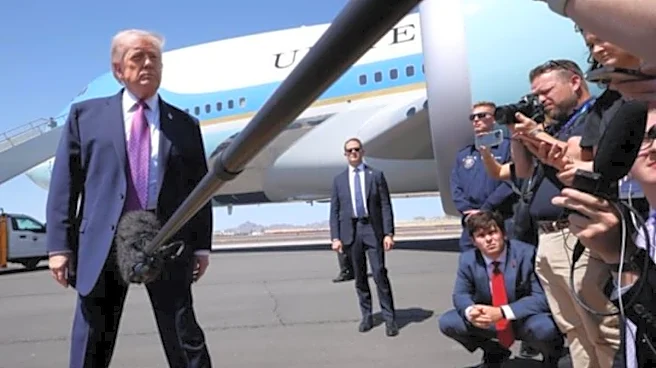
latest picture of US President Donald Trump has sparked fresh discussions about his health, with social media users highlighting his unusual posture during a public appearance. In the image, the 79-year-old is seen standing with his feet spread wider than shoulder width, forming what some described as an “upside-down V-shape,” while his arms appear stiff at his sides. While such observations have led to speculation about a possible leg brace, coordination issues, or neurological concerns, medical experts caution against concluding based solely on a single image.
Here was Donald Trump standing like that (?) while talking to reporters on Thursday(Win McNamee/Getty) pic.twitter.com/GvPnz6wVDD
— Lucas Sanders 👊🏽🔥🇺🇸 (@LucasSa56947288) April 18, 2026
Why can posture raise health questions?
Changes in posture or movement can sometimes be linked to underlying health conditions, especially in older adults and senior citizens. A wider stance, for example, may occasionally indicate an attempt to maintain balance and stability. As people age, the risk of reduced muscle strength, joint stiffness, or balance issues naturally increases. However, posture can also be influenced by non-medical factors such as fatigue, footwear, surface conditions, or even the angle of the photograph. This makes it difficult to accurately assess health without a proper clinical evaluation.What could be behind the changes?
Experts note that several conditions - ranging from mild to serious- can affect posture and coordination. These include:- Musculoskeletal issues, such as arthritis or joint pain
- Neurological conditions affecting balance or motor control
- Age-related muscle weakness
- Temporary factors like fatigue or minor injury
The role of social media in health speculation
Public figures often face intense scrutiny, and health-related discussions can quickly gain traction online. While curiosity is natural, experts warn that diagnosing medical conditions based on photos or videos can be misleading. Health assessments require a detailed evaluation, including medical history, physical examination, and diagnostic tests. Visual cues alone rarely provide enough information for an accurate diagnosis.When should posture changes be a concern?
For the general public, noticeable and persistent changes in posture or coordination should not be ignored. If such symptoms appear, it is important to seek medical advice for proper evaluation. Warning signs may include:- Frequent loss of balance
- Difficulty walking or standing
- Sudden stiffness or weakness
- Tremors or unusual movements




/images/ppid_a911dc6a-image-177642922600239549.webp)