/images/ppid_a911dc6a-image-177062202825395059.webp)

/images/ppid_a911dc6a-image-177054023172596726.webp)



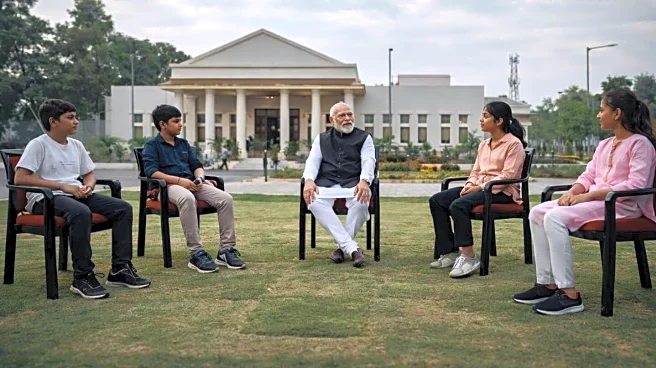
Prime Minister Narendra Modi addressed students, teachers, and parents in the second episode of Pariksha Pe Charcha 2026, stressing the importance of sleep before their board exams. During the interaction, Modi advised the students to “get proper sleep before exams”, an advice that stands out as both timely and medically sound. While often overlooked, sleep plays a critical role in academic performance, mental health, and overall well-being.
Get Proper Sleep Stress Less!While interacting with students in Episode 2 of Pariksha Pe Charcha, when a student from Gujarat asked about handling exam stress, PM @narendramodi emphasised that writing practice, solving papers regularly, staying relaxed, and getting proper sleep… pic.twitter.com/3GE4fUiUs2
— MyGovIndia (@mygovindia) February 9, 2026
Sleep is not a luxury but a learning tool
Many students believe that an exam approach, not sleeping, and studying more will give them extra hours to revise. However, in reality, not shutting your eyes does the opposite. Sleep is essential not just for memory consolidation - the process by which the brain converts what you study during the day into long-term memory – but also for resting your physical and mental health. Without sufficient sleep, facts, formulas, and concepts are harder to recall during exams, no matter how long a student studies. Scientific studies have consistently shown that students who sleep 7 to 9 hours perform better on tests than those who stay up late. Proper resting improves concentration, problem-solving ability, and decision-making, all of which are crucial during time-bound examinations.Also read: World Epilepsy Day 2026: When ‘Daydreaming’ in Children Is Actually a Seizure WarningHow does exam stress hinder sleep?
Exam stress can trigger the release of cortisol – the main stress hormone – and not sleeping properly further elevates it. It can make you feel terribly anxious, irritable, and overwhelmed. In the long run, it leads to panic during exams, blanking out, or difficulty understanding even familiar questions. Adequate sleep regulates emotions, keeping anxiety in check and improving confidence. Students who are well-rested are calmer, more focused, and better equipped to manage pressure in the exam hall.How does sleep deprivation affect your physical health?
Apart from taking a toll on your mental performance, sleep deprivation also affects physical health. Teenagers and young adults who consistently sleep poorly are bound to experience headaches, weakened immunity, digestive issues like bloating and constipation, and fatigue. Falling sick during exam season is the worst nightmare of any student, as it can derail preparation entirely. Proper sleep supports immune function, hormonal balance, and energy levels, ensuring students remain physically fit during crucial exam days. Also, studying late at night means more stress on screen time – including mobile phones, tablets, or laptops. Exposure to blue light suppresses melatonin, the hormone that regulates sleep, making it harder to fall asleep even after switching devices off. Moreover, studying while exhausted reduces comprehension. What seems like productive revision at midnight often results in minimal retention, making the effort inefficient.How can you improve sleep before exams?
PM Modi’s advice becomes truly effective when combined with practical steps:- Maintain a consistent sleep schedule, even during exams
- Avoid screens at least an hour before bedtime
- Revise earlier in the evening, not late at night
- Practice light relaxation, such as deep breathing
- Avoid caffeine in the evening hours
/images/ppid_a911dc6a-image-177044923088746416.webp)







/images/ppid_a911dc6a-image-177053764417956845.webp)