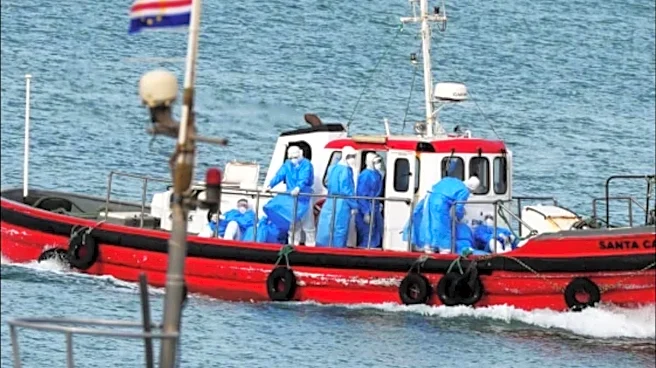
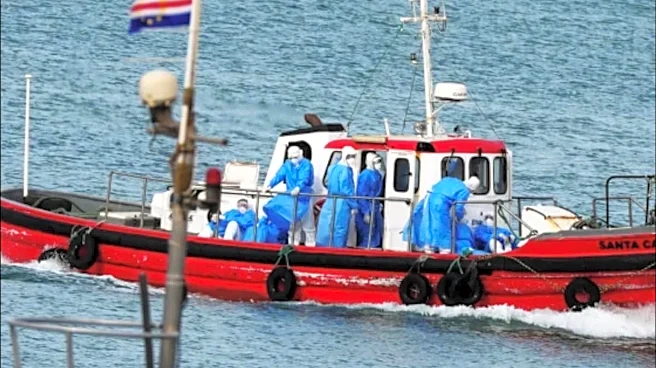
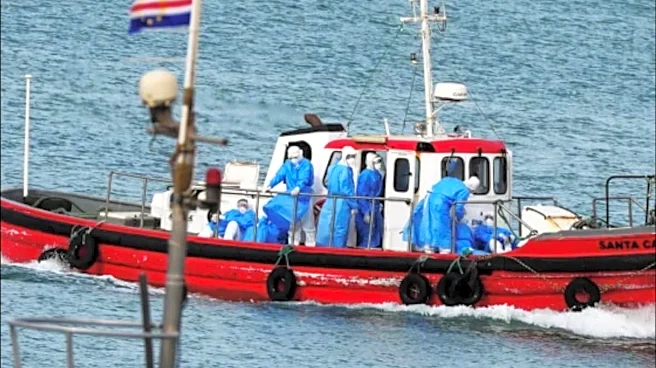
When reports emerged of suspected Hantavirus cases aboard the Antarctic expedition cruise ship MV Hondius, it reminded people of an old fear that has haunted the world since the early days of COVID-19: what happens when an infectious disease enters a cruise ship? Any outbreak on a cruise ship immediately evokes memories of the COVID-19 pandemic, particularly the quarantined Diamond Princess cruise ship docked near Japan in early 2020. The ship was carrying 3,700 people in total and reportedly 721 people on the ship tested positive for COVID virus and the ship became a major early focal point of the pandemic. While doctors remind us that comparisons with the current hantavirus scare are misleading. Dr Rajeev Jayadevan is a Senior Consultant Gastroenterologist
and former President of Indian Medical Association Cochin who was also Co-Chairman of the National IMA COVID Task Force said that the spread of a virus in a ship lies in the very design of these vessels. "A cruise ship is essentially a closed system," he explains. "You have a large number of people sharing a relatively small space, constantly coming into contact with one another."Unlike a town or city, where an infected person can isolate at home and naturally reduce interactions, cruise ships leave little room for escape. Passengers dine together, use common recreational spaces, touch the same railings and elevator buttons, and often spend days or weeks in shared environments. That makes containment uniquely difficult.
"If someone sneezes in a public area and respiratory secretions remain on a surface, transmission becomes very easy," Dr Ishwar Gilada, infectious disease expert says. "The dynamics of how infections spread on a cruise ship are very different from what we observe on land."The reasons are structural as much as behavioural. "Cruise ships rely on shared ventilation systems. Cabins are compact. Public spaces on the ship like restaurants, theatres, gyms, decks and lounges are communal by nature. Even luxury liners with advanced medical facilities cannot completely eliminate the risk created by prolonged close contact." Experts caution, however, against treating every vessel the same way. "A small fishing boat is not the same as an 18-storey mega cruise ship carrying thousands of passengers," Dr Rajeev notes. "But the core issue remains true across ships: it is a confined space." And once an outbreak begins, mobility becomes restricted almost instantly. Passengers are often confined to their cabins during observation periods while health authorities assess the situation. In effect, the ship becomes a floating quarantine zone.
Why Ships Are Especially Vulnerable To Outbreaks
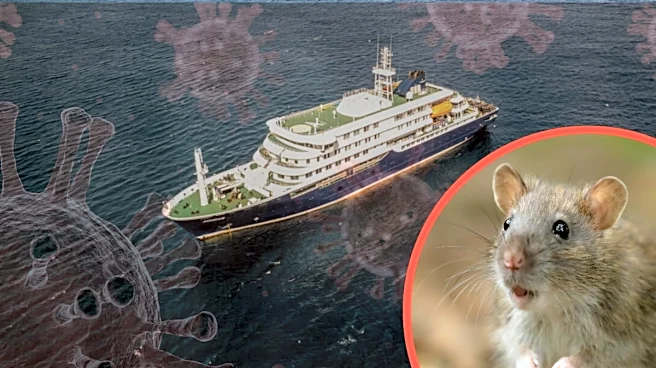
Cruise ships have long been recognised as environments where infectious diseases can spread rapidly. "Norovirus outbreaks, infamous for causing vomiting and diarrhoea, are among the most common. Influenza, food-borne infections and respiratory illnesses have also repeatedly surfaced aboard ships worldwide. “Infections on ships are not unusual," the doctor says. "These can be bacterial, viral, food-related, water-related, or introduced by someone boarding the ship while already infected."The problem is amplified by modern cruise culture itself. Today’s mega liners function like densely populated floating cities, with thousands of passengers and crew members interacting in enclosed settings for extended periods. That combination creates ideal conditions for a contagious pathogen. However, all the doctors we spoke to stressed that there is no reason to fear a pandemic-like situation at the moment. He explains the reasons. "COVID-19 was a novel virus. In the beginning, scientists knew very little about it. There were no vaccines, no targeted treatments, and no certainty about how widely or silently it could spread. Most importantly, it demonstrated efficient human-to-human transmission on a global scale. Hantavirus behaves very differently. While some strains of hantavirus can be severe, transmission to humans typically occurs through contact with infected rodents or their droppings not through widespread casual human transmission. Experts stress that the current situation does not resemble the conditions that led to a global pandemic in 2020.""When people hear about deaths, fear spreads quickly," he says. "It is natural for social media speculation to begin immediately. But not every outbreak is the beginning of another pandemic."In the age of viral misinformation, experts say context matters as much as caution.
/images/ppid_a911dc6a-image-177817363416963287.webp)





/images/ppid_a911dc6a-image-177839763343139352.webp)


/images/ppid_a911dc6a-image-17782380643965935.webp)
/images/ppid_a911dc6a-image-177829962861126661.webp)
/images/ppid_a911dc6a-image-177823242487786246.webp)