/images/ppid_a911dc6a-image-177823803080054474.webp)

/images/ppid_a911dc6a-image-177821003249367978.webp)
/images/ppid_a911dc6a-image-177812602914117851.webp)


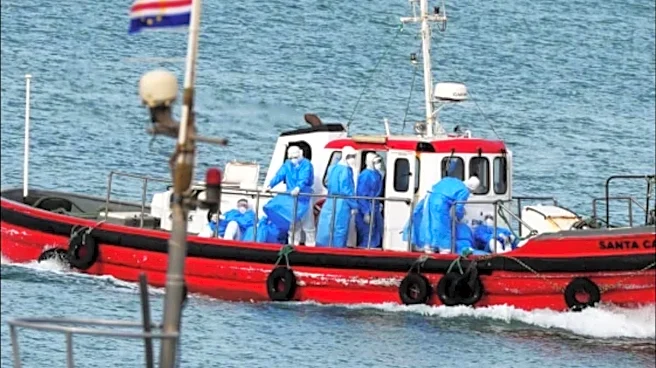
The ongoing hantavirus outbreak that was identified in an Atlantic cruise ship, MV Hondius, is raising global public health concerns. WHO yesterday addressed media where Dr Tedros Adhanom Ghebreyesus, WHO Director-General said, "While this is a serious incident, WHO assesses the public health risk as low." He also added that given the incubation period, "it’s possible that more cases may be reported." While there is still a lot of curiosity around what WHO means when it says the spread is based on prolonged exposure, let's see what happens when hantavirus enters human bodies. Much like COVID-19, hantavirus is an RNA virus with a lipid envelope, which has a fragile outer coating that can be destroyed with soap and disinfectants. This is why hygiene
and handwashing were being pushed as the most important steps to prevent the spread of COVID. Unlike 'naked' viruses such as norovirus, which survive longer on surfaces and spread aggressively, enveloped viruses are generally more vulnerable outside the body. But it needs to be understood that hantavirus is not one single virus, it is a family of viruses, and different strains behave differently in different parts of the world. The strain commonly seen in the Americas is different from the one reported in Europe and Asia. Andes virus (ANDV) is the only known strain of hantavirus known to infect humans. The strain found in Chile and Argentina causes Hantavirus Pulmonary Syndrome (HPS), a severe respiratory illness with a fatality rate of nearly 40 percent. When hantavirus enters the human body, humans become what doctors call a 'dead-end host'. In most cases, the virus is not designed to circulate efficiently among humans. However, the body’s immune response to the infection can suddenly become dangerously intense. The infection initially resembles a viral fever with symptoms including headache, fever, body ache, fatigue, and sometimes a runny nose. But within days, some patients rapidly develop severe breathing distress. What follows is often not just direct viral damage, but an overwhelming immune reaction known as a cytokine storm. The lungs begin filling with fluid, making it difficult for the patient to breathe. This condition resembles severe pneumonia and can progress very quickly. Certain strains can also affect the kidneys, causing renal complications. Some variants, especially those seen in Europe and Asia, may lead to Hemorrhagic Fever with Renal Syndrome (HFRS), which can involve internal bleeding, bleeding from the nose or mouth, and kidney failure. The strain more commonly seen in the Americas present in the form of Hantavirus Pulmonary Syndrome (HPS) in humans, where lung involvement becomes the primary threat. The recent cruise ship-linked outbreak has raised questions because multiple passengers reportedly became infected. Traditionally, hantavirus infections are considered rare and mostly linked to rodent exposure (urine, feces and more) rather than sustained human-to-human transmission. In the case of the husband and wife who died, experts believe it is possible the husband acquired the infection earlier and passed it to his wife since she cared for him closely. But questions remain about how other passengers became infected. One theory being discussed is linked to the incubation period. If passengers developed symptoms several days or even weeks after the ship sailed, it becomes less likely they all acquired the infection independently from outside exposure. That has led to speculation that limited human-to-human transmission may have occurred, something previously observed rarely with the Andes strain. However, health experts do not want people to panic. As of now, hantavirus is not considered a pandemic-level virus like COVID-19. Human-to-human spread, if it happens at all, is believed to be extremely limited and strain-specific. Doctors say fear-driven social media reactions often amplify anxiety far beyond the actual risk. While the illness can be deadly in severe cases, it does not spread easily under normal circumstances. This outbreak also reminds us how ecological imbalance can increase the risk of zoonotic diseases. Hantavirus naturally lives in rodents such as rats and mice, often without making them visibly sick. Scientists have observed a similar phenomenon with the Nipah virus in bats where the virus coexists with its host species without causing major outbreaks among them. Trouble begins when these viruses accidentally jump to humans. Rodents and humans are not meant to share the same ecological space closely. But increasing human intrusion into forests, remote islands, and wild habitats is creating more opportunities for such spillover events.

/images/ppid_59c68470-image-177820512189361916.webp)



/images/ppid_a911dc6a-image-177815406543422853.webp)
/images/ppid_59c68470-image-177822256212341788.webp)
/images/ppid_59c68470-image-177815506000998685.webp)

/images/ppid_59c68470-image-177806756255519502.webp)
/images/ppid_a911dc6a-image-177812322923178262.webp)