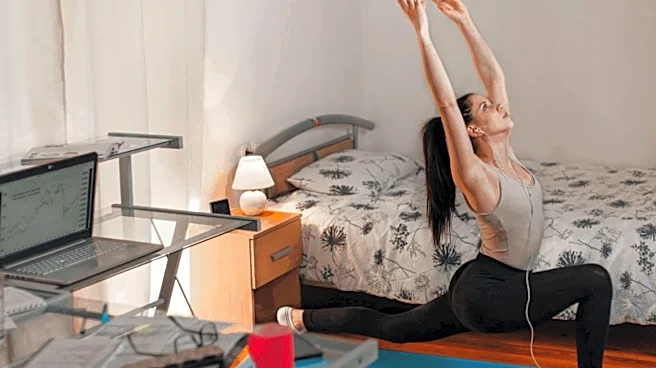
On the occasion of International Day of Yoga, Timesnow.in spoke to Vaidya Rajesh Kotecha, Secretary, Ministry of Ayush, Government of India, about the remarkable strides India is making in taking yoga from a traditional practice to a global public health movement. As the world marks this year's theme, 'Yoga for healthy ageing', Kotecha shared how India is encouraging people across age groups to embrace yoga not merely as an annual celebration, but as a lifelong habit.During the conversation, he spoke about the government's vision of making yoga a 365-day movement rather than a one-day event, with initiatives aimed at integrating the practice into everyday life. Describing yoga as a 'zero-premium health insurance,' Kotecha highlighted the growing
body of scientific evidence supporting its role in preventing and managing a range of health conditions. He also discussed the increasing number of research papers and clinical studies validating yoga's effectiveness, underscoring India's efforts to position yoga as an accessible, evidence-based tool for healthier living. Here's a lowdown of our conversation...
India has given yoga to the world. What do you think will be our next global conversation to really take yoga on a bigger scale than before?
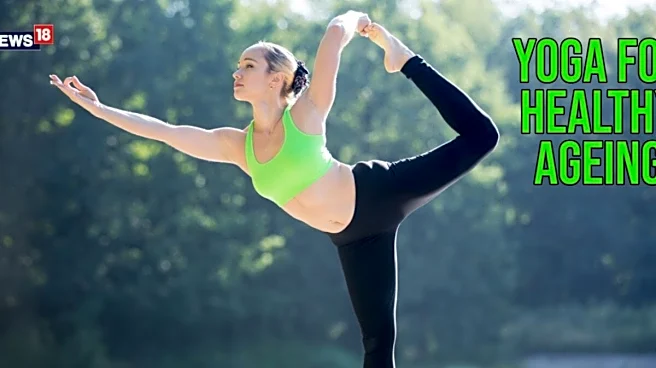
It’s a very good question. You know, I would like to relate this with this year’s yoga theme. You know, the theme is yoga for healthy aging. Yes, so aging. So I think the answer from India for healthy aging to the globe is yoga. Because we all know it offers a scientifically validated, low cost and holistic pathway to ensure healthy aging by promoting mobility, mental well-being, disease prevention, and independent living. So it makes it one of India’s strongest contributions to the global healthy aging agenda, I think. And I would like to also mention that this decade, 21 to 30, is also UN healthy aging decade. So we are in the middle. And proposing this is a solution for the globe, for the world, from India, in the form of yoga.
Yoga is something we have been hearing about for the longest time in India. What gaps do you feel Indians still need to really try to embrace it enough?
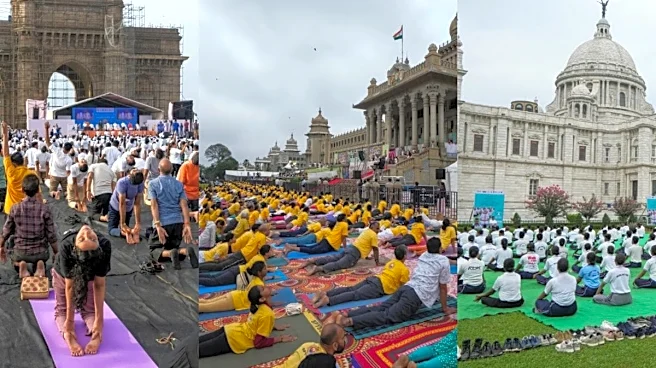
A: Actually, you know, since 2015, you know, we all know that our Prime Minister did propose this celebration of International Day of Yoga to the UN. And it was unprecedented. It was supported by 175 countries and it was resolution passed unanimously. Since then, this yoga became a global brand. And what we do from the ministry perspective, from the participation of the community, the whole of government, all of society, that we should not restrict our yoga day for one day. It should be 365 days. It should be 365.So we have recently launched this Yoga 365 campaign. So 365 means it should be done 365 days a year, every day. Yes, this is one thing. I would like to substantiate this with some interesting documentation that we believe that we Indians need more to embrace yoga. Actually, it is happening, you know, we have national organizations, you know, data, they did a survey for us. And in 2022, they found that in 4.5 crore household, it’s almost 15% of household, at least one person is doing yoga. So they may be doing meditation or together. But this is something very big step. It means that if from 15%, if we aspire to reach to 75% in the next five years, it is possible.And that is why we are thinking of Yoga 365 and it’s a large scale behavioral change communication. So our Prime Minister says that yoga is a zero premium health insurance. So it is not just saying. So yes, there are so many now that yoga is only helping a person to stay physically fit, but also in a lot of different disorders, you know, as a therapeutic aspect is becoming now a science.So there are a lot of things that is happening, not only in our country, it is happening across the globe.
Yoga is no more just about fitness, it is therapy. Are there clinical trials going on to study yoga’s impact on diseases and addiction in India?
There are a wide range of studies available in high-end journals of the globe, including Lancet and AMJ and all those journals. So I would like to say some examples because there is a lot. One example is that until recently it was believed that as we age, our brain shrinks, our brain gets atrophied, and that is one of the causes that many people develop dementia or forgetfulness.
So a long-duration study has been able to prove that regular yoga and meditation practice actually reverses this shrinking of brain and expands its size to a significant level.We have a center of excellence known as Center of Integrative Medicine and Research at AIIMS Delhi. This center did multiple studies on yoga. One is the effect of yoga in migraine. Migraine is a very troublesome problem. Once people get an attack, they have to take medicine and productivity is compromised. So adding yoga into migraine management, this was not to replace standard treatment but to add yoga, and it has a great impact in the form of less intensity of pain, less frequency of episodes.Recently, the Ministry has partnered with ICMR. They are integrating yoga evidence into standard treatment guidelines for diseases. I cited a couple of examples, but such evidence is available in post-cardiac rehabilitation, mental health, anxiety, OCD, psychiatric disorders, lifestyle disorders like hypertension and diabetes, and menopausal problems in women.As a matter of fact, American Heart Association has introduced yoga into therapeutic aspects of cardiac treatment guidelines. So it is happening at a very big scale across the globe.
This brings me to something important, bringing yoga into the school curriculum so children are exposed early and it becomes a lifestyle. What is being done in that direction?
Actually, to attract the new generation, we have to innovate. We have to do something very innovative. Yoga is integrated into different levels of school education like pre-primary, primary, secondary. It is part of the Indian Knowledge System (IKS). It is also integrated into physical education. The requirement is that it should be scaled up, and it should be interesting for kids so they get engaged.We have come up with a character known as Professor Ayushman. This is linked with Ayushman Bharat. Professor Ayushman talks to kids and explains yoga and simple medicinal plants in the form of a cartoon character. We have created a cartoon series for this.In addition, with support of the Ministry of Youth and Sports, Yogasana has been declared a sport in India. Yogasana is now an approved sport. It has expanded to Asia and the world. Recently there was Asian Yogasana Championship in Delhi where India won most medals. Just this month there was a World Yogasana Championship in Ahmedabad and India won 108 gold medals out of more than 200, and overall 114 medals were gold.Yogasana Bharat is now starting a Yogasana Super League like IPL. It is agreed that in the next Asian Games it will be a demonstration sport, then a formal part of games, and later it may even be in the Olympics.So it is also becoming a career. The yoga sector is booming...digital yoga, online yoga, yoga therapy, coaching. We have a yoga certification board to certify skills and therapeutic aspects.
Young Indians are facing a lot of stress and anxiety, especially due to exams and competition. Is there any government program focusing on yoga for children’s emotional wellbeing and resilience?
There is no disagreement that yoga must increasingly be positioned as a comprehensive mind-body intervention that supports emotional balance, concentration, stress management, and mental resilience. For young people especially, it offers an effective response to challenges of modern digital lifestyle.We have an institute known as Morarji Desai National Institute of Yoga, which is also a WHO nodal center for yoga. This institute is doing innovative work to attract younger people to yoga through digital talks, quizzes on MyBharat portal and MyGov portal, and school and university-level outreach.We also have the concept of 'Har Ghar Yoga' and now we are evolving it into 'Har Ghar Ayur Yoga' integrating Ayurveda lifestyle, food, dinacharya and ritucharya. It will be a large-scale behavior change campaign similar to Swachhata Abhiyan.This multi-pronged strategy will help young people find solutions for anxiety, mental resilience, and related issues.
In the next 10 years, what would you call India’s yoga movement, and what would successful implementation look like?
My perspective is very humble. Success would mean yoga becoming a natural part of daily life for all age groups. Not only young kids or millennials, but all age groups, with yoga available specifically for them.India will emerge as a leading voice globally in preventive healthcare, integrative medicine, and sustainable wellness through yoga.
/images/ppid_a911dc6a-image-178206282518335663.webp)

/images/ppid_a911dc6a-image-178198542297994713.webp)







/images/ppid_a911dc6a-image-178200364200740098.webp)