The
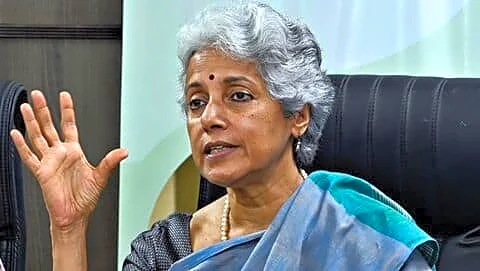
recent discussions surrounding the Twisha Sharma case have once again highlighted a disturbing social issue in India - the misuse of mental health accusations to silence, control, or discredit women during marital and family conflicts. Mental health experts say that while psychiatric illnesses are real and serious medical conditions, there are also instances where women are unfairly labelled as “mentally unstable” simply for asserting their independence, speaking up against abuse, or refusing unrealistic expectations at home. Speaking exclusively with Times Now, Dr. Vrinda Kabra, Resident Psychiatrist at All India Institute of Medical Sciences (AIIMS), said such situations are not uncommon in psychiatric practice.
When family conflicts are mistaken for mental illness
Speaking about her clinical experience, Dr. Kabra revealed that some women are brought for psychiatric evaluation not because of actual symptoms of mental illness, but because of disagreements within the household. “I have had many instances where in-laws would bring in daughters-in-law due to dissatisfaction with their work at home,” she explained. Dr. Kabra recalled one case where a husband was upset because his wife refused to wake up at 4 a.m. daily to cook for a large joint family, unlike his mother. “That was the only reason he brought her here,” she said. In other cases, women who questioned their husbands over alleged infidelity were labelled as “delusional”. “She is delusional, I am not cheating on her,” Dr. Kabra said some husbands would claim during consultations. While some women may genuinely require mental health support, psychiatrists warn that social bias and patriarchal expectations can sometimes distort the narrative presented to doctors.
Why accurate mental health evaluation matter?
Experts stress that psychiatric diagnosis should never rely solely on one-sided family accounts. Mental illnesses are complex medical conditions that require detailed assessment, direct interaction with the patient, and careful observation. Dr. Kabra emphasized that doctors must avoid depending only on information provided by in-laws or spouses. “For doctors, not relying ONLY on in-laws for history or information is very important, as it may be untrue, fabricated, or biased,” she said. At the same time, she also clarified that most families do provide truthful information and genuinely seek help for loved ones struggling with mental illness. Still, mental health professionals say awareness is essential because false psychiatric labelling can deeply affect a woman’s dignity, confidence, legal standing, and relationships.
Warning signs families should not ignore
Mental health experts say families must learn to differentiate between emotional distress, personal choices, and genuine psychiatric disorders. Dr. Kabra noted that many normal desires are unfairly treated as signs of “rebellion” or “mental instability” in some households. “Wanting to work after marriage, wanting to wear comfortable clothes at home, or wanting to delay having children are not signs of mental illness,” she said. She added that women deserve the same respect, autonomy, and basic human rights routinely granted to men. “If men are given the basic right to exist with respect, so should women,” Dr. Kabra stated.
Mental health needs compassion, not control
Twisha’s case has reignited conversations around women’s mental health, emotional abuse, and social stigma in India. Experts say genuine psychiatric care must focus on empathy, evidence-based diagnosis, and patient dignity, not social control. Doctors also urge families to support women facing emotional distress instead of immediately dismissing their experiences or labelling them as unstable. As awareness around mental health grows, psychiatrists believe society must also confront how psychological labels can sometimes be weaponised against vulnerable individuals - especially women navigating difficult family environments.
/images/ppid_a911dc6a-image-177936362919874043.webp)







/images/imfZ6nBC-image-177925728082881439.webp)


/images/ppid_59c68470-image-177917502458447907.webp)

/images/ppid_59c68470-image-17791775308601284.webp)