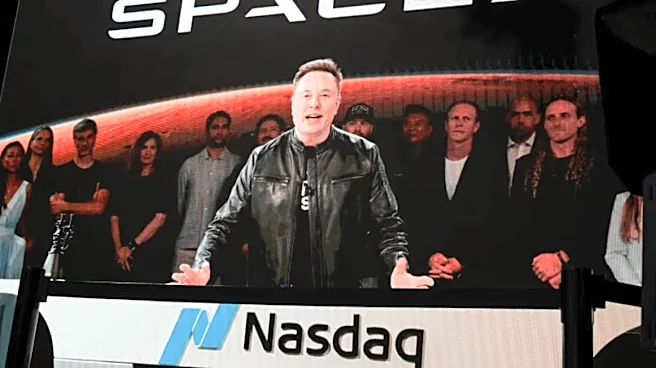
Elon Musk is widely regarded as one of the most influential entrepreneurs of the modern era. On June 12, the 54-year-old officially became the world's first trillionaire, driven by the historic blockbuster IPO of his rocket and satellite company, SpaceX. Yet alongside discussions of his wealth and business empire, Musk's health has increasingly attracted public attention. Musk has publicly stated that he has Asperger's syndrome, a condition that falls under Autism Spectrum Disorder (ASD). Reports have also highlighted his struggles with sleep deprivation, periods of depression, and an aversion to certain fragrances and medications. Researchers have proposed that these seemingly unrelated health issues could potentially be linked to a little-known
condition called Toxicant-Induced Loss of Tolerance (TILT), although Musk has never been diagnosed with the condition.Also read: Elon Musk By The Numbers: $1,100,000,000,000 - Rich Enough To Buy 2.5 Million Homes, 243 Billion Gallons Of Fuel
What is TILT and chemical intolerance?
According to Dr. Claudia S. Miller, allergist, immunologist, and founder of the TILT Research Program at UT Health San Antonio, TILT develops after exposure to environmental toxicants such as mold, solvents, pesticides, smoke, volatile organic compounds (VOCs), and other chemicals. The theory suggests that an initial exposure can sensitize the body's immune system, particularly mast cells, which serve as frontline defenders against foreign substances. Once sensitized, individuals may develop chemical intolerance, experiencing symptoms when exposed to fragrances, medications, foods, alcohol, caffeine, or environmental pollutants that were previously well tolerated.
Why is Elon Musk a part of this discussion?
According to Dr. Miller, who came up with the theory earlier this year, Musk reportedly exhibits several characteristics associated with chemical intolerance, including sensitivity to fragrances and medications. However, she emphasizes that he has not been formally diagnosed with TILT or chemical intolerance. One factor that has drawn attention is a story shared by Musk's mother, Maye, in her memoir
A Woman Makes a Plan, where she recalled being exposed to paint solvents while pregnant with him during the repainting of an airplane indoors. Dr. Miller has hypothesized that such prenatal chemical exposures can influence immune system development and mast cell function. However, this remains a scientific hypothesis rather than an established explanation for Musk's health profile.
The link between mast cells, autism, and environmental exposure
Researchers studying TILT often focus on Mast Cell Activation Syndrome (MCAS), a condition involving excessive activation of immune cells called mast cells. These cells release inflammatory chemicals that can contribute to allergy-like reactions and systemic symptoms. Some studies suggest a connection between chemical intolerance and MCAS. Dr. Miller's research has also explored possible associations between chemical intolerance and neurodevelopmental conditions such as autism and ADHD. Her findings suggest that parents with high chemical intolerance scores were more likely to report having children with autism or ADHD. However, experts caution that correlation does not prove causation. Autism Spectrum Disorder is believed to result from a complex combination of genetic and environmental influences.
Health challenges behind extraordinary success
As Elon becomes more successful by the day, his story highlights an important public health conversation about environmental exposures, chemical sensitivity, and immune system health. Whether or not TILT plays any role in Musk's personal health remains unknown. Still, according to experts, growing awareness of chemical intolerance can help individuals identify environmental triggers, improve symptom management, and better understand the relationship between environmental health and overall well-being. For a man redefining the future of technology and wealth creation, the ongoing discussion about Musk's health also underscores how scientific questions can remain unanswered even for the world's most famous innovators.
/images/ppid_a911dc6a-image-178133202091846898.webp)

/images/ppid_59c68470-image-178114505401228036.webp)
/images/ppid_59c68470-image-178105504634828142.webp)






/images/ppid_59c68470-image-178128752787059749.webp)

/images/ppid_59c68470-image-178128752799820407.webp)
/images/ppid_59c68470-image-178131502291577167.webp)
/images/ppid_59c68470-image-1781290081072104.webp)
/images/ppid_59c68470-image-178119753110043637.webp)
/images/ppid_a911dc6a-image-178117468125295029.webp)