







What is a Quarter Quell?
In the dystopian world of Panem, the Hunger Games were a brutal annual punishment. But every 25 years, the Capitol escalated the horror with a 'Quarter Quell'. These anniversary Games came with a special, vicious twist meant to reinforce the Capitol's absolute power. For the first Quell, districts were forced to vote for the children they sent to die. For the third, which involved Katniss Everdeen, past victors were reaped back into the arena. These events were milestones of fear, designed to be even more spectacular and cruel than the standard Games.
The Twist of the Second Quell
The Second Quarter Quell, the 50th Hunger Games, came with a particularly cruel rule: each district had to send double the tributes. Instead of one boy and one girl, two of each were reaped, bringing
the total number of competitors from 24 to a staggering 48. This rule was designed to crush any hope the districts might have, doubling their losses and amplifying the spectacle for the Capitol audience. It was into this meat grinder that a 16-year-old Haymitch Abernathy from District 12 was thrown.
Meet a Young, Defiant Haymitch
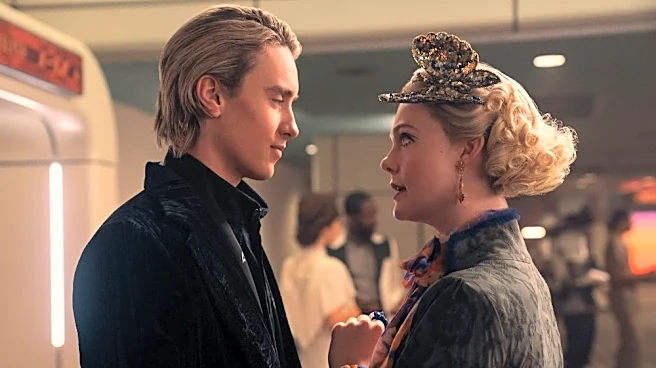
Long before he was the drunken, cynical mentor to Katniss and Peeta, Haymitch Abernathy was a fiery teenager from the Seam. The new film, 'Sunrise on the Reaping', explores his story, revealing a young man who was ripped away from his family and his girlfriend, Lenore Dove Baird. Faced with an arena designed to be a 'poison paradise' and 47 other tributes, Haymitch proved to be a clever and resourceful fighter. He formed a reluctant alliance with his fellow District 12 tribute, Maysilee Donner—the original owner of the famous mockingjay pin.
A Victory That Humiliated the Capitol
Haymitch didn't just win; he won in a way that made a mockery of the Capitol's power. In the final moments of the Games, facing a Career tribute from District 1, Haymitch used the arena's own force field as a weapon. He dodged an axe thrown at him, letting it rebound off the force field and kill his opponent. This wasn't just survival; it was an act of intellectual defiance that outsmarted the Gamemakers. President Coriolanus Snow was enraged by this public embarrassment, a transgression he would never forgive.
The Price of Rebellion
Haymitch's victory came at an unimaginable cost. As punishment for his defiance, President Snow orchestrated the murders of Haymitch's mother, younger brother, and girlfriend. The Capitol's official broadcast of the Games was heavily edited to portray him as selfish and ruthless, erasing his moments of rebellion and painting his victory as a fluke. This personal devastation and public character assassination is what forged the broken man we meet 24 years later. His story demonstrates that for some victors, surviving the Hunger Games was only the beginning of their nightmare.