

Rule 1: Always Start Your Studs
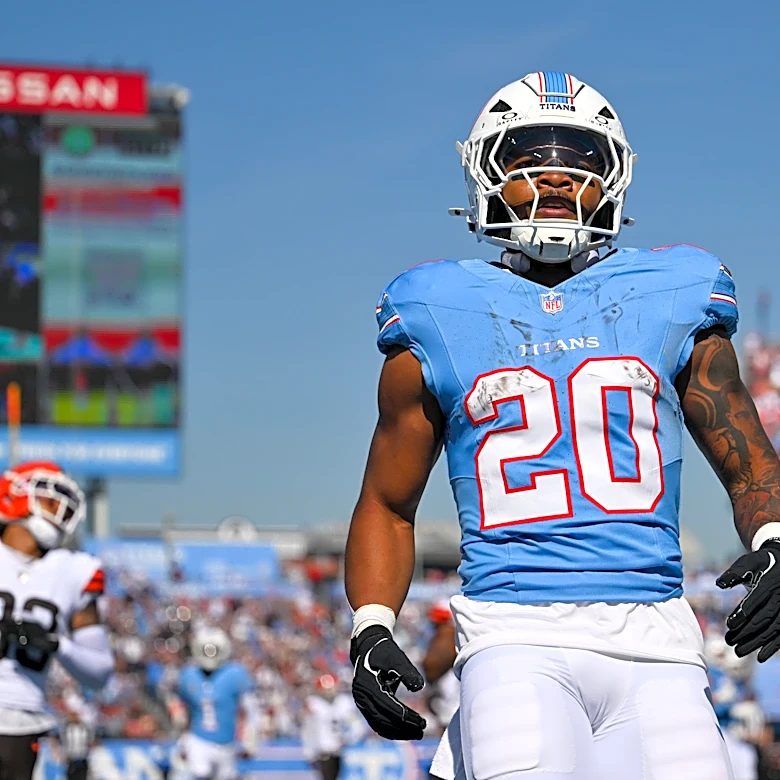
We've all heard it: 'Never bench your stars.' But Thanksgiving week is different. With games on Wednesday, Thursday, and Friday, short weeks can wreak havoc on player recovery and performance. A star running back coming off a high-volume game on Sunday might see a reduced workload or be less effective on just a few days' rest. Pros aren't afraid to pivot to a lesser-known player with fresh legs and a fantastic matchup over a stud who's playing his second game in five days. If your top wide receiver is facing a shutdown corner on a short week in a game with a low projected point total, it’s smarter to play a WR2 who has a full week of rest and is facing a team that gives up a ton of points to the position. It feels wrong, but winning is the goal,
not blindly trusting big names.
Rule 2: Avoid Thursday Night Players
The conventional wisdom says to fade players in standalone Thursday games because they are often sloppy, low-scoring affairs. But on Thanksgiving, the opposite can be true. These are nationally televised rivalry games (think Eagles at Cowboys or Bears at Lions) where teams pull out all the stops. More importantly, with no byes this week, the player pool is at full strength. Professional fantasy players know that these high-profile games can turn into unexpected shootouts. Instead of avoiding them, they target key offensive players, especially in games with high betting totals. Leaving a high-upside receiver on your bench just because he plays on Thursday could mean leaving 20 points on the table before the Sunday slate even kicks off.
Rule 3: Don't Get Cute with Your Flex
Many managers play it safe with their flex spot, opting for a running back with a guaranteed 8-10 points. It's a high-floor strategy that rarely wins you a week. Pros, especially in a week with unique scheduling, use the flex position to take calculated risks. They look for boom-or-bust players who could single-handedly swing a matchup. This could be a speedy deep-threat receiver in a potential shootout or a pass-catching running back on a team that's a heavy underdog and likely to be throwing a lot. The key is to analyze game scripts. Is a team likely to fall behind early? Their third-down back becomes a great flex play. Is another team expected to win in a blowout? Their secondary running back might get significant fourth-quarter work. Don't just play a 'safe' 12-touch running back; play the guy who could get two long touchdowns.
Rule 4: Never Trust a Backup Quarterback
Normally, starting a backup quarterback who was just thrust into the lineup is a recipe for disaster. But context is everything. Sometimes, a backup is a veteran with a history of solid play stepping in for a struggling starter, instantly raising the offense's potential. Other times, an injury to a star QB forces a team to simplify its offense and lean on high-percentage throws, which can be a goldmine for tight ends and slot receivers. Pros dig deeper than the name on the jersey. They look at the matchup, the offensive line's health, and the skill players surrounding the new quarterback. A backup facing a defense that generates no pressure and struggles to cover the middle of the field can easily become a top-12 fantasy QB for the week, and you can get him for free off the waiver wire.
Rule 5: Stick to Season-Long Rankings
Relying on expert consensus rankings is a solid baseline strategy, but pros know that weekly rankings are what truly matter, especially during a weird week like this one. Player values can shift dramatically based on short-term factors. A receiver who is ranked outside the top 30 for the season could be a top-15 play in Week 12 due to a recent injury to a teammate, leading to a massive target share increase. Conversely, a top-10 season-long player might be a sit recommendation due to a brutal matchup against an elite defense. Successful fantasy managers are adaptable; they prioritize recent trends, target volume, and specific weekly matchups over season-long narratives that may no longer be relevant. Don't be the manager who starts a player based on what he did in September.