



Your Brain Loves an Easy Job
First, let's talk about how our brains work. They are incredibly powerful but also incredibly lazy, constantly seeking ways to conserve energy. Watching something new requires active effort: you have to follow the plot, learn the characters, and process unfamiliar jokes. Psychologists call the ease of processing familiar things 'perceptual fluency'. When your brain encounters something it already knows—like an old sitcom episode or a holiday movie—it doesn't have to work as hard. That ease of processing creates a subtle, positive feeling. Your brain mistakes that feeling of ease for a feeling of liking. In a post-feast haze, the last thing anyone wants is a mental workout. A rerun is the cognitive equivalent of putting on your favorite old sweater;
it’s just plain comfortable because it demands nothing from you.
The Potent Pull of Nostalgia
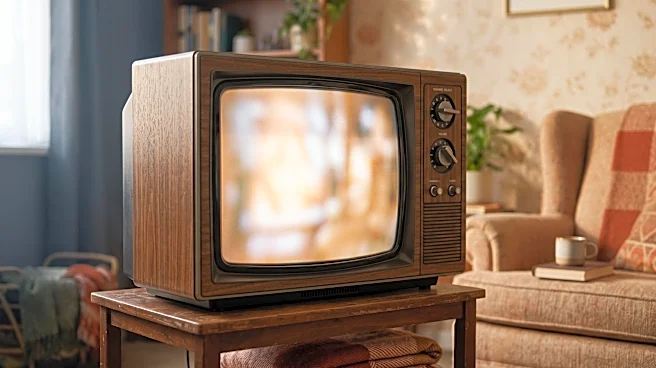
A familiar show is more than just a show; it's a time machine. Nostalgia is a powerful psychological force that connects us to positive memories from our past, providing comfort and reducing anxiety. When you rewatch a holiday special you first saw as a kid, you’re not just seeing the program—you’re tapping into the feelings of safety, joy, and connection associated with that time. The brain's memory center (hippocampus) and emotion center (amygdala) work together, activating reward pathways that release feel-good chemicals like dopamine. These traditions, whether it's a specific movie or just having the game on in the background, become an anchor to our past selves and strengthen our sense of identity and belonging. They remind us of who we are and where we come from, a feeling that is especially potent during family-focused holidays.
Lowering the Social Stakes
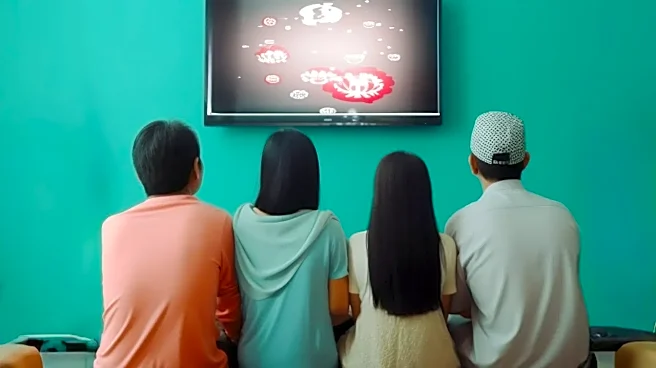
Thanksgiving is wonderful, but it can also be a socially delicate event. You have multiple generations and personalities in one room, and finding common ground isn’t always easy. A new show presents a social risk. What if half the room hates it? What if it’s controversial or just plain bad? The conversation becomes about judging the new thing, creating potential for disagreement. A beloved rerun, on the other hand, is a neutral, pre-approved social lubricant. No one needs to pay close attention. It’s background noise that provides a shared, pleasant context without demanding engagement. People can talk over it, drift in and out of the room, or simply zone out without offending anyone. It removes the pressure of a shared activity 'failing' and lets the family simply be together.
The Science of 'Just Seeing It a Lot'
There’s a psychological phenomenon called the 'mere-exposure effect', and it’s one of the simplest explanations for our love of the familiar. The principle is that people tend to develop a preference for things merely because they are familiar with them. Experiments have shown that the more we see something—whether it's a face, a word, or a TV show—the more we tend to like it. From an evolutionary perspective, this makes sense: what’s familiar is predictable and likely safe, while the unknown could pose a threat. Your affection for that Thanksgiving episode of 'Friends' or a classic football rivalry isn't necessarily because it’s the pinnacle of entertainment. It might just be that you’ve been exposed to it so many times that your brain has decided it’s a trusted and positive part of your holiday experience.