
Isn’t it refreshing when you find a restaurant that actually feels like it has a new perspective? That’s the case at Iara, which opened in October from chef Vitor Mendes, an alum of the ever-popular Theodora. Like Theodora, Iara emphasizes its use of live
fire, on display through the restaurant’s open kitchen, where chefs wrangle steaks and huge slabs of fish. What truly sets Iara apart is its emphasis on Amazonian ingredients: Mendes cites a trip to Brazil after his father’s death as inspiration.
Here, you’ll find the seed puxuri (also known as Brazilian nutmeg) and the fruit cupuaçu (a relative of cacao). Nothing features as prominently as cassava. The tuber appears in the form of bouncy tapioca-based bread, tapioca pearls on desserts, cassava crisps beneath delicate slices of scallop, and as tucupi, fermented cassava juice that’s employed at Iara in ceviche and martinis. (Naturally, it also decorates the dining room.) Iara is already a tough reservation, but even this early into its tenure, a meal there is worth the effort, especially for a special occasion.
What to order
- The pão de queijo ($14), small balls of cheese bread, feel essential at a Brazilian restaurant. Made with cassava, these have a mochi-like squishiness, but the order is as much about the sauces as the bread — the inky charred-eggplant dip in particular is a standout. (Save some of it for the fries, if you get them.)
- The dadinho de tapioca ($16) is pricey for small bites, but they exemplify what makes Iara interesting. The tapioca is crispy and warm, and the toppings offer an exhilarating interplay of sensations. The piece of lean tuna atop is chilled. Then, the bud of jambu, an herb, offers a citric zap similar to Sichuan peppercorns.
- The moqueca ($48), a fish stew with a coconut broth, is comforting, especially as the weather cools. The rice that comes alongside it is grown in the Hudson Valley and topped with a trio of sauces (one spicy, one herby, and one creamy), plus a sprinkle of farofa (coarse, toasted cassava) for texture. (Think of it like what toasted rice powder adds to larb.) The toppings keep each bite of rice and stew interesting and novel.
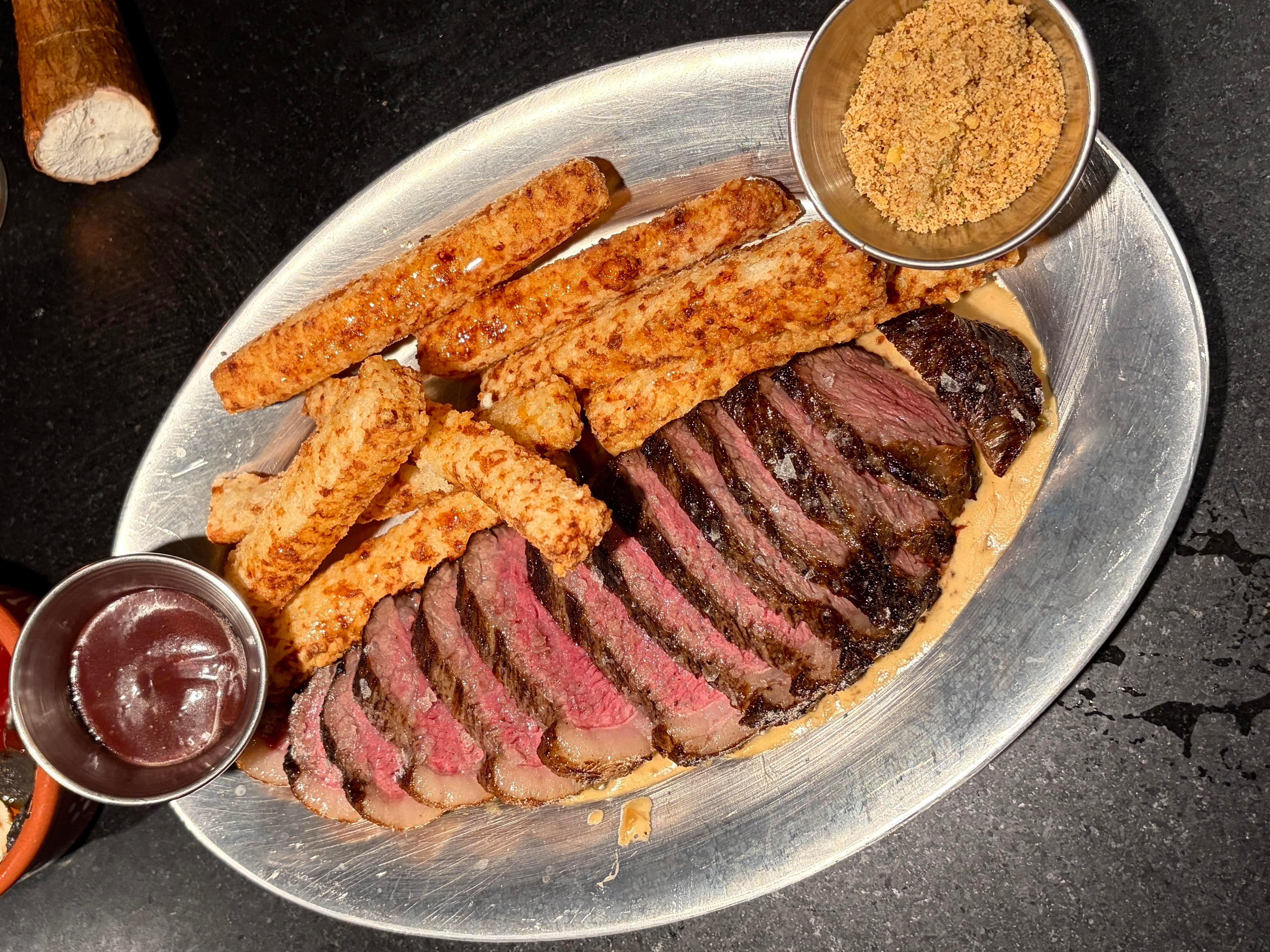
- The picanha con fritas ($68) is technically yet another take on steak frites, but it’s worth a spot on the table, if just to get a taste of the live-fire cooking. Even here, the restaurant makes fun choices. The very long fries are made out of tapioca for a juxtaposition of chewy and crispy. Açaí lends a berry-like note to the ketchup on the side.
- The desserts are all hits, though I found the sorvete ($12) refreshing after the large meal. It’s made with cupuaçu, which has a milky and lightly tart flavor similar to soursop. That’s finished with small tapioca pearls and sweet farofa, finer this time.

Best for
The restaurant is great for anyone who feels jaded by all the same-y restaurants on their roster and wants to try something with ingredients they’ve likely encountered less often in NYC. It’s also fun for pairs who don’t mind splitting everything and want a show with their dinner (make sure to get seats at the chef’s counter). Diners who are tired of limited gluten-free options (or ones that feel like afterthoughts) will also appreciate the range here: By virtue of the restaurant’s focus on cassava, the vast majority of the menu is gluten-free. Much of it can also be made vegan.
Insider tip
Your server might offer the tambaqui special, featuring half of a large Amazonian river fish that’s grilled and presented with sides, intended to serve four. The quantity is very limited each night, given that the fish is sourced directly from Brazil — if it appeals to your group, act quickly, or email the restaurant ahead of time if you know you want it.