


A slew of reimagined bistros , revivals of old dining favorites, colorful cafes, and specialty pastry makers all entered the Los Angeles scene this past year and struck a chord with diners. But being a successful Los Angeles restaurant in 2026 meant far
more than superlative food and service. Each introduced experiences that transcend what we expect from a restaurant in spite of a severe economic slowdown, continuing ICE raids, and a steep decline in Los Angeles tourism.

This crop of restaurants reflects the continued inventiveness of Los Angeles’s chefs and independent business owners in the face of uncertainty. In late 2025, Little Fish expanded into Melrose Hill, drawing crowds with a unique style of West Coast seafood, while Hermon’s became an envied neighborhood restaurant. Yerord Mas’s $38 sandwich kept long lines, while tasting menu prices dropped considerably. The year 2026 was also one of rebirths, with chef Ray Garcia’s Broken Spanish Comedor, chef Casey Lane’s formidable Tasting Kitchen, and the return of classic movie palaces. Those looking for inventive wine bars and cocktails found newcomers like Bar Betsy and Vandell, the latter with its clever produce-focused drinks. Of course, awarding the best of the new also becomes a bittersweet acknowledgement as longtime favorites like Taix, Crustacean, and Sky’s Gourmet Tacos shuttered in 2026.
Though plenty of predictable “Erewhonified” restaurants debuted, refreshing bakeries like Pinecone also emerged, as did Pasadena’s cinnamon roll expert Badash Bakes. The taco scene continues to deliciously veer Northern Mexican, with styles from Tijuana and Sonora gaining influence at Echo Park’s Tijuanero by Tijuanazo and Silver Lake’s carne asada superstar, Tacos Royale.
Here are the 2026 Eater Award winners, representing the best and brightest of the newcomers in Los Angeles of the past year. Visit Eater for the full list of 2026 Eater Awards, presented by Capital One. — Mona Holmes, editor, Eater Southern California/Southwest
Best New Restaurant: Maydan Market
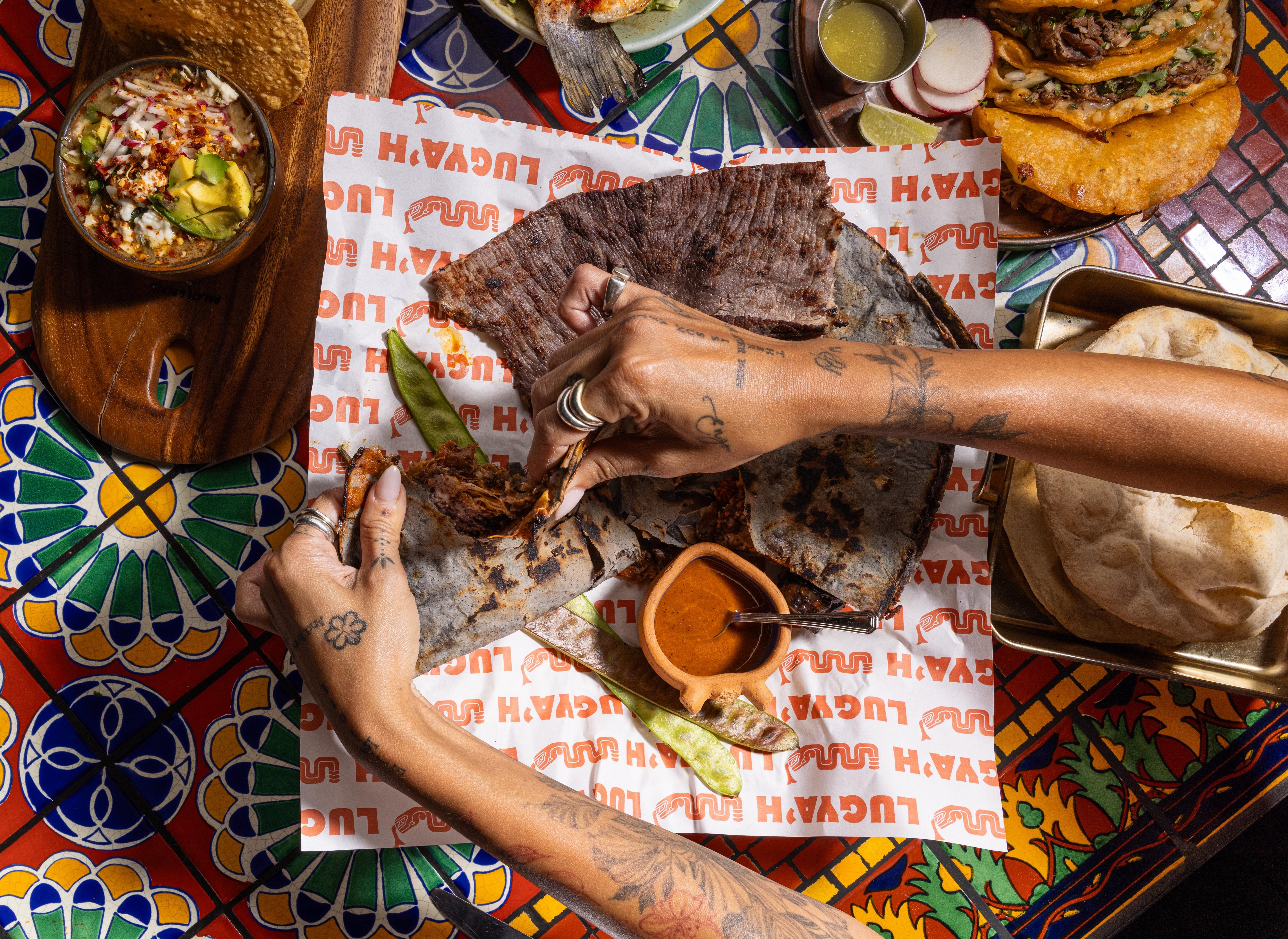
Maydan Market opened in 2025 as a collaborative restaurant space and marketplace home to a few different Los Angeles-born businesses; in essence, it functions as one super-incubator for some of the best food you can find in the city. Diners bounce around to try a pozole flight and pescadillas (sofrito-fried fish nested in supple blue corn tortillas) at Maléna, from the family behind the beloved Tamales Elena; a crisp, UFO-sized, asiento-painted tlayuda from Lugya’h, from Los Angeles legend Poncho’s Tlayudas; and chile-sauce-slicked gai tod from Golden Mountain Chicken (formerly Yhing Yhang), from the intrepid team behind Thai restaurant Holy Basil. They will certainly stop to perch at the rotating Club 104 stall, which has hosted Black-owned businesses such as Melnificent Wingz and Caribbean diasporic pop-up Rubie, as well as Palestinian home restaurant Mid East Eats. On their way out, they may circle the storefront simply named Sook to eye wines, spices, and woven goods sourced from the Levant.
This is not to mention the market’s anchor restaurants: the Lebanese-influenced Maydan and Compass Rose, respectable D.C. transplants from prolific restaurateur Rose Previte, who, alongside her team, curated the market with the knockout lineup of Indigenous vendors. Maydan Market feels boldly like one whole; people rarely come for a single hyped stall. The point, in effect, is the crawl. In a year marked by ongoing, unrelenting, nationwide ICE raids targeting Black and brown immigrants, the fact that the market centers Indigenous Mexican-owned businesses, allowing their owners the space and sovereignty to reach a wider stage and audience, speaks loudly. — Nicole Fellah, dining editorial manager

Chef of the Year: Marcus Jernmark, Lielle and Marée
Marcus Jernmark quietly landed in Los Angeles five years ago with Michelin pedigree, hosting an $800 dinner series at private homes and trying to drum up support for his own professional projects. Over time, he learned what this city was about: casual refinement, the labor of love in sourcing local ingredients, and effortless style, which he has implemented in spades at his new restaurant Lielle (and California French bistro Marée, which just opened upstairs). The results are stunning: barely cooked shrimp tangled into handmade uni pasta; fire-kissed dry-aged squab that reflects a truly joyful, energetic viewpoint. Jernmark could have shaped Lielle to be an unattainable, once-a-year dinner but instead chose a more accessible $150 prix-fixe approach — serving a menu that changes every few months to lure local diners back in to try his deceptively ambitious, inventive cooking. It’s exciting to see someone who made his career in New York, Singapore, and Stockholm embrace Los Angeles for what it is — a discerning diner’s wonderland with unparalleled food from street to tasting counter — and set a new standard. — Matthew Kang, Eater West Coast correspondent
Best New Bakery: Chainsaw
Born as an underground dinner party operated out of Karla Subero Pittol’s Echo Park garage, Chainsaw finally got its own digs this year in the form of a lively cafe in Melrose Hill, an unquestionably gentrifying neighborhood that has become home to some of Los Angeles’s best independent restaurants. At the cafe, Subero Pittol channels her Venezuelan heritage through a menu of arepas plump with beans, limey guasacaca, and cheese; a Venezuelan hot dog (“perro caliente”) buoyed by an acidic slaw; and her bracingly tart passionfruit-lime icebox pie, which commands a cult following all its own. Stepping into Chainsaw feels like you could be in Subero Pittol’s own kitchen as she greets regulars and newcomers as if they are old friends. Customers study a handwritten menu that changes daily — it doesn’t help to come in too attached to any one dish (save the ever-present icebox pie) when you may get tempted by another. The cafe’s impact on Los Angeles feels clear in the near-constant crowds that hover outside, reading their newspapers over an espresso or tucking into the latest of Subero Pittol’s ideas, such as a full English breakfast served for a single day. In a city lacking in untamed Venezuelan cooking, Chainsaw offers a home for Subero Pittol to celebrate the cuisine in a way that feels distinctly Los Angeles. — Rebecca Roland, deputy editor, Eater Southern California/Southwest

Dish of the Year: Roast chicken and Caesar panzanella at Henrietta
To understand California cuisine in 2026, look no further than Henrietta, a neighborhood bistro that has struck a just-right balance of precision and ingenuity while imbuing a feeling of nostalgia that begs locals and travelers alike to return. The restaurant’s intentions come across most clearly in its roast chicken, served as a just-salty-enough half chicken hunked into handheld pieces with deep, smoky char marks. The prize chicken pile gets tucked onto a plate alongside a scorched lemon half and a heaping, chicory-heavy Caesar panzanella blanketed under a layer of Parmesan that could be a snowcap on a stretch of the San Gabriel Mountains. With the chicken, Henrietta nods to forebears (namely San Francisco’s Zuni), while making the dish its own with a Baja-born Caesar salad that feels distinctly Los Angeles, dotted with torn fistfuls of bread from the neighboring local Clark Street Bakery. Of course, 2026 continues to be the year of the Great Chickening, where roast chicken has become many a restaurant’s calling card — and an easy way into the cultural cache. In Los Angeles alone, Sqirl (with its new dinner menu) and Pasjoli have both put out progressive, near-intoxicating spins on the dish, but Henrietta’s has lodged itself into the collective imagination with its brazen simplicity. — RR

The Rising Star: Alto
This sleeper hit in Studio City from chefs Esteban Klenzi and Juana Castellanos Lagemann serves elegant, wood-fired Argentine and Uruguayan food in a rustic, neighborhood restaurant-coded space. The quality of the fish, meats, and vegetables is fine dining level, while artfully plated presentations of familiar dishes offer more inventive techniques, such as a near-smoldering, blackened avocado and empanadas that look as if they have been blistered by dragon fire; kombu-cured grilled pork chops, sliced and arranged on saline kombu skin; and seared sweetbreads and spring onion bathed in roasted onion consomé and cheese oil. Whimsy comes through in drinks and desserts: Mate gourds might hold a fermented welcome spirit; the Ode to DDL kicks the more traditional chocolate souffle in favor of a dulce de leche rendition crowned with an orb of caramel ice cream befitting a sceptre. The result: one of Los Angeles’s most complete and compelling restaurants to debut this year. The Uruguayan through line, present in deftly homemade dishes such as galleta de campaña, a layered quick bread called “criollo” on the menu, makes the slate feel even more distinct than that of other South American diasporic restaurants across the city. — MK

Punch’s Best New Bar: Vandell
Rarely does a new cocktail achieve citywide notoriety in a matter of months, but such is the case with the Smoked Tomato at Vandell, the Los Feliz bar that opened in early 2026. By its name alone, you might expect something red and pulpy, like a Bloody Mary. Instead, the love letter to umami reveals itself as a crystal-clear, glistening cocktail. Essentially a mezcal Margarita, it’s also so much more; the Smoked Tomato gets its acidity from fresh tomatoes, juiced and smoked for six hours. The mezcal spends a night infusing with lemongrass, ginger, and galangal before meeting shio koji, basil, chiles, and a rim of lime leaf salt. Co-creators Shawn Lickliter and Vay Su (who met behind the bar at République) call it “a ridiculous amount of prep,” but the drinker is none the wiser — all that labor presents itself as, simply, a damn good cocktail.
That sleight of hand defines Vandell’s bar program, which brings technical precision and a healthy sense of humor to both seasonal-produce-based drinks and classic cocktails. The Melon, a fluffy sour, channels Japanese candy; a Gimlet gets its Technicolor brightness of flavor from homemade sour lime cordial; and the Martinis, available standard-sized and miniature, range from a tarragon-vinegar-spiked classic to an ultra-dirty, anchovy-tinged number.
There’s also a better-than-it-needs-to-be burger; genuinely thoughtful nonalcoholic options; and Manhattans, Negronis and Sidecars made with vintage spirits from the ’60s, ’70s, and ’80s. But Vandell’s greatest achievement might be making all this cleverness feel so unpretentious. Warm, convivial service; a well-designed and conversation-friendly space, wood-paneled like a ’70s rec room; and a neighborhood-restaurant feel have all helped make Vandell the bar where you want to be a regular (and try every drink on the menu). No wonder there’s always a line out the door. — Hilary Pollack, deputy editor, Eater
Partner content from Capital One
Enjoy special access to premier culinary events and reserved tickets just for cardholders. And explore Dinner Party, a curated monthly series of dining gatherings, developed with industry-leading culinary partners.
Learn more about Capital One’s exclusive events.