

The Seductive Promise of 'Stretch'
We've all been there, standing in a store, giving a pair of pants a hopeful tug. The label says 'stretch,' and our brains translate that to 'Thanksgiving-proof.' It seems like a simple equation: more give equals more comfort, especially when second helpings
are on the line. The apparel industry has leaned into this, making stretch a primary selling point for everything from denim to chinos. The idea is that these pants offer a forgiving fit that adapts to our bodies. Yet, by the time the pumpkin pie is served, many of us find ourselves discreetly unbuttoning a waistband that feels more like a vice grip than a gentle hug. The truth is, the word 'stretch' on a tag is a dramatic oversimplification of what actually makes a garment comfortable.
It’s Not the Stretch, It's the Recovery
Here's the secret textile experts know: a fabric's ability to stretch is only half the story. The other, more important half is its 'recovery'—the ability to snap back to its original shape after being extended. Fabrics with poor recovery stretch out but don't bounce back, leading to saggy knees and a loose, unsupportive fit by the end of the day. Think of a cheap elastic band that goes limp after a few uses. High-quality stretch, often found in blends with a good percentage of elastane or spandex, has excellent recovery. It moves with your body and then smartly returns to form, providing consistent support instead of just bagging out. A fabric that stretches but doesn't recover isn't offering comfort; it's just losing its shape.
The Waistband Is the Real Tyrant
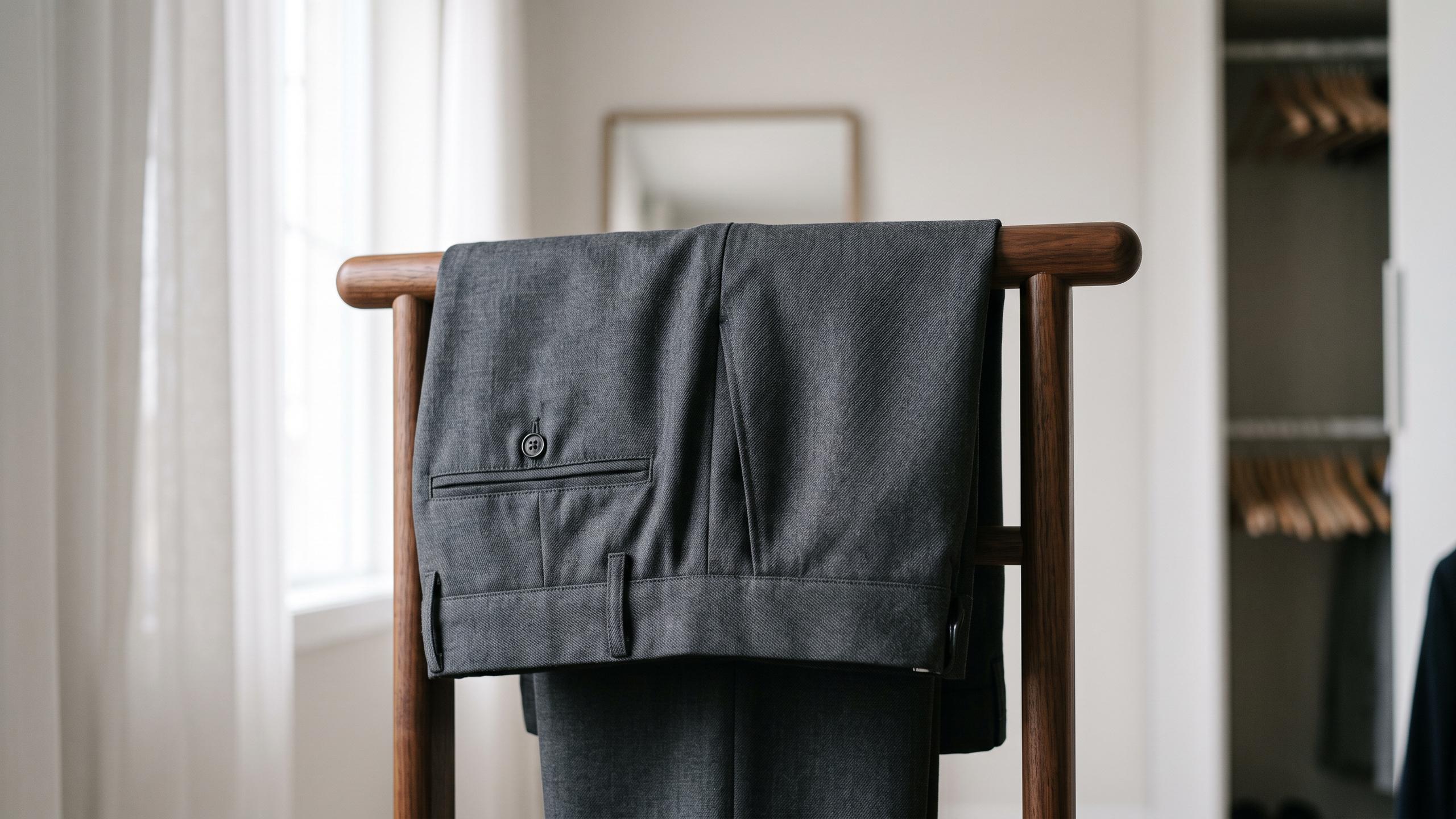
You can have the stretchiest fabric in the world, but if it's attached to a rigid, unforgiving waistband, you have a comfort bottleneck. The waistband is the anchor of any pair of trousers, and its construction is paramount. A standard, stiff waistband is designed to hold its shape, not to expand with you after a big meal. When you sit, your waist naturally expands, and a rigid band has nowhere to go but to dig in. Truly comfortable trousers often feature thoughtful waistband design, like a contoured cut that follows the body's natural shape, hidden elastic panels, or a simple drawstring. Before you buy, ignore the legs for a moment and focus on the waist. If it has zero give, it's not a true Thanksgiving contender, no matter how much spandex is in the fabric.
Rise and Cut: The Unsung Heroes of Comfort
Where your pants sit on your body and how they are shaped matter immensely. This is determined by the 'rise' (the distance from the crotch to the waistband) and the cut. Low-rise pants that sit on the hips can create pressure points and require constant pulling up, especially when you're moving from standing to sitting. A mid- or high-rise pant, which sits closer to your natural waist, provides better coverage and is less likely to shift or dig in when you sit down. Similarly, a super-skinny cut will feel restrictive even with stretch, as the fabric is constantly under tension. A straight-leg or relaxed-fit cut provides more ease and allows the fabric to drape rather than cling, giving your body room to breathe and move without feeling constricted.