
What's Happening?
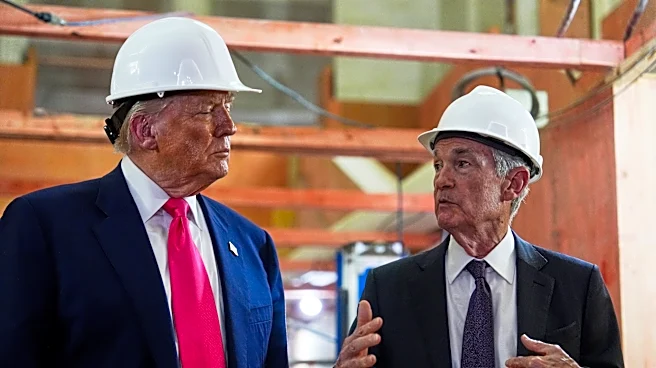
The U.S. Federal Reserve has decided to leave interest rates unchanged, despite President Trump's repeated calls for cuts. The decision was made in light of elevated inflation, slow job growth, and geopolitical
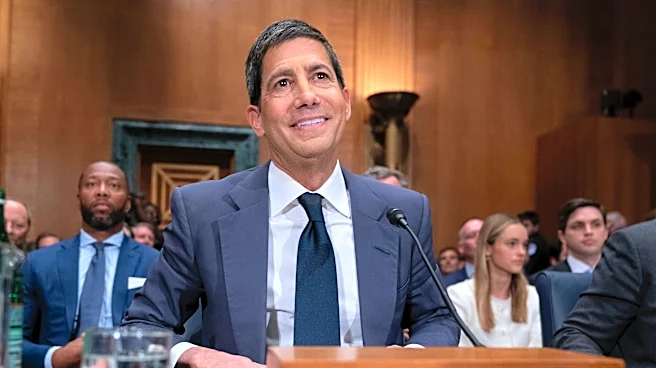
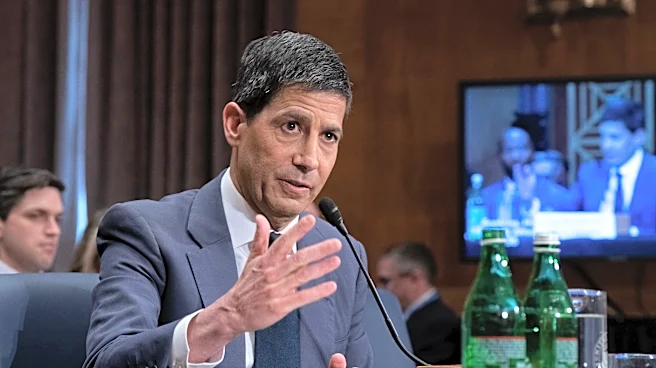
uncertainties, particularly in the Middle East. The Fed's current rate range of 3.5% to 3.75% remains in place, as officials take a cautious approach amidst economic challenges. Jerome Powell, whose term as chair ends on May 15, will remain on the Fed's board of governors. The decision comes as the Senate Banking Committee has confirmed Kevin Warsh as the next Fed chair, who is expected to be more amenable to Trump's rate cut demands.
Why It's Important?
The Fed's decision to maintain interest rates highlights the central bank's focus on managing inflation and economic stability, despite political pressures. This move is crucial as it affects borrowing costs, consumer spending, and overall economic growth. The leadership transition at the Fed could lead to changes in monetary policy, depending on Warsh's stance on interest rates. The decision also underscores the importance of central bank independence in maintaining economic stability, as political influences could lead to short-term decisions that may not align with long-term economic goals.
What's Next?
With Powell remaining on the board, the Fed's future policy direction will be closely watched, especially as Warsh takes over as chair. The Fed's actions will depend on inflation trends and economic conditions, particularly the impact of the Iran conflict on global markets. The central bank's ability to navigate these challenges will be critical in maintaining economic stability and achieving its dual mandate of price stability and maximum employment.