







What's Happening?
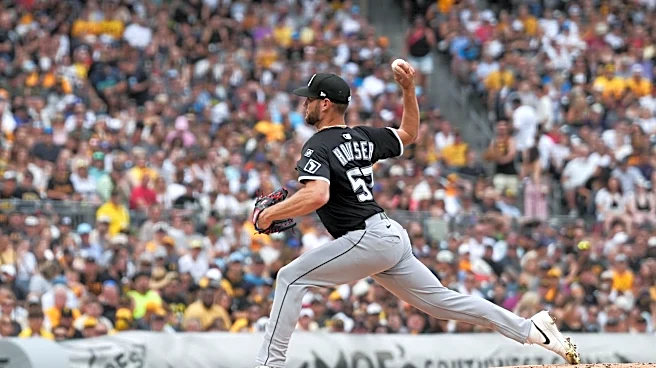
The San Francisco Giants are experiencing buyer's remorse after signing pitcher Adrian Houser to a two-year, $22 million contract during the 2026 MLB offseason. The team, seeking to bolster their starting rotation, acquired Houser from the free agent
market following his tenure with the Tampa Bay Rays and Chicago White Sox. However, Houser's performance has been underwhelming, with a 5.25 ERA and a negative WAR, making the investment questionable. The decision to sign Houser has been criticized as the Giants' most regrettable offseason move, overshadowing other signings like Tyler Mahle, who also underperformed but was contracted for a shorter term.
Why It's Important?
The Giants' misstep in signing Houser highlights the risks associated with high-value contracts in professional sports, particularly when performance does not meet expectations. This decision impacts the team's financial flexibility and competitive strategy, as they are now committed to a player who has not delivered the anticipated results. The situation underscores the importance of thorough evaluation and risk assessment in player acquisitions, which can significantly affect a team's success and financial health. The Giants' predicament serves as a cautionary tale for other teams in the league, emphasizing the need for prudent financial management and strategic planning.
What's Next?
The Giants will need to reassess their roster and financial commitments moving forward. With Houser's contract extending into the next season, the team faces the challenge of either improving his performance or finding a way to mitigate the financial impact. This may involve exploring trade options or restructuring contracts to free up resources for future acquisitions. The team's management will likely focus on developing a more effective strategy for player evaluation and contract negotiations to avoid similar pitfalls in the future.