


What's Happening?
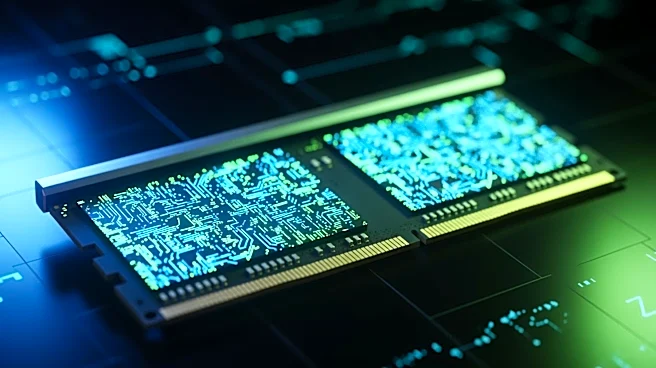
Michael Dell, CEO of Dell Technologies, has projected a significant increase in memory demand driven by artificial intelligence (AI) advancements. Speaking at a Bank of America event, Dell highlighted that the total memory demand from the AI market is
expected to grow 625 times by 2028 compared to 2022 levels. This surge is attributed to the expansion of memory per AI accelerator and the scaling of AI infrastructure. Dell noted that the popular Nvidia H100 AI accelerator, which had 80 GB of High Bandwidth Memory (HBM3) in 2022, is anticipated to require 2 TB by 2028. This increase, combined with a 25-fold rise in AI accelerator deployment in data centers, underpins the projected demand growth. However, the current production capabilities of major memory manufacturers like SK hynix, Samsung, and Micron may not suffice to meet this demand, leading to potential shortages.
Why It's Important?
The anticipated surge in memory demand underscores the rapid evolution and integration of AI technologies across industries. As AI systems become more prevalent, the need for advanced memory solutions will intensify, impacting the semiconductor and data center sectors significantly. Companies involved in memory production and AI hardware stand to benefit from increased demand, potentially driving innovation and investment in these areas. However, the limited number of manufacturers capable of producing high-end memory like HBM4 could lead to supply constraints, affecting pricing and availability. This scenario could have broader economic implications, influencing the cost structures of AI-driven businesses and potentially slowing the pace of AI adoption if supply cannot meet demand.
What's Next?
As the demand for AI memory continues to rise, memory manufacturers are likely to expand their production capacities to address potential shortages. This may involve significant capital investment in new facilities and technologies to enhance production efficiency. Additionally, companies may explore alternative memory technologies or partnerships to diversify supply sources. The semiconductor industry could see increased collaboration and consolidation as firms seek to secure their positions in the growing AI market. Policymakers and industry leaders may also need to address potential supply chain vulnerabilities to ensure the sustainable growth of AI technologies.