






What's Happening?
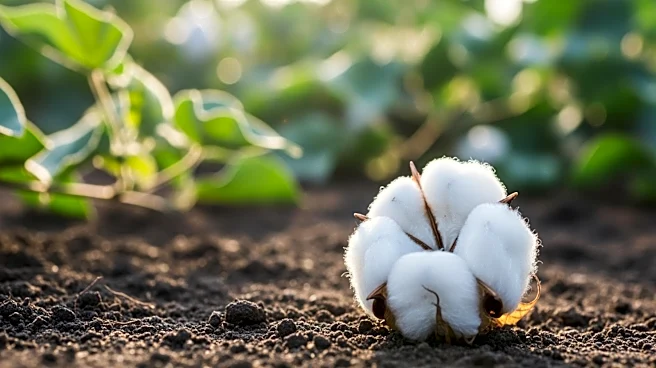
The U.S. Department of Agriculture (USDA) has introduced the 'Great American Cotton Plan,' a nationwide initiative aimed at revitalizing the cotton industry. This plan seeks to support struggling farmers, enhance domestic textile manufacturing, and counteract
the financial challenges faced by cotton producers. U.S. Agriculture Secretary Brooke Rollins announced the initiative, emphasizing its role in the Trump administration's efforts to restore profitability for American cotton growers. The USDA estimates that cotton farmers are facing a fifth consecutive year of negative returns, with potential losses of $2.6 billion across 9 million acres. The plan addresses issues such as declining U.S. textile manufacturing and the rise of synthetic fibers, aiming to boost demand for American-grown cotton.
Why It's Important?
The 'Great American Cotton Plan' is crucial for stabilizing the U.S. cotton industry, which is a significant economic contributor. By increasing domestic cotton consumption and expanding textile manufacturing, the plan aims to create jobs and stimulate economic activity across multiple sectors. The initiative also seeks to protect farmers from financial risks and improve trade opportunities, which could enhance the competitiveness of American cotton on the global stage. The focus on natural cotton fibers aligns with environmental sustainability goals, potentially reducing reliance on synthetic materials and addressing environmental concerns associated with plastic-based textiles.
What's Next?
The USDA will implement several strategies under the 'Great American Cotton Plan,' including increasing marketing loan rates, expanding crop insurance tools, and providing export assistance. The 'Plant Not Plastic' campaign will be expanded to encourage consumers to choose products made with natural cotton fibers. The initiative will also support textile mills and manufacturers using American-grown cotton, aiming to rebuild domestic production capacity. As the plan unfolds, stakeholders in the cotton industry will likely monitor its impact on market dynamics and adjust their strategies to align with new opportunities and challenges.