




What's Happening?
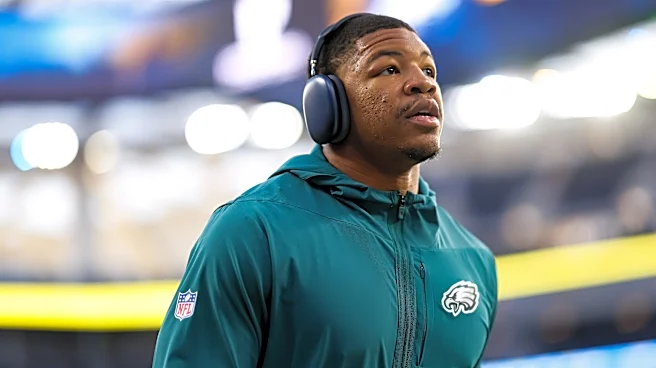
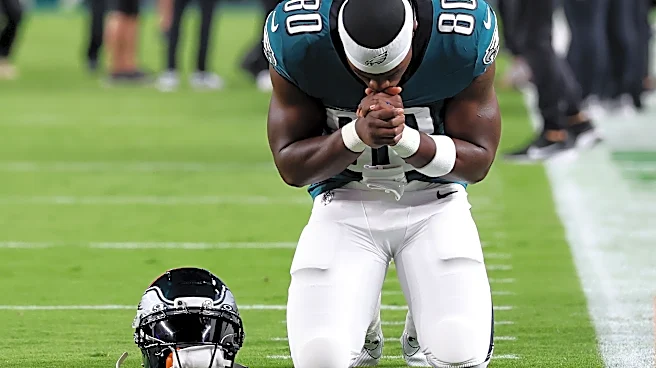
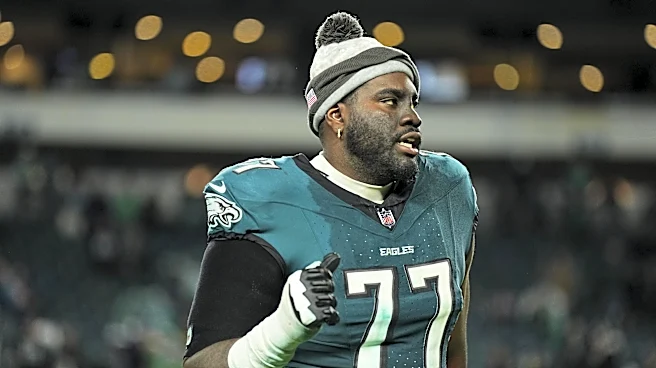
Nolan Smith Jr., a linebacker for the Philadelphia Eagles, was recently arrested in Georgia on charges of reckless driving and speeding. The arrest was confirmed by E.J. Smith of PHLY Sports and CBS affiliate WMAZ-TV, following initial reports from The Georgia Gazette,
which is known for publishing arrest records and mugshots. Smith's arrest occurred on May 15, 2026, and he was charged with 'speeding in excess of maximum limits' and reckless driving. Although social media accounts have claimed that Smith was driving at 137 miles per hour in a 70-mph zone, there is no verified evidence to support this specific allegation. Smith, a first-round pick in the 2023 NFL draft, played college football at the University of Georgia, a program that has seen multiple players involved in similar incidents. Notably, Eagles defensive tackle Jalen Carter, also a first-round pick in 2023, pleaded no contest to misdemeanor charges of reckless driving and racing earlier in 2023.
Why It's Important?
The arrest of Nolan Smith Jr. highlights ongoing concerns about the behavior of professional athletes off the field, particularly those associated with the University of Georgia's football program. Such incidents can impact the public perception of the teams and players involved, potentially affecting sponsorships and fan support. For the Eagles, this arrest could lead to disciplinary actions from the NFL, which has a history of penalizing players for conduct detrimental to the league. The situation also underscores the broader issue of athlete conduct and the responsibilities that come with being a public figure. The NFL and its teams may face increased pressure to address these issues more proactively, possibly leading to stricter conduct policies or enhanced educational programs for players.
What's Next?
The legal proceedings following Smith's arrest will likely determine any immediate consequences he may face, both legally and professionally. The Eagles and the NFL may conduct their own investigations to decide on potential disciplinary actions. This could include fines, suspensions, or mandatory participation in educational programs. The outcome of Smith's case may also influence how the NFL and other sports leagues handle similar incidents in the future, potentially leading to policy changes aimed at preventing reckless behavior among athletes. Additionally, the University of Georgia may face scrutiny regarding its role in preparing athletes for the responsibilities of professional life, possibly prompting changes in its athletic program's approach to player conduct.