



What's Happening?
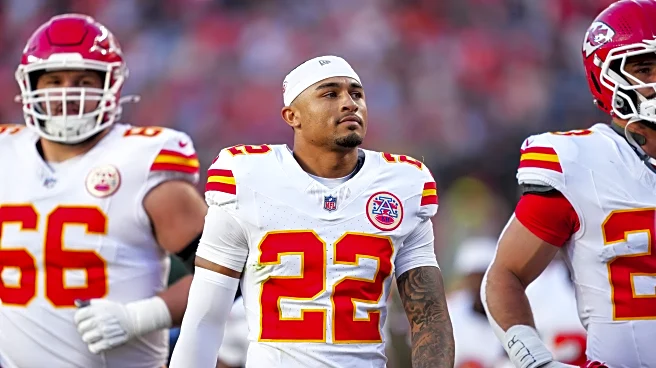
Kansas City Chiefs tight end Travis Kelce is currently considering whether to retire or continue playing for a 14th NFL season. At 36 years old, Kelce has been a key player for the Chiefs, leading the team with 76 catches, 851 yards, and five touchdowns
last season. However, his performance has declined from his peak years, and he is no longer the 1,000-yard threat he once was. If Kelce decides to return, he is expected to earn significantly less than his previous $17.125 million salary, with market projections estimating his value at around $10.8 million per year. Despite the potential pay cut, Kelce's decision may not be financially motivated, as he has lucrative opportunities awaiting him in broadcasting, where he could earn up to $15 million annually as an NFL analyst.
Why It's Important?
Kelce's decision holds significant implications for both his career and the Kansas City Chiefs. If he retires, the Chiefs will need to find a replacement for one of their most reliable offensive weapons, potentially impacting their performance in the upcoming season. On the other hand, if Kelce transitions to a broadcasting career, he could become a prominent figure in sports media, influencing public perception and analysis of the NFL. His potential move to broadcasting also highlights the lucrative opportunities available to former athletes, which could encourage other players to consider similar career paths post-retirement.
What's Next?
Should Kelce choose to retire, the Chiefs will likely explore options to fill the void left by his departure, either through the draft or free agency. If he opts to continue playing, negotiations regarding his contract will be crucial, as the team will need to balance salary cap considerations with retaining a veteran presence. In the broadcasting realm, Kelce's entry could shake up the current landscape, as networks like CBS and NBC are reportedly seeking new talent for their NFL coverage. His decision could influence the hiring strategies of these networks and potentially set a precedent for other athletes considering media careers.