



What's Happening?
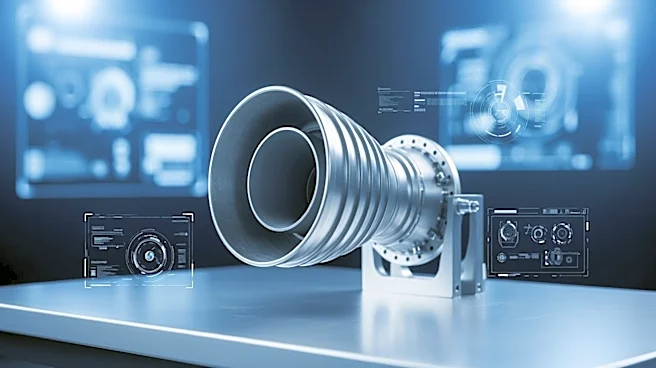
The Defense Advanced Research Projects Agency (DARPA) has awarded Voyager Technologies a $16.5 million contract to advance the development of a new solid rocket motor thrust-control technology. This initiative is part of DARPA's Burn n’ Go program, which
aims to create a 'propellant-embedded control technology' that allows for post-manufacturing adjustments to the thrust of solid rocket motors. Traditionally, solid rocket motors have fixed performance characteristics determined during manufacturing, which limits their adaptability for different missions. The new technology seeks to overcome these limitations by enabling modifications to a motor's performance after production. This development comes as the Pentagon seeks to expand missile production in response to increasing demand for air defense interceptors and long-range strike weapons. Voyager Technologies, which entered the propulsion sector through its acquisition of Estes Energetics, is tasked with validating the concept and conducting live tests of the technology over a 20-month period.
Why It's Important?
This contract highlights a significant advancement in missile propulsion technology, which could enhance the flexibility and efficiency of U.S. defense capabilities. By allowing for post-manufacturing adjustments, the technology could reduce the need for multiple propulsion systems tailored to specific missions, potentially lowering costs and increasing the speed of deployment. This development is crucial as the U.S. military seeks to maintain its technological edge and readiness in the face of evolving global threats. The ability to quickly adapt missile systems to different operational requirements could provide a strategic advantage, supporting national defense and deterrence efforts. Additionally, this contract underscores the role of private companies like Voyager Technologies in driving innovation within the defense sector.
What's Next?
Voyager Technologies will focus on validating the new propulsion technology through a series of 'tailorable SRM hot-fire demonstrations,' which involve live testing of the solid rocket motors under operational conditions. These tests are expected to take place over the next 20 months. Successful validation could lead to broader adoption of the technology across various missile systems, enhancing the U.S. military's operational flexibility. The outcome of these tests will likely influence future contracts and collaborations between DARPA and private defense companies, potentially setting a precedent for similar technological advancements in other areas of military technology.