






What's Happening?
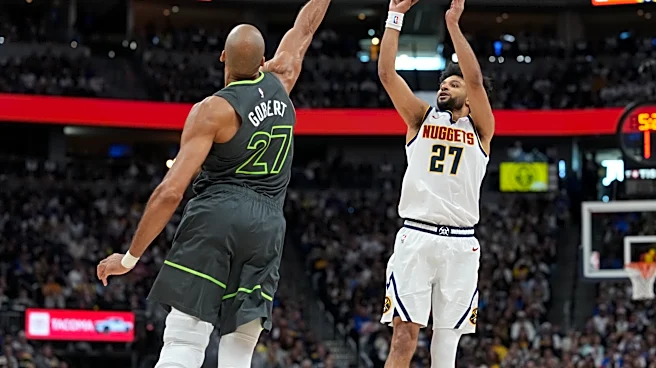
The Minnesota Timberwolves are preparing for Game 2 against the Denver Nuggets after a challenging Game 1 where they lost despite a strong start. Coach Chris Finch highlighted composure issues as a key factor in their performance, noting turnovers and
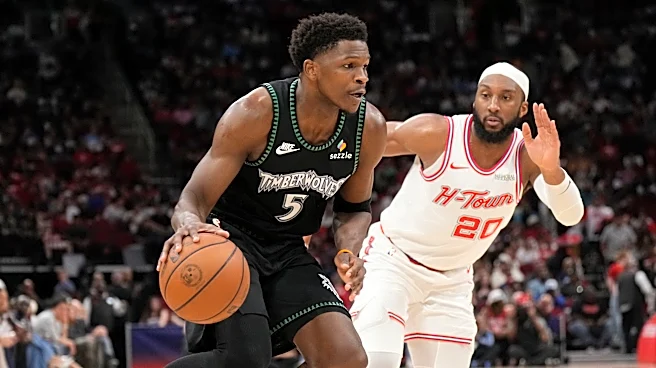
lack of offensive execution as critical areas for improvement. The team initially outperformed the Nuggets in the first quarter but struggled in the subsequent quarters, failing to maintain their offensive momentum. Anthony Edwards, a key player for the Timberwolves, played for over 38 minutes despite recent knee injury concerns, scoring 22 points but showing signs of fatigue. Finch emphasized the importance of maintaining composure and executing solid plays to avoid self-inflicted wounds, especially against experienced teams like the Nuggets.
Why It's Important?
The Timberwolves' ability to address their composure issues is crucial for their success in the playoffs. With the series shifting to the Twin Cities after Game 2, a win would be pivotal in leveling the series and boosting team morale. The performance of Anthony Edwards, despite his injury, is vital as he is a central figure in the team's strategy. The team's ability to adapt and overcome these challenges will determine their progress in the playoffs. The outcome of Game 2 could significantly impact their chances of advancing further, making it essential for the Timberwolves to refine their strategy and execution.
What's Next?
The Timberwolves will focus on improving their offensive execution and minimizing turnovers as they prepare for Game 2. Coach Finch expects the team to approach the game with confidence and a sharp mindset, aiming to win and shift the series momentum. The team will likely rely on key players like Rudy Gobert, who was praised for his performance in Game 1, and explore strategic adjustments to enhance their gameplay. The outcome of Game 2 will set the tone for the remainder of the series, influencing the team's approach as they return to their home court.