


What's Happening?
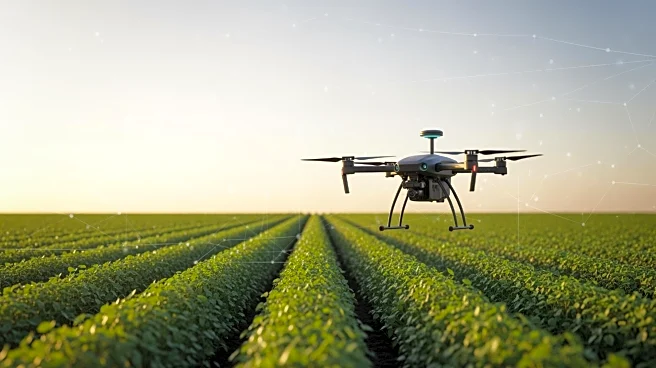
The global connected agriculture market is anticipated to grow significantly, reaching $18.67 billion by 2032, up from $5.38 billion in 2024. This growth is driven by the integration of digital technologies such as IoT devices, GPS, data analytics, and
cloud platforms into agricultural practices. These technologies enable real-time monitoring of crops, livestock, soil, and weather conditions, facilitating data-driven decision-making. The adoption of connected agriculture is expected to enhance operational efficiency, reduce resource waste, and increase yields, promoting precision farming and sustainable agricultural practices. Key developments in the U.S. include the USDA's expansion of 5G-enabled IoT networks for crop monitoring and John Deere's launch of AI-driven connected tractor fleets.
Why It's Important?
The expansion of the connected agriculture market is crucial for addressing the challenges of increasing global food demand and limited arable land. By leveraging technology, farmers can optimize resource use, improve crop yields, and enhance sustainability. This shift towards data-driven agriculture is particularly important in the context of climate change and environmental conservation. The market's growth also presents economic opportunities, with increased demand for IoT devices, AI analytics, and cloud services. However, high initial investment costs and limited internet connectivity in rural areas pose challenges, particularly for small-scale farmers.
What's Next?
As the connected agriculture market continues to grow, further advancements in 5G connectivity, AI-powered analytics, and blockchain integration are expected. These technologies will enhance supply chain transparency and make smart farming more accessible to smallholder farmers. Government initiatives promoting digital agriculture and smart farming subsidies will likely accelerate adoption. Additionally, partnerships between agritech companies, telecom providers, and agricultural cooperatives will drive innovation and market scalability. The focus on sustainable farming practices and climate-smart solutions will also open new revenue streams.
Beyond the Headlines
The adoption of connected agriculture technologies raises important considerations around data privacy and cybersecurity, as farms become increasingly digitized. There is also a cultural dimension, as traditional farming communities may resist technological change. Addressing these challenges will require targeted education and support to ensure that all farmers can benefit from technological advancements. Furthermore, the emphasis on sustainable practices aligns with broader environmental goals, potentially influencing agricultural policies and regulations.