



What's Happening?
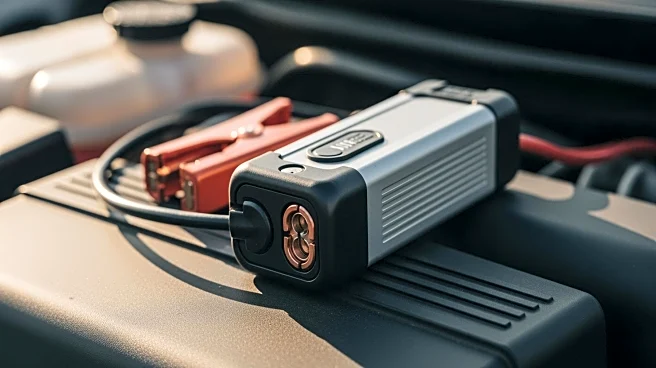
Car and Driver conducted tests on various portable jump starters priced at $100 or less, evaluating their effectiveness in starting vehicles with dead batteries. The tests focused on factors such as ease of use, clamp quality, charging speed, safety features,
and additional functionalities like USB ports and flashlights. The results showed that many affordable models performed reliably, providing sufficient power to start most cars. Notable models include the Noco Boost Plus GB40, known for its compact size and safety features, and the AstroAI S8 Ultra, praised for its high peak output and large battery capacity. These jump starters offer a practical solution for drivers needing emergency power without the need for another vehicle.
Why It's Important?
The availability of reliable and affordable portable jump starters is significant for drivers who may face unexpected battery failures. These devices provide a convenient and independent solution, reducing the need for roadside assistance or help from other drivers. The affordability of these jump starters makes them accessible to a wider range of consumers, promoting safety and preparedness. As more drivers equip their vehicles with these devices, the demand for traditional jumper cables and external assistance may decrease. This trend could also encourage manufacturers to continue improving the features and performance of budget-friendly models, enhancing consumer options in the automotive accessory market.
Beyond the Headlines
The increasing popularity of portable jump starters reflects a broader shift towards self-reliance and preparedness among consumers. As technology advances, these devices are becoming more compact and feature-rich, offering additional functionalities such as USB charging and emergency lighting. This evolution aligns with the growing consumer preference for multifunctional gadgets that enhance convenience and safety. Furthermore, the emphasis on safety features like reverse polarity protection highlights the industry's commitment to user safety, potentially reducing the risk of accidents or damage during use. As these devices become more commonplace, they may also influence the design and features of future automotive emergency kits.